
Views: 0 Author: Site Editor Publish Time: 2026-05-18 Origin: Site


Peptide therapy has quietly shifted from niche biohacking circles into mainstream wellness, performance optimization, and even clinical treatment protocols. If you’ve spent any time researching recovery, anti-aging, fat loss, or hormone balance, chances are you’ve come across peptides. These tiny chains of amino acids act like messengers in the body—telling cells what to do, when to repair, and how to optimize function.
Sounds futuristic, right? In many ways, it is.
But here’s the catch: most peptides aren’t swallowed—they’re injected.
And that’s where things get… complicated.
For decades, self-injection has relied heavily on traditional syringes. While effective, they introduce a layer of friction that many users struggle with. Think about it—measuring precise doses, handling vials, maintaining sterility, and overcoming needle anxiety. It’s not exactly beginner-friendly.
Now imagine you’re new to peptides. You’ve done your research, you’re motivated, and then suddenly you're staring at a vial, syringe, and instructions that look like a chemistry lab manual. That initial excitement? It often turns into hesitation.
This is precisely why innovation stepped in.
Enter the peptide pen—a device designed to simplify the entire experience. It’s not just about convenience; it’s about making peptide therapy more accessible, more accurate, and frankly, less intimidating.
But is it actually better?
That’s what we’re here to unpack.

Let’s start with the classic: the syringe.
For years, syringes have been the gold standard for peptide administration. Doctors trust them. Clinics rely on them. And experienced users often swear by them.
But let’s be honest—just because something works doesn’t mean it’s easy.
There’s a reason syringes haven’t disappeared. They offer:
High precision (in skilled hands)
Low cost compared to newer devices
Universal compatibility with nearly all peptides
Full control over dosage
If you know what you’re doing, a syringe is like a manual transmission car—powerful, flexible, and precise.
Manual doesn’t always mean better.
For beginners, syringes can feel like:
Trying to bake a cake without measuring cups
Or assembling furniture without instructions
Let’s break down the friction points:
Reconstituting peptides, drawing the correct dose, removing air bubbles—it’s not rocket science, but it’s close enough to scare people off.
Even small mistakes in measurement can lead to inconsistent dosing. And with peptides, precision matters.
Compared to modern devices, syringes are slower. You need setup time, cleanup, and careful handling.
Needle anxiety is real. Seeing a syringe can trigger hesitation—even for experienced users.
Syringes are reliable and cost-effective, but they’re also less user-friendly, slower, and more prone to user error—especially when compared to newer alternatives like peptide pens.
Now let’s talk about the disruptor: the peptide pen.
If syringes are like manual cars, peptide pens are the automatic transmission equivalent—sleek, intuitive, and designed for everyday use.
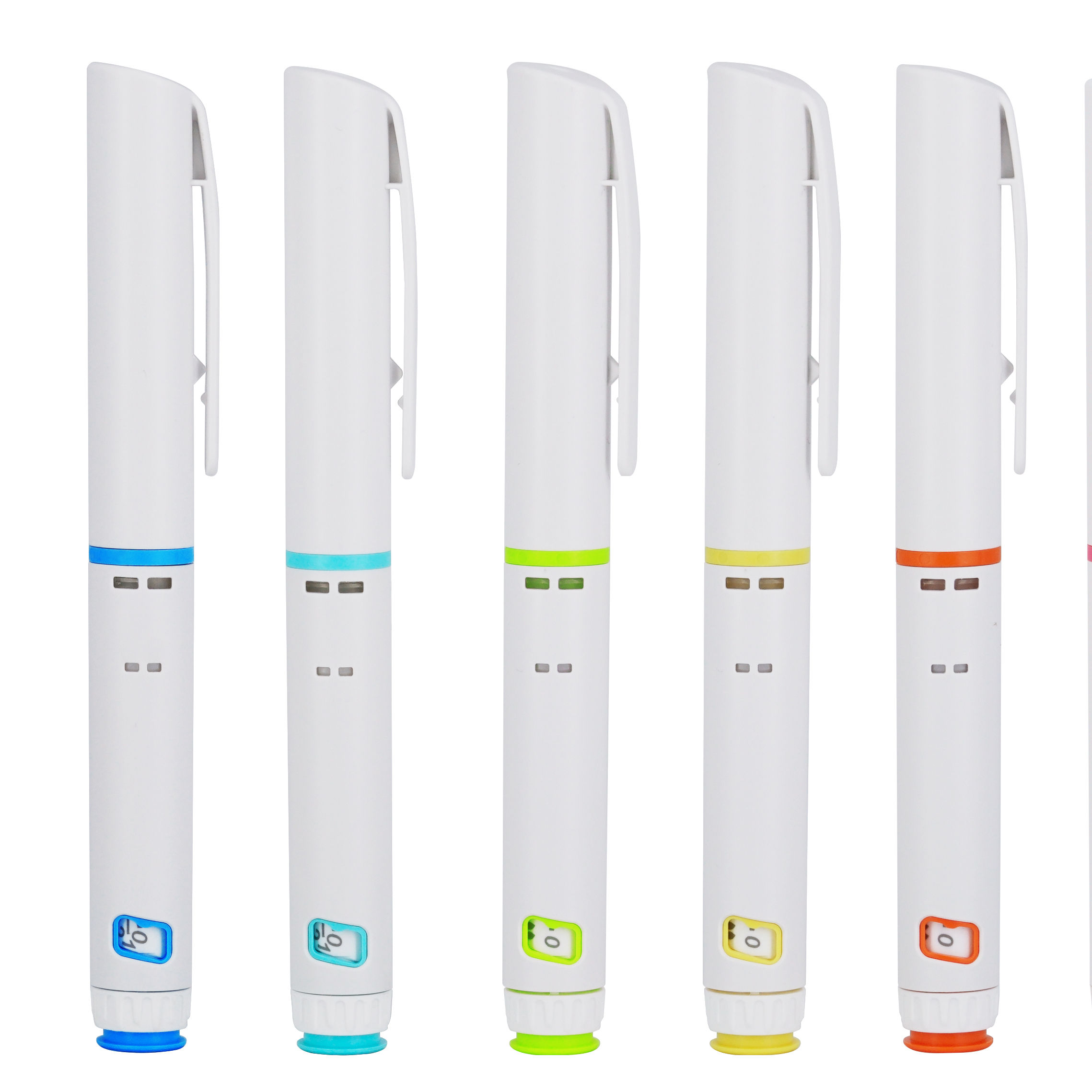
A peptide pen is a preloaded or refillable injection device that allows users to administer peptides with minimal effort. Think of it like a pen-shaped injector where dosage is dialed in rather than manually measured.
Simple. Clean. Efficient.
Here’s where things get interesting.
Peptide pens are faster and easier to use. You don’t need to draw medication manually. Just dial, click, inject.
It’s the difference between:
Brewing coffee manually
vs.
Pressing a button on a coffee machine
Both work—but one is clearly more convenient.
Because dosing is pre-calibrated, peptide pens often deliver more consistent and accurate doses, especially for beginners.
The design is discreet and less intimidating. Many users report feeling more comfortable using a pen compared to a syringe.
Peptide pens are lighter, more compact, and travel-friendly. No need to carry multiple components.
Let’s not pretend they’re perfect.
More expensive upfront
Limited compatibility with certain peptides
Less flexibility for custom dosing (in some models)
Peptide pens are faster, easier, and more user-friendly, but they come at a higher cost and may offer less flexibility for advanced users.
To really understand the differences, let’s put them side by side.
Feature | Syringe for Peptides | Peptide Pen |
|---|---|---|
Ease of Use | Moderate to difficult | Very easy |
Learning Curve | Steep | Minimal |
Dosing Accuracy | High (if experienced) | Very high (automated) |
Speed | Slower | Faster |
Portability | Moderate | Excellent |
Cost | Lower | Higher |
Flexibility | High | Moderate |
Error Risk | Higher | Lower |
If you’re experienced, a syringe can be just as accurate. But for most people, peptide pens are easier, faster, and more consistent.
Here’s the truth no one tells you:
“Easier” is subjective.
What feels effortless to one person might feel overwhelming to another.
Peptide pens are clearly easier. No question.
They remove complexity, reduce fear, and make the process feel approachable.
Some prefer syringes because they offer:
More control
Greater flexibility
Lower cost
Peptide pens win. They’re lighter, more discreet, and easier to manage on the go.
Syringes are less expensive, especially over time.
Want simplicity? → Peptide pen is better
Want control? → Syringe is stronger
Want affordability? → Syringe is cheaper
Want convenience? → Peptide pen is faster and lighter
Accuracy is where things get serious.
With peptides, dosing isn’t just a detail—it’s everything.
In theory, syringes are highly accurate.
In reality?
Accuracy depends on:
User skill
Measurement technique
Consistency
Even a small miscalculation can throw things off.
Peptide pens are designed for repeatable precision.
They:
Reduce human error
Deliver consistent doses
Improve adherence to protocols
In expert hands → Syringe can match or exceed accuracy
For average users → Peptide pen is more reliable
Think of it like shooting a basketball:
A pro can hit shots manually (syringe)
A machine can hit the same shot every time (pen)
No matter which method you choose, technique matters.
Always double-check your measurements
Remove air bubbles carefully
Use consistent injection timing
Practice sterile technique
Learn your device settings thoroughly
Store it properly (temperature matters)
Replace needles regularly
Don’t rush injections
Rotate injection sites
Follow dosage guidelines
Monitor for side effects
Consult a healthcare professional when needed
The debate between peptide pen vs syringe isn’t about which is universally better—it’s about what fits your needs.
Syringes are reliable, flexible, and cost-effective, but they demand skill and patience.
Peptide pens are modern, faster, and easier, offering a smoother experience—especially for beginners or those prioritizing convenience.
If peptide therapy is a journey, then:
Syringes are the rugged manual route
Peptide pens are the streamlined highway
Both get you there. The question is: how do you want to travel?

Question | Detailed Answer |
|---|---|
What is a peptide pen used for? | A peptide pen is used to inject peptides in a controlled, precise, and user-friendly way, often for health, recovery, or performance purposes. |
Is a peptide pen safe? | Yes, when used correctly and with proper medical guidance. Always follow dosage and storage instructions. |
Can I switch from syringe to peptide pen? | In most cases, yes—but compatibility with your specific peptide matters. |
Are peptide pens reusable? | Many are refillable, but some are single-use depending on the model. |
Do peptide pens require training? | Minimal compared to syringes, but basic instructions should still be followed. |
What are the side effects of peptide injections? | Possible side effects include redness, irritation, or mild swelling at the injection site. |
Who should use a peptide pen? | Beginners, frequent travelers, and those who prefer convenience and consistency. |
Are peptide pens better for accuracy? | Yes, especially for users without advanced injection experience. |


