
Views: 0 Author: Site Editor Publish Time: 2026-05-14 Origin: Site


Peptide therapy is exploding in popularity—and for good reason. From fat loss and muscle recovery to anti-aging and hormone optimization, peptides promise targeted, powerful results. But here’s the uncomfortable truth: even the best peptide is only as effective as your dosing precision.
And that’s where the peptide pen comes in.
Think of it like the difference between using a dropper versus a calibrated pipette in a lab. One is “close enough.” The other is exact. In peptide therapy, close enough can quietly sabotage your results—or worse, your safety.
Let’s break this down step by step and build your precision protocol from the ground up.
Let’s start with a simple question:
Would you eyeball your prescription medication dose?
Probably not. Yet many people treat peptide dosing casually—especially when using traditional syringes.
Peptides operate in microgram-level precision. That’s not just small—it’s microscopic. A slight miscalculation can mean:
Underdosing → no results (wasted time and money)
Overdosing → side effects (nausea, water retention, fatigue)
Inconsistent dosing → unpredictable outcomes
Compared to pills, which are pre-measured, peptide injections require manual accuracy. And humans? We’re not great at consistency under pressure.
Here’s what often happens:
You reconstitute a vial
You estimate your dose
You inject “about right”
Sounds harmless, right?
But over time, those small errors compound—like rounding errors in finance. Suddenly your results plateau, or worse, you experience side effects you can’t explain.
Compared to traditional insulin syringes:
Peptide pens are more precise (click-based dosing)
Faster to use (no manual measurement every time)
Less error-prone (repeatable settings)
More convenient (portable, discreet)
But—and this is critical—only if you understand how to use them correctly.
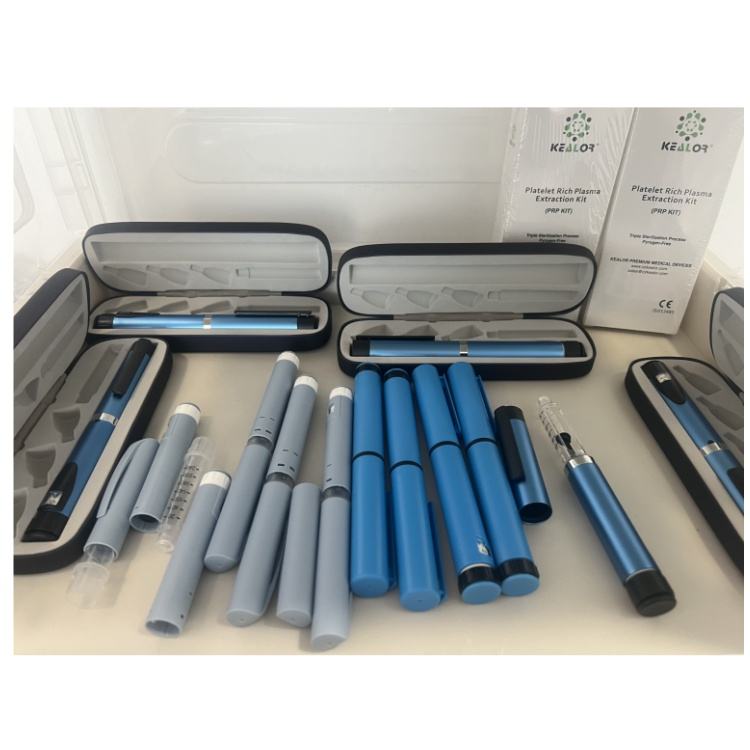
Before you start injecting anything, you need to understand the tool in your hand.
A peptide pen isn’t magic—it’s a precision delivery system. And like any tool, misuse leads to problems.
Component | Function | Why It Matters |
|---|---|---|
Cartridge/Vial Chamber | Holds reconstituted peptide | Stability and sterility depend on proper storage |
Dose Dial | Sets exact dose | This is where precision lives |
Plunger Mechanism | Pushes peptide during injection | Ensures consistent delivery |
Needle Tip | Delivers peptide subcutaneously | Affects comfort and absorption |
Click System | Audible/tactile feedback | Helps prevent dosing errors |
Let’s be blunt:
Syringes are cheaper but less precise
Peptide pens are more expensive but more reliable
Think of it like this:
Syringe = manual transmission car (requires skill)
Pen = automatic transmission (consistent, easier)
A peptide pen doesn’t eliminate errors—it reduces them.
If you:
Miscalculate concentration
Load incorrectly
Ignore calibration
…you can still mess things up.
So yes, peptide pens are better, faster, and more consistent—but only when paired with correct technique.
Before every injection, you need a ritual. Not optional. Not “when you remember.”
A checklist is your safety net.
Ask yourself:
How many mg in the vial?
How much bacteriostatic water did you add?
If you don’t know this, stop immediately.
Example:
5 mg peptide + 2 mL water = 2.5 mg/mL
Your pen dose must match this concentration.
Look closely:
Clear? Good.
Cloudy? Problem.
Particles? Discard.
Compared to fresh solution, degraded peptides are less effective and potentially unsafe.
Priming removes air bubbles.
Why does this matter?
Because air ≠ peptide.
Skipping this step means your “dose” might be partially air—less accurate, less effective.
Double-check the dial.
Then check it again.
Most dosing mistakes happen here—not during injection.
Common areas:
Abdomen (most popular)
Thigh
Upper arm
Compared to intramuscular injections, subcutaneous delivery is:
Less painful
Safer
More consistent for peptides
Let’s talk about something most guides ignore: timing.
After pressing the injection button:
Hold the pen in place for at least 3 seconds before removing it.
Sounds simple, right?
But this tiny habit can dramatically improve dosing accuracy.
When you inject:
The plunger pushes fluid forward
But tissue resistance slows delivery
If you pull out too quickly:
Some peptide leaks out
Your actual dose becomes less than intended
Technique | Result |
|---|---|
Immediate withdrawal | Incomplete dose |
3-second hold | Full, accurate delivery |
Don’t wiggle the pen.
Think of it like planting a flag—firm, stable, controlled.

Ever had that feeling?
You’re doing everything right… but results aren’t matching expectations.
Before blaming the peptide, check your pen calibration.
Results suddenly weaker
Side effects increase unexpectedly
Dose feels inconsistent day-to-day
Calibration ensures:
The dose dial = actual delivered dose
Dispense a test dose into a sterile container
Measure volume using a calibrated syringe
Compare expected vs actual
If they don’t match:
Your pen may need adjustment
Or replacement
Ignoring calibration problems leads to:
Wasted peptides (expensive!)
Inconsistent results
Increased risk of side effects
Fixing it early is cheaper, smarter, and safer.
If you’re serious about peptide therapy, you don’t settle for “good enough.” You optimize.
Here are some next-level techniques.
Peptides are fragile.
Compared to room temperature storage:
Refrigeration = more stable, longer-lasting
Heat exposure = faster degradation
Why?
Repeated injections in the same spot can:
Reduce absorption efficiency
Cause irritation
Rotation = better consistency + healthier tissue
Use a log:
Dose
Time
Site
Effects
Compared to guessing, tracking gives you:
Faster optimization
Better results
Clear patterns
Instead of large jumps:
Adjust in small increments
Why?
Peptides respond better to precision tuning, not aggressive changes.
Let’s talk about costly errors—the ones that waste money, time, and progress.
This is the big one.
If your math is wrong:
Every dose is wrong.
Fix:
Recalculate concentration and start fresh.
Air bubbles = inaccurate dosing.
Fix:
Always prime before injecting.
“I’ve done this before, I don’t need to check.”
That mindset leads to:
Missed steps
Incorrect dosing
Poor outcomes
Fix:
Use a checklist—every time.
Let’s simplify everything into a repeatable system:
Measure with intent – Know your concentration and dose exactly
Inject with discipline – Use the 3-second rule and proper technique
Track and adjust – Let data guide your optimization
That’s it.
Peptide therapy isn’t about guessing—it’s about controlled precision.
Master that, and you unlock its full potential.

Question | Answer |
|---|---|
What is a peptide pen? | A peptide pen is a precision injection device designed to deliver controlled doses of peptides more accurately compared to traditional syringes. |
Are peptide pens better than syringes? | Yes, peptide pens are generally better because they are more precise, easier to use, and reduce dosing errors. However, they are more expensive. |
How accurate is a peptide pen? | When used correctly, peptide pens are highly accurate due to their calibrated dosing mechanism and click-based system. |
Can peptide pens malfunction? | Yes, like any device, they can become inaccurate over time. Regular calibration checks are recommended. |
Do I need to refrigerate my peptide pen? | Yes, most peptides should be stored in the refrigerator to maintain stability and effectiveness. |
What happens if I inject the wrong dose? | Underdosing may reduce effectiveness, while overdosing can cause side effects like fatigue, nausea, or water retention. |
Is injection painful? | Compared to intramuscular injections, peptide pen injections are less painful because they are subcutaneous and use fine needles. |
How often should I change injection sites? | Rotate sites regularly to avoid irritation and ensure consistent absorption. |
Can beginners use peptide pens? | Yes, peptide pens are actually better for beginners because they are easier and more consistent compared to syringes. |
What’s the biggest mistake to avoid? | Incorrect reconstitution and dosing miscalculations—these can affect every injection you take. |


