
Views: 0 Author: Site Editor Publish Time: 2026-11-17 Origin: Site


You'd think it would be simple, right? You've got this incredibly pure, potent steroid powder sitting in a jar. You mix it with some liquid, pop it into a vial or a sleek peptide pen, and boom—you've got a finished pharmaceutical product ready for the market. It sounds like a straightforward recipe, doesn't it? Like making a simple syrup for your morning coffee. But here's the thing: that perception is not just wrong; it's dangerously misleading. The journey from a raw steroid powder to a finished, reliable, and safe injectable or pen device is less like following a simple recipe and more like orchestrating a symphony orchestra where every single instrument—from the raw materials to the final packaging—has to be perfectly in tune. A single note off-key, and the entire performance is compromised.
This "powder-to-pen" journey is a fascinating, frustrating, and deeply complex saga of science, engineering, and regulatory hurdles. We're talking about a molecule, a steroid powder, that is often incredibly powerful, where micrograms can make a world of difference. The transformation of this raw, crystalline substance into a stable, sterile, and precisely dosed product is a gauntlet of challenges. Each step is a potential failure point, a puzzle waiting to be solved.
Think of it like this: you can't just take a high-quality ingredient like a prime cut of Wagyu beef and expect a Michelin-star meal if you don't know how to cook it, what pan to use, or how to plate it. The ingredient is crucial, but the process is king. In pharmaceuticals, particularly with something as potent as steroid powders, the process isn't just king—it's the entire kingdom, the laws, and the very fabric of its reality. The challenges are immense, often underestimated, and they can make the difference between a life-saving therapy and a costly, ineffective, or even dangerous product. The journey is harder, more expensive, and far more intricate than a simple glance at the raw powder would suggest.
This article is your guide through that gauntlet. We're going to pull back the curtain and explore the seven major challenges that define the powder-to-pen revolution, comparing the classic injectable vial with the more modern peptide pen. We'll uncover the myths, highlight the costly oversights, and give you a realistic, no-nonsense view of what it truly takes to bring a steroid powder product from a batch record to a patient's hands. Let's dive in.

Before you can even dream of a finished product, you have to fall in love with your starting material. And with steroid powders, that love affair begins with obsessive, meticulous characterization. You can't build a skyscraper on a foundation of sand, and you can't build a reliable pharmaceutical on a mysterious, variable raw material. This first challenge is all about knowing your powder inside and out, from its chemical identity to its physical properties.
First off, "steroid powder" is a deceptively simple term. It's like saying "flour." Is it bread flour, cake flour, all-purpose, or a gluten-free blend? The behavior of each is wildly different. Similarly, steroid powders can exist in different crystalline forms, or "polymorphs." A polymorph is a solid material with the same chemical formula but a different internal crystal lattice structure. Why does this matter? Because different polymorphs can have vastly different solubility rates, stability profiles, and even biological activity. One polymorph might dissolve instantly and be a dream to work with, while another might be stubbornly insoluble and prone to degradation. If your supplier doesn't consistently provide the same polymorph every single time, your entire manufacturing process could collapse. You might need to revalidate your dissolution methods, adjust your formulation, and re-run stability studies—a nightmare that translates directly into lost time and massive expense.
Furthermore, the purity of the steroid powder is paramount. You're not just looking for 99% purity; you're looking for the right 99%. The 1% of impurities can be a complex cocktail of related substances, synthetic by-products, residual solvents, and inorganic contaminants. Each of these impurities has its own toxicity profile and can interact with the active ingredient or the excipients in your formulation. The phrase "source consistency" is the holy grail here. Your supplier's manufacturing process, their sourcing of precursors, and their purification methods must be locked down and monitored. You need a detailed Certificate of Analysis (CoA) for every batch, but you also need to trust—and verify—that the CoA accurately reflects the batch. A cheap powder from an unknown source is not a bargain; it's a massive liability that can lead to a failed batch, a product recall, or, worse, harm to a patient.
Let's zoom in on another physical property: particle size. Imagine two jars of sugar. One is filled with coarse, sparkling crystals, and the other with fine, powdery confectioner's sugar. If you try to dissolve a spoonful of each into water, which dissolves faster? The fine powder, obviously, because it has a much greater surface area for the water to interact with. The same principle applies to steroid powders. The particle size distribution (PSD) of your raw powder is a critical parameter. A smaller, more uniform particle size will generally lead to better and faster solubility, which is crucial for injectables. However, it can also lead to agglomeration (clumping), which makes it harder to disperse uniformly. Certain manufacturing processes, like micronization, are used to reduce particle size, but they can also introduce amorphous regions or even change the polymorphic form, creating new challenges for stability.
So, you see, the first challenge isn't just about buying a chemical. It's about establishing a deep, ongoing relationship with a supplier who provides a consistent, well-characterized raw material. You're not just a customer; you're a partner in quality. You need a full suite of analytical data—HPLC for purity, GC for residual solvents, XRD for polymorph identification, and PSD analysis for particle size. If any of these are a mystery, your entire "powder-to-pen" journey is built on a foundation of uncertainty, doomed to crumble at the first sign of trouble. This step is more expensive and time-consuming than simply ordering a product, but it's the only way to build a stable and reliable product.
Alright, you've got your beautifully characterized, pure, and consistent steroid powder. Congratulations! Now the real fun begins. You need to turn that solid into a stable, injectable liquid. This is where the twin specters of solubility and suspension come into play, and mastering them is a delicate dance of chemistry and physics.
For an injectable, you typically have two paths: a solution or a suspension. A solution is like making a perfect cup of tea—the active ingredient (the tea bag) completely dissolves into the solvent (the water), creating a clear, single-phase liquid. A suspension is more like making a vinaigrette or a well-shaken bottle of salad dressing—the active ingredient (the oil) is dispersed as tiny particles throughout the solvent (the vinegar), but it's not dissolved.
The path you choose has profound implications. Solutions are generally preferred because they are easier to sterilize (you can filter sterilize a clear liquid), and the drug is immediately bioavailable upon injection. However, many steroid powders are highly hydrophobic (water-repelling), meaning they just won't dissolve in water alone. You need a co-solvent, a surfactant, or a more complex formulation to coax them into a solution. This is where the magic of formulation science comes in. You might use a mixture of water, ethanol, and propylene glycol, for example, to find the perfect balance that dissolves the powder. But every excipient you add introduces a new variable. Will the solution be stable over time? Will it be too viscous to inject? Will it be irritating to the tissue?
If a solution isn't feasible, you must create a suspension. This is arguably even more difficult. The goal is to have the steroid powder particles remain uniformly suspended in the liquid so that every single injection from the vial or pen delivers the exact same dose. But as we all know, if you leave that vinaigrette on the counter, the oil and vinegar will separate. The same happens with a pharmaceutical suspension. The particles, if they are not properly controlled, will settle at the bottom, leading to a phenomenon called "caking." Once a cake forms, shaking it might not redisperse the particles into a uniform mixture. You could be injecting a dose that is far too low, followed later by a dose that is dangerously high.
To prevent this, formulators add suspending agents (like carboxymethylcellulose or polysorbate) to increase the viscosity of the liquid and slow down the settling rate. But even then, you're fighting a constant battle. This is where homogeneity becomes the ultimate goal. It means that every single vial or pen from your batch is identical in potency, and that each dose within that vial is also identical. In comparison to a solution, a suspension is more complex to manufacture, more difficult to analyze, and generally more challenging to deliver reliably, especially in a multi-dose device like a pen. The formulation is a high-stakes balancing act where the wrong choice can make the difference between a smooth, effective injection and a painful, ineffective one.
You've formulated your liquid—either a clear, elegant solution or a uniformly milky suspension. Now, it must be sterile. This isn't just a good idea; it's an absolute, non-negotiable regulatory requirement for any injectable product. Sterility assurance is the process of ensuring that the product is free from all living microorganisms (bacteria, fungi, etc.). A failure here is catastrophic, leading to severe infections, sepsis, and potentially even death. This challenge is where the stakes are highest.
The most common method for sterilizing a liquid injectable is sterile filtration. The idea is simple: the product is passed through a filter with a pore size of 0.22 microns (a micron is one-millionth of a meter). The pores are so small that most bacteria cannot pass through. It sounds foolproof, doesn't it? But it's not as simple as it sounds, and there are several critical caveats.
First, not all solutions can be sterile-filtered. A suspension, for example, has particles that are often larger than 0.22 microns. If you try to filter a suspension, you will likely clog the filter and filter out all of your active ingredient, leaving you with a sterile but useless liquid. For these products, terminal sterilization in an autoclave (using high-pressure steam) is required. But wait—is your steroid powder heat-stable? Many steroids will degrade or change their polymorphic form when exposed to high heat, making this a non-starter. So, you're left with a complex problem: aseptic processing, where each individual component is sterilized separately and then all the components are assembled in a meticulously controlled environment. This is much more expensive, more time-consuming, and more prone to human error compared to simple filtration.
And let's not forget particulate control. Have you ever noticed a tiny fleck of dust floating in a syringe? That's a particulate. In a pharmaceutical injectable, particulates are a serious problem. They can cause allergic reactions, block blood vessels, or cause inflammation in the tissue. These particulates can come from the raw materials, from the manufacturing equipment, from the filters themselves, or from the container closure system. A critical part of the challenge is ensuring that your product meets strict limits for visible and sub-visible particulates. For a multi-dose pen, the risk is even higher, as the needle is used multiple times, increasing the chance for the introduction of particulates and microbes. The process must be robust enough to deliver a product that is not only sterile but also visually and microscopically clean, every single time.
So, you've got a sterile, homogeneous injectable that is free of particulates. But what happens a month from now? Or a year? Or two years? This brings us to the challenge of stability. A pharmaceutical product must remain stable and potent until its expiry date. For steroid powders, this is often a monumental task. The very chemical structure that makes them so potent can also make them fragile.
Stability is a cruel mistress. It refers to the product's ability to resist degradation from a host of environmental factors. The major culprits are temperature, light, oxygen, and moisture. Many steroid powders, especially when in a liquid formulation, are susceptible to hydrolysis (a reaction with water), oxidation (a reaction with oxygen), and photodegradation (a reaction with light). You might have a perfectly good batch today, but if you don't control these factors, you could have a batch full of toxic degradation products next month.
Degradation is not just about the active ingredient losing potency. In many cases, the degradation products themselves are toxic or have different biological effects. For example, a common degradation product of some steroids is a related substance that can cause allergic reactions. This is why regulatory agencies require extensive stability studies. You can't just make a product and say "it's good for a year." You must prove it.
This involves storing your product in its final container under various conditions—at room temperature, in a hot climate (like a simulated desert), and in a humid climate (like a simulated rainforest)—for extended periods. At regular intervals (e.g., 0, 3, 6, 12, 24 months), you test the product for potency, purity, pH, and other critical quality attributes. This is expensive and time-consuming, but it's non-negotiable. This is where the comparison between vials and pens becomes interesting. A vial is a simple, sealed container. A peptide pen has a complex device with many moving parts, each of which can introduce new stability risks. The silicone oil on the rubber seal, the plastic components, and the potential for air leakage can all contribute to degradation. Making a stable vial is one thing; making a stable pen is a much harder, more expensive, and longer process.
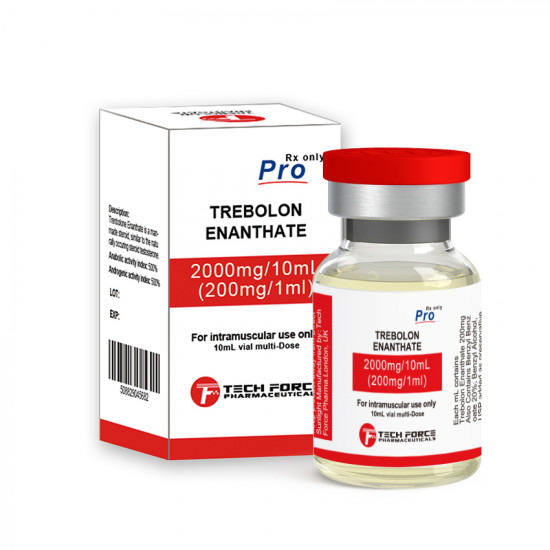
You might think the container is just the box you put your product in. But in the world of pharmaceuticals, the container and closure system (e.g., the vial and its rubber stopper, or the pen and its cartridge) are an integral part of the product. They are not inert bystanders. In fact, they can interact with the drug in ways that can profoundly affect its quality and safety. This is the challenge of extractables and leachables.
Think of your container closure system like a tea bag. When you steep a tea bag in hot water, you're not just getting tea. You're getting flavor, color, and subtle compounds from the tea leaves. Similarly, the rubber stoppers, the silicone oil on the plunger, the plastic of the pen cartridge, and the adhesive used to assemble it are all made of complex chemical mixtures. When they are in contact with your formulation, especially over a long period, chemical compounds from these materials can "extract" into your product.
Some of these are "extractables"—compounds that can be pulled out of the material under extreme conditions in a lab. Others are "leachables"—compounds that actually do migrate into the drug product under normal storage conditions over time. These leachables can come from the rubber, the plastic, the oil, or even the ink on the label. This is a big deal. A leachable compound might be toxic, or it might be an organic compound that interacts with your steroid powder, causing it to degrade. It might also cause a visible change in the product, like a color shift, or it might form particles.
This challenge is particularly relevant when comparing a simple vial to a complex pen. A standard vial with a simple rubber stopper has a relatively small surface area of contact. A peptide pen, however, is a miniaturized chemistry lab. It has multiple plastic components, a rubber plunger, and silicone oil, all of which have a large surface area in contact with the drug. The potential for leachables is far greater, making the analytical testing for a pen far more extensive and expensive compared to a vial. You need to carefully screen your container materials, test for extractables, and conduct long-term leachables studies to ensure the product remains safe and pure throughout its entire shelf life.
The shift from a traditional injectable vial to a peptide pen is a game-changer for patient convenience. It's like moving from a clunky, desktop computer with a separate mouse and keyboard to a sleek, all-in-one laptop. But this convenience comes at a cost. The pen is a complex medical device, and integrating a drug into it creates a whole new universe of challenges.
The main advantage of a peptide pen is its elegance and ease of use. Instead of drawing a dose from a vial with a needle and syringe—a process that can be intimidating and error-prone—the patient simply dials a dose and injects it. It’s faster, more discreet, and often more accurate. But this functionality is built on a mountain of complex engineering. The pen's mechanism must deliver an incredibly precise volume of the drug. This means the drug formulation must have the right viscosity; too thick, and the pen's spring-loaded mechanism might fail; too thin, and it might leak.
The pen's inner workings—the plunger, the screw drive, the cartridge—all need to be perfectly compatible with the drug. The silicone oil used to lubricate the plunger is a critical point of interaction. Does it degrade the steroid? Does the steroid dissolve into the oil, changing the concentration? The plastic of the cartridge can absorb the drug or its preservatives, or it can leach its own components into the product. This is a much more intimate and complex relationship than a simple vial. The vial, in comparison, is a passive container. The pen is an active participant in the drug's life.
Furthermore, the pen introduces a new dimension of risk: user error. Does the user know when the pen is empty? What if the dose dialing mechanism fails? What if the needle gets blocked? The device must be robust enough to withstand the rigors of daily use and even abuse. The cost and time required to develop and validate a pen are significantly more expensive than for a vial. The regulatory pathway is more complex, requiring medical device approvals in addition to drug approvals. This means that while a pen is more convenient and better for patient compliance, it is also far more challenging and costly to develop. The final product might be more elegant, but the journey to get there is definitely more arduous.
You've made it through the science. Now you have to face the bureaucracy. You cannot just claim your product is safe, effective, and high-quality. You must prove it, with overwhelming, meticulously documented scientific evidence. This is the world of analytical methods, scale-up, and regulatory filings.
Let's say you've perfected your formula in a small, one-liter lab beaker. Everyone is happy. Now, you need to make it in a 10,000-liter vat. This process, called scale-up, is not just a matter of multiplying all the ingredients by 10,000. It's a science in itself. The mixing dynamics change. A small stir bar is very different from a giant impeller. The heat transfer is different. The time it takes to dissolve a steroid powder in a giant vat might be hours longer than in a beaker, and you need to ensure that the powder isn't degrading while it's waiting to dissolve.
Your analytical methods also need to be validated. The HPLC method you used to measure the purity of your small batch must be proven to work for your large batch. It must be robust, accurate, and precise. You need to develop and validate methods for every single quality attribute: potency, purity, identity, pH, osmolality, particulate matter, sterility, and more. Each method validation is a costly and time-consuming project in itself.
All of this data—from raw material testing to stability studies to manufacturing records—is then compiled into a massive regulatory dossier, which could be tens of thousands of pages long. This dossier is submitted to regulatory agencies like the FDA or EMA, who will scrutinize every single detail. They will audit your manufacturing facility. They will inspect your data. If there is a single piece of missing evidence, or a single inconsistency, the entire application could be delayed or rejected. The cost of this regulatory process is staggering, often running into millions of dollars.
To make things clearer, let's put the challenges of a traditional injectable vial and a modern peptide pen side-by-side. This isn't about which one is "better"—that depends entirely on the drug and the patient population—but rather a map of the specific complexities each path entails.
Let’s break down the challenges into a comparative table so you can see the relative difficulty and specific hurdles for each delivery method.
Challenge Area | Injectable Vial (Classic) | Peptide Pen (Modern) |
|---|---|---|
Raw Materials | Same challenge: requires high purity, consistent polymorph and particle size. | Same challenge: identical requirements for raw steroid powder. |
Formulation | Solutions are easier; suspensions are common but challenging for homogeneity. | Solutions are heavily preferred for pens; a suspension can clog the device. Formulation must be perfectly tailored to the pen's mechanism. |
Sterility | Simple filter sterilization for solutions; aseptic processing for suspensions. | More complex; the device itself must be sterilized and assembled aseptically. Final product cannot be terminally sterilized. |
Stability | Potential for leachables from the vial/stopper. Shelf life is a factor. | More complex. Pen has many components (plastics, rubber, silicone oil, metal) that can interact with the drug. Greater surface area for leachables. |
Container Closure | Relatively simple. Test for extractables/leachables from the rubber stopper and glass. | More complex. Testing must cover all device components, including the cartridge, plunger, and silicone oil, plus the needle/container interface. |
Device Integration | Not applicable. The vial is a passive container. | The main challenge. Requires complex engineering to ensure the device accurately and reliably delivers the dose. Viscosity must be in a specific range. |
Scale-Up & Regulatory | Challenging but well-understood pathway. | More expensive and complex. Requires both drug and medical device regulatory submissions. Scale-up involves assembly of a device, not just a liquid. |
Patient Use | Requires training and can be intimidating. Slower and more cumbersome. | Better for patient compliance. Faster and more discreet. More user-friendly. |
Cost | Generally less expensive to develop and manufacture. | More expensive to develop and manufacture. Higher cost per unit. |
In the world of pharmaceuticals, misinformation can be a death sentence for a project. Let's bust some common myths about steroid powders and the powder-to-pen journey.
This is the most dangerous myth of all. A 99% pure powder is just a starting point. It says nothing about the 1% of impurities, the polymorphic form, the particle size, or the physical characteristics. A pure, but wrong polymorph can be useless. A pure powder with an inconsistent particle size can lead to a failed batch. Quality is built on a foundation of deep characterization, not just a simple purity number.
This is often not true. Forcing a hydrophobic steroid into a simple aqueous solution may require a complex cocktail of co-solvents and surfactants that can cause irritation or stability issues. This can make the formulation more expensive and problematic than developing a well-designed suspension. Formulators must always balance the elegance of a solution with the practical realities of stability and tolerability.
Regulatory agencies don't provide a recipe book. They provide a framework of guidelines and expect you to have the scientific expertise to build the evidence yourself. It is your responsibility to develop a robust, validated analytical method. It is your responsibility to prove the stability of your product. If you go to the regulator with incomplete data or a flawed scientific rationale, they will not fill in the blanks for you; they will send you back to the drawing board.
Many startups focus all their energy on the drug formulation and treat the container as an afterthought. They choose a cheap vial or a generic pen, only to find months later that leachables from the container have ruined their product. It is crucial to engage with container suppliers early and to perform extractable and leachable testing on all components that will contact the drug.
A brilliant formulation in a one-liter beaker is a long way from a 10,000-liter production batch. If you try to scale up without investing in process engineering and analytical method validation, you will likely fail. The cost of a failed manufacturing campaign, wasted raw materials, and lost time is far greater than the cost of doing it right the first time.
Formulators often focus solely on the chemical stability of the steroid, but its physical properties are just as important. If the powder agglomerates, it can't be uniformly suspended. If it has a poor particle size distribution, it can't be sterile-filtered. Physical characterization—particle size, shape, surface properties, and flowability—is not an optional extra; it is a core requirement.
So, where is this all heading? The future of steroid delivery is bright, but it's a future built on a deeper understanding of these intricate challenges.
One of the most exciting trends is the rise of continuous manufacturing. Instead of making products in massive batches, a continuous process runs non-stop, with raw materials going in one end and the finished product coming out the other. This approach offers potentially better control, faster production, and greater flexibility. However, it also places extreme demands on process analytical technology (PAT)—real-time sensors that can monitor the product quality at every second. This is a more expensive initial investment but could ultimately be a stronger and more reliable way to manufacture.
Another trend is the development of more sophisticated, user-friendly delivery devices. We're moving beyond simple pens to devices that are more like smart medical gadgets. They might have Bluetooth connectivity to track adherence, or they might use a micro-needle array for virtually painless injections. These devices will require even more seamless integration of drug and device, making the challenges of extractables, leachables, and device compatibility even more acute.
If you are involved in the development of a steroid powder product, here are some key takeaways to keep you on the right path:
Start with the Raw Material, and Never Stop. Your relationship with your raw material supplier is the foundation of your product's quality. Demand full analytical data for every batch and verify it. Don't just buy a chemical; buy a relationship built on consistency and transparency.
Embrace the Physical Science. Don't just be a chemist. Be a physicist. Understand the polymorphic form, particle size, and surface properties of your powder. These physical properties dictate how it behaves in your formulation and in the body.
Choose Your Container Carefully. The container is not a passive bystander. Engage with your supplier early and test for extractables and leachables from every single component that will contact your drug. A cheap container is a false economy.
Don't Fear the Suspension. If your drug is hydrophobic, a well-designed suspension is often the better and more stable option compared to a complex, irritating solution. Be prepared to invest in the complex science of creating and testing a truly homogeneous suspension.
Plan Your Regulatory Strategy from Day One. The regulatory process is long and expensive. Don't treat it as an afterthought. Develop a robust analytical package, plan your stability studies early, and make sure your manufacturing process is scalable and validated from the start.
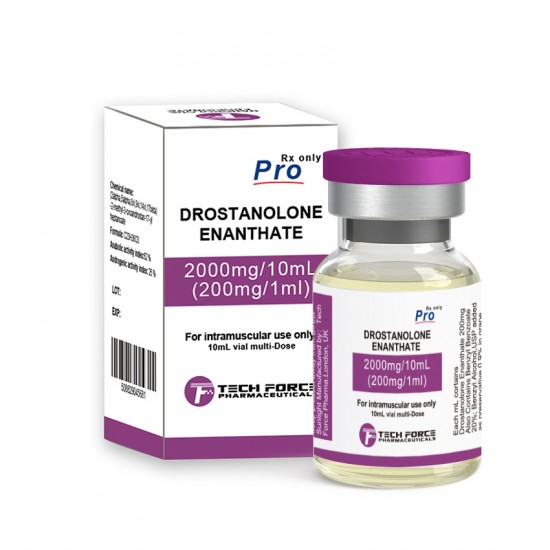
The journey from a steroid powder to a final, sterile, and reliable product is one of the most complex and fascinating narratives in modern medicine. It's a story of meticulous characterization, elegant formulation, and unwavering quality control. It is a far cry from the simple, easy path one might imagine. The challenges—from ensuring raw material consistency and mastering the physics of solubility to guaranteeing sterility and proving long-term stability—are formidable.
The choice between an injectable vial and a peptide pen is not merely a choice of convenience; it is a choice of a different development pathway with its own unique set of hurdles. The pen offers a better, faster, and more user-friendly experience for the patient, but it is significantly more expensive and complex to develop, requiring a deep understanding of both pharmaceutical science and medical device engineering.
Ultimately, success in this field lies in recognizing that the process is king. By embracing the complexities, investing in thorough characterization, and relying on a strong scientific foundation, you can navigate the gauntlet and bring a life-changing product from the powder to the patient. It's not an easy journey, but it's one that is essential for the delivery of safe and effective therapies to the people who need them.
Here are some of the most frequently asked questions about steroid powders and their journey to a final product.
Question | Answer |
|---|---|
What are steroid powders? | Steroid powders are the raw, chemically pure forms of steroid compounds, typically synthesized in a laboratory. They are the starting material for creating finished pharmaceutical products, such as injectables, creams, or oral medications. |
Can I use raw steroid powder to make my own injectables at home? | Absolutely not. This is extremely dangerous and illegal. You cannot guarantee sterility, purity, or accurate dosing at home. The process requires specialized equipment, analytical testing, and a sterile environment. Doing so risks severe health consequences, including infection, toxicity, and overdose. |
What is the difference between a "solution" and a "suspension" injectable? | A solution is a clear liquid where the steroid powder is completely dissolved. A suspension is a liquid where the powder particles are dispersed but not dissolved, requiring shaking before use to ensure an even dose. |
Why is the "polymorphic form" of a steroid powder so important? | Different polymorphs have the same chemical formula but different crystal structures. This can affect their solubility, stability, and how well the body absorbs them. Using the wrong polymorph can render the final product unstable or ineffective. |
What are "leachables" from a container? | Leachables are chemical compounds that migrate from the container or closure (e.g., a rubber stopper or plastic pen cartridge) into the drug product over time. They can impact the drug's stability and safety. |
Are peptide pens less stable than injectable vials? | Generally, yes. A pen is a complex device with more components (plastics, rubber, silicone oil, metal) that can interact with the drug. The potential for leachables and compatibility issues is greater, requiring more extensive testing and a more complex regulatory pathway. |
Why is the raw material source so critical? | The source of the raw material dictates its purity, impurity profile, and physical properties (like polymorph and particle size). Inconsistency from a supplier will lead to inconsistent final product, requiring you to constantly revalidate your process and risk failure. |
What is "scale-up" in manufacturing? | Scale-up is the process of transitioning a manufacturing process from a small, lab-scale to a large, commercial-scale. It is a complex engineering challenge that can introduce new problems with mixing, temperature control, and process timing that didn't exist in a small beaker. |
本回答由 AI 生成,内容仅供参考,请仔细甄别


