
Views: 0 Author: Site Editor Publish Time: 2026-08-06 Origin: Site


Imagine standing at the edge of a frontier town in 1849, pickaxe in hand, the smell of possibility in the air. Now fast-forward to 2026, replace the dusty claim stakes with sterile vials of lyophilized powder, and you’ve just found yourself in the middle of the peptide gold rush. But here’s the twist that nobody’s shouting about from the rooftops yet — your pickaxe isn’t the peptide itself. It’s the pen you use to inject it. And just like the prospectors who showed up with rusty shovels and went home empty-handed, the difference between a breakthrough cycle and a catastrophic waste of money boils down to one decision: choosing the right peptide pen supplier.
You’ve probably spent hours researching which peptide sequence does what — BPC-157 for healing, Semaglutide for metabolic reset, AOD9604 for stubborn fat, Melanotan II for that summer-long glow. You’ve compared purity reports, agonized over third-party COAs, maybe even learned more about lyophilization than you ever wanted to know. Yet when it comes to the device that actually delivers those delicate chains of amino acids into your system, most people click “buy” on the cheapest option that pops up in a marketplace search. And that, my friend, is like assembling a Formula 1 engine and then pouring fuel through a leaky garden hose.
This guide is your map to the 2026 landscape of peptide pen suppliers. I’m not here to sell you a particular brand or drop affiliate links disguised as advice. I’m here because I’ve seen too many smart, meticulous biohackers and researchers get burned by a flimsy injection device that leaked, jammed, or delivered wildly inaccurate doses. We’ll dive deep into why the peptide world has shifted from “alternative” to unavoidable mainstream, why the pen is genuinely mightier than the molecule inside it, what makes a supplier worth trusting in a market flooded with drop-shippers, and why waiting even a few months could cost you more than just money. By the time you finish reading, you’ll be able to evaluate a peptide pen supplier with the precision of a mass spectrometer — and you’ll know exactly why the ink on this gold rush is far from dry.

Cast your mind back just five years. Peptide therapeutics occupied a cozy, slightly eccentric corner of the pharmaceutical world. They were the domain of niche anti-aging clinics, fringe biohacking forums, and a handful of cutting-edge researchers who had to defend their funding against skeptics muttering about bioavailability and short half-lives. In 2026, that landscape has been bulldozed and rebuilt. Peptides aren’t knocking on the mainstream door anymore; they’ve kicked it down and made themselves comfortable on the couch.
The global peptide therapeutics market, which was already flexing at over $45 billion in 2024 according to industry analysts at Grand View Research, is now barreling toward $70 billion before the decade closes. That’s not just growth; it’s a fundamental shift in how we think about molecular intervention. Big Pharma, which once viewed peptides as finicky prima donnas compared to stable small-molecule drugs, is now pouring billions into peptide platforms. The GLP-1 receptor agonist class alone — think semaglutide and tirzepatide — has reshaped the diabetes and obesity treatment landscape so thoroughly that it’s triggered supply chain emergencies and sent Big Food companies scrambling to reformulate snack portfolios. When a peptide can move the stock price of a multinational conglomerate, you know the alternative label has expired.
What’s fascinating is how the regulatory pendulum has swung alongside cultural acceptance. In 2023 and 2024, the FDA approved a record number of new peptide-based drugs — more than a dozen in a single year by some counts — covering everything from rare metabolic disorders to chronic pain. The agency has streamlined approval pathways for certain peptide classes, recognizing that the old playbook designed for chemically synthesized small molecules doesn’t quite fit these complex chains of amino acids. Meanwhile, compounding pharmacies have stepped aggressively into the peptide space, creating a gray-but-not-entirely-black market where patients can access therapies that are technically off-label but supported by a growing mountain of anecdotal and small-clinical-trial evidence.
This regulatory flux creates both opportunity and chaos. On one hand, you have legitimate peptide companies running proper stability studies, investing in cold-chain logistics, and publishing real pharmacokinetic data. On the other hand, you have fly-by-night operations mixing peptides in non-sterile conditions, slapping a label on a vial, and selling through social media channels that vanish when complaints pile up. The common thread connecting both ends of this spectrum is the delivery device. Whether you’re injecting FDA-approved semaglutide from a name-brand pharmacy or reconstituting research-grade BPC-157 in your home lab, you’re relying on a pen to get that peptide from the cartridge into your subcutaneous tissue. And that’s precisely why the conversation about peptide pen suppliers has moved from “nice to know” to “existentially important.”
Remember when biohacking meant taking cold showers and drinking butter-laced coffee? In 2026, the biohacker with a $200 monthly peptide budget isn’t an outlier; they’re the norm in certain demographic slices. Executives, athletes, longevity enthusiasts, and even soccer moms curious about NAD+ restoration are now comfortable reading PubMed abstracts and reconstituting lyophilized peptides. This democratization of access is genuinely exciting. It’s also terrifying when you realize that many people who can confidently explain the difference between CJC-1295 with and without DAC have never been trained on proper injection technique, let alone on how to evaluate whether their injection pen is sterile, accurate, and mechanically sound.
The consumerization of peptides means that the market for injection pens has exploded far beyond the medical supply companies that traditionally served diabetes patients. Online marketplaces are now awash with devices labeled as “peptide pens” or “insulin pen compatible for peptides” at price points that seem too good to be true. Spoiler alert: many of them are. The peptide pen supplier you choose is now as critical a decision as the peptide source itself, because a pen that doses inaccurately can render even the purest peptide either useless or dangerous.
Let’s get visceral for a moment. Imagine you’ve spent $300 on a 10 mg vial of a cutting-edge peptide that took you three weeks to source from a supplier you vetted through six different forums. You reconstitute it carefully with bacteriostatic water, calculate your mcg per IU with the focus of a bomb disposal expert, and load your pen cartridge. You dial up what you think is 250 mcg, press the button, and… the pen delivers 180 mcg because the internal mechanism has a variance of nearly 30%. Or, worse, it delivers 400 mcg and you spend the next three hours in a cold sweat, wondering if you’ve just triggered a systemic reaction that’ll land you in the ER.
This isn’t hypothetical fear-mongering. Cheaper peptide pens often use injection-molded plastic components with tolerances that would make an engineer weep. The click mechanism that you trust to advance the plunger by a precise distance can stick, skip, or compress unevenly, especially after a few uses when friction wear starts to take its toll. A high-quality peptide pen supplier engineers their devices with dosing increments as fine as 0.01 mL and backs those specifications with real calibration testing, not just marketing copy.
Beyond dosing accuracy, there’s the question every researcher should be asking but many don’t: How sterile is the path that the peptide solution travels from cartridge to my body? In a proper medical-grade pen, the fluid pathway is designed to minimize dead space where bacteria could colonize. The materials are selected to resist protein binding so that your expensive peptide doesn’t stick to the inner walls of the cartridge or needle hub. The needle attachment mechanism creates a secure Luer lock or proprietary connection that doesn’t leak or allow retrograde contamination when you’re drawing back to check for blood vessel entry.
When you source from a peptide pen supplier that treats their product as a medical device rather than a commodity widget, you get the benefit of sterilization protocols like ethylene oxide (EtO) gas treatment validated to a sterility assurance level of 10⁻⁶. In plain English, that means the probability of a non-sterile unit is one in a million. The knock-off pens flooding certain platforms? You’re lucky if the factory wiped the components with an alcohol swab before assembly.
A quality reusable peptide pen is designed to last for thousands of injection cycles, with a plunger rod that advances smoothly and a dose dial that clicks with crisp, tactile feedback even after six months of daily use. The internal gearing in premium pens is often made from metal alloys or high-durometer engineered plastics that maintain their pitch and tooth profile under repeated loading. By comparison, a cheap pen’s plastic gears can begin to wear after as few as 50 injections, leading to a phenomenon called “dose creep” where the actual delivered volume gradually drifts away from the dialed dose. You might not notice it for a while, but your peptide cycle certainly will.
Here’s a truth the spreadsheet warriors sometimes miss: a pen that’s lighter, easier to grip, and delivers with less injection force isn’t just a luxury; it’s a compliance multiplier. Peptide protocols often demand multiple daily injections or precise timing around meals and workouts. If your pen feels like a toy that requires a death grip to depress the plunger, you’ll start dreading your injection schedule. Missed doses, rushed injections that hit muscle instead of subcutaneous fat, and sloppy site rotation all degrade your results. A thoughtfully designed pen from a reputable peptide pen supplier can actually make your protocol feel sustainable, even enjoyable, rather than a daily chore.
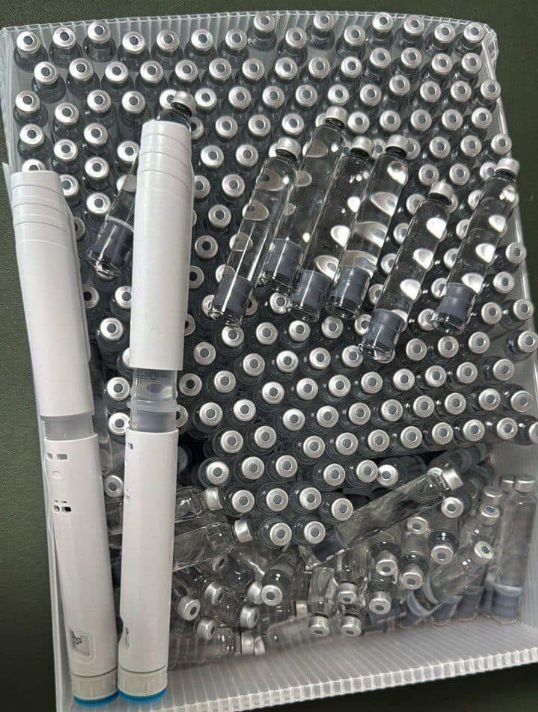
Whenever a market heats up, the counterfeiters follow like sharks to chum. In 2026, the peptide injection space is crawling with devices that look almost identical to the name-brand reusable pens used by diabetes patients. They feature the same color accents, the same general silhouette, and packaging that mimics the medical-branded boxes down to the holographic stickers. Inside, however, the components are a nightmare of substandard plastics, unpolished metal springs that corrode when exposed to humidity, and O-rings that swell in contact with benzyl alcohol preservatives.
I know a researcher — let’s call him Alex — who bought three pens from a no-name Amazon storefront that claimed to be a “peptide pen supplier” with thousands of positive reviews. The pens arrived in sealed boxes that looked legitimate. Alex loaded his first pen with a meticulously prepared solution of a research peptide for a rodent study. On the third injection, the dose dial jammed solid, snapping off in his hand when he tried to free it. Inside, he discovered the gear train had stripped because the tiny plastic cogs were cast with flash — those thin, unwanted bits of plastic left over from the molding process — that interfered with meshing. The pen couldn’t be disassembled to retrieve the remaining peptide solution, so he lost nearly a third of his prepared cartridge. Worse, the failure introduced plastic debris into the drug reservoir, meaning even if he could extract the liquid, it was now contaminated. Total loss: peptide, pen, time, and confidence.
Contaminated peptide pens are a vector for infections that range from local skin abscesses to life-threatening systemic sepsis. The problem isn’t always the pen body itself; it’s often the interface between the cartridge, the needle, and the user’s skin. A poorly machined needle hub may not seat correctly, creating a microscopic gap where skin flora can wick inward. Silicone lubricants used to ease plunger movement can separate from the polymer matrix and form droplets that harbor bacteria if the material is not medical-grade and properly cured.
In 2025, a cluster of Mycobacterium abscessus infections was traced back to a specific lot of aftermarket injection pens sold through an unverified online peptide pen supplier. The pens had been assembled in a facility that also processed animal feed components, leading to cross-contamination. The individuals affected — all of whom were following legitimate wellness protocols — required months of multi-drug antibiotic therapy to clear the hard-to-treat mycobacterial infection. Scars, both physical and psychological, remain.
Let’s talk about what happens when a cheap pen overdoses you. Peptides that modulate growth hormone release, like the GHRP and GHRH classes, have dose-response curves that are not linear. A 50% overdose doesn’t just give you 50% more effect; it can saturate receptors, trigger cortisol spikes, or cause a dangerous drop in blood sugar if the peptide has insulinotropic effects. Melanotan II overdosed by even 20% can lead to severe nausea, facial flushing that lasts hours, and blood pressure swings that make you feel like you’re on a roller coaster you didn’t sign up for.
On the flip side, chronic underdosing due to a pen that consistently delivers less than dialed is an insidious thief of results. You might blame the peptide, switch suppliers, throw away a perfectly good vial, and start a cycle of frustration that costs you months of stalled progress. All because the delivery device you sourced from the cheapest peptide pen supplier couldn’t maintain a calibrated plunger stroke.
When you hold a high-quality pen, the first thing you notice is the tactile presence. The body isn’t slick, brittle, or creaky. It has a subtle, almost velvety grip surface that comes from medical-grade polypropylene or polycarbonate blends formulated to resist degradation from alcohol wipes and common peptide reconstitution solvents. The cartridge housing uses borosilicate glass, not cheap soda-lime glass, to prevent leachables from interacting with your peptide solution over time. A trustworthy peptide pen supplier will openly state their material specifications and, when asked, provide certificates of compliance to USP Class VI or ISO 10993 biocompatibility standards. If the supplier can’t articulate what grade of polymer their pen barrel is made from, that’s a blazing red flag.
In the realm of micro-dosing — think 50 mcg of a potent peptide like IGF-1 LR3 — the difference between a pen that doses in 0.01 mL increments and one that only manages 0.05 mL is the difference between a clean, controllable experiment and a shot in the dark. A premium peptide pen supplier will publish the dosing accuracy specification, typically expressed as a percentage of the dialed dose across the full range of the pen. You want to see numbers like ±1% at full dose and ±3% at the minimum dose. They’ll also explain how the pen handles partial dosing, whether the dial mechanism has a back-turn prevention feature to avoid accidental double-dosing, and how the plunger maintains constant force independent of fill volume.
There’s a world of difference between a pen that’s been wiped down and one that’s been through validated EtO sterilization with a biological indicator challenge. Ask your peptide pen supplier about their sterility assurance methods. Do they process pens in sealed Tyvek pouches with indicator dots that change color? Do they use dosimeters to confirm radiation or gas exposure levels? Do they run post-sterilization endotoxin testing using Limulus amebocyte lysate (LAL) assays? The suppliers who welcome these questions are the ones who understand the stakes. The ones who deflect with “trust me” platitudes should be avoided as if they carry a biohazard sign.
Walk into this trap and you’ll lose a cartridge full of peptide before you even start. Many pens advertise “universal compatibility with standard 3.0 mL cartridges,” but the reality is far more nuanced. Cartridges from different manufacturers can vary by fractions of a millimeter in flange thickness, neck diameter, and plunger material. A reputable peptide pen supplier will provide a detailed compatibility list — not just “3 mL” — and will often include test fixtures or adapter pieces if needed. They’ll also offer guidance on how to properly load the cartridge to avoid air bubbles that can later cause dosing errors. If you’ve ever wrestled with a cartridge that rattles loosely inside the pen body, you’ll appreciate the value of a precision-fitted chamber that holds the glass perfectly concentric with the plunger rod.
This is where the peptide pen supplier separates from the chaff. A supplier worthy of your trust operates with radical transparency. They’ll have batch-specific quality control data available, not just a generic PDF that’s been on their website since 2023. They’ll share photos or videos of their assembly and sterilization environments. They’ll have a traceable lot numbering system on each pen that lets you tie your purchase back to a specific production run. Some of the top suppliers even engage third-party labs to perform random audits on their shipped lots, and they publish those results regardless of whether they’re flawless or reveal a need for corrective action. That kind of honesty takes guts and builds loyalty.
Imagine it’s midnight, you’re about to inject, and your pen’s dose dial suddenly spins freely without engaging the plunger. You have 30 minutes before the peptide’s timing window closes. Can you reach your supplier? The very best peptide pen supplier operations offer emergency support channels — a Signal or Telegram contact, a direct phone line — that recognize your protocol doesn’t run on banker’s hours. Beyond emergencies, they actively maintain knowledge bases with videos on cartridge loading, pen disassembly for cleaning, needle selection, and troubleshooting common mechanical issues. They don’t just sell you a device; they bring you into a community of responsible usage.
Let me paint you a picture of global manufacturing in mid-2026. The micro-molding facilities that produce pen components with tolerances measured in microns are not infinite. They serve multiple industries — medical devices, automotive sensors, aerospace actuators — and they allocate production slots months in advance. As peptide usage surges, the available capacity for consumer-grade reusable pens gets pinched. The peptide pen supplier who could ship you a box of three pens in 48 hours in January might be quoting six-week lead times by September.
I’m already hearing whispers from logistics contacts that raw polymer resin availability is getting tight due to geopolitical shipping route disruptions. Medical-grade polypropylene, the bread-and-butter material of pen bodies, competes with the automotive and consumer electronics sectors for resin supply. When shortages hit, prices don’t climb gently; they spike. A pen that costs $35 today could easily be $55 by Q4, and that’s if you can find one in stock.
Regulatory bodies don’t sleep. The FDA and their international counterparts are watching the peptide injection space with the intensity of hawks eyeing a field of rabbits. Every adverse event report linked to a faulty injection device narrows the window for the current, relatively hands-off approach to consumer peptide pens. There’s already chatter in regulatory circles about requiring injection devices to be cleared through a 510(k) pathway, even for research use, which would dramatically thin the field of peptide pen supplier options and drive compliance costs into the end price.
Getting set up with a trusted peptide pen supplier now means you’re grandfathered into their supply chain before potential regulatory bottlenecks make sourcing as painful as pulling teeth. It also means you have time to test pens, verify accuracy with a scale and a water-dosing experiment, and get comfortable with the device before any external pressures force rushed decisions.
One more factor pushing urgency: the peptide protocols themselves are evolving toward longer durations. Where a 4-week BPC-157 cycle for a nagging tendon injury was once the standard, practitioners are now exploring 8- to 12-week protocols with maintenance micro-dosing that extends indefinitely. The GLP-1 agonists have essentially become lifelong metabolic tools for many users. If you’re committing to months or years of regular injection, the cost per injection of a quality pen amortizes to pennies, but the cost of dealing with a pen failure — ruined vials, interrupted protocols, medical visits — scales inversely. Waiting only delays that cost-efficiency tipping point.
Here at the end of our journey, I want you to sit with a simple but profound re-framing: the pen is not an accessory to your peptide protocol. It is the literal, physical bridge between a lyophilized powder and your body’s cellular machinery. Every click of that dial, every smooth plunge of the plunger, every sterile needle puncture represents an act of trust. You’re trusting that the dose you calculated arrives exactly as intended, that the fluid pathway hasn’t been compromised by a substandard O-ring, that the materials won’t leach or bind your precious cargo.
Choosing a peptide pen supplier is not a transactional checkbox. It’s a partnership with a company that, ideally, cares as much about the sterility of your injection as you care about the purity of your peptide. The 2026 landscape is rich with opportunity but riddled with landmines disguised as bargains. By applying the checklist we’ve dissected — material integrity, dosing precision, sterility validation, compatibility transparency, testing documentation, and responsive support — you can navigate this gold rush with the confidence of a prospector who brought the right equipment.
Don’t let a cheap pen write the final chapter of your peptide story. Write that chapter yourself, with bold ink from a pen you trust. The gold is there, gleaming in the vials. Make sure your pickaxe is worthy of the dig.

Question | Answer |
|---|---|
What exactly is a peptide pen, and how does it differ from an insulin pen? | A peptide pen is a reusable or single-use injector designed to deliver precise doses of reconstituted peptide solutions from a multi-dose cartridge. While insulin pens share the same mechanical concept, peptide pens from a reputable peptide pen supplier often feature finer dosing increments (as low as 0.01 mL) and are engineered with materials that minimize protein binding — a critical factor since peptides can stick to certain plastics more aggressively than insulin. Both types use pen needles, but a dedicated peptide pen typically offers better compatibility with the varied cartridge brands used in research and wellness contexts. |
How do I identify a trustworthy peptide pen supplier? | Look for transparency. A legitimate peptide pen supplier will provide material certifications (USP Class VI or ISO 10993), dosing accuracy specifications, sterility validation methods, and a clear cartridge compatibility list. They’ll have customer support that actually answers detailed technical questions rather than brushing you off with canned responses. Check community forums for long-term user reviews that discuss durability beyond the unboxing experience, and ask if the supplier offers batch-specific quality control data. |
Are peptide pens safe for long-term use? | Yes, when sourced from a quality peptide pen supplier, they are safe for months or even years of daily use. High-quality reusable pens are built to withstand thousands of injection cycles with mechanical components that resist wear and maintain calibration. However, the user must maintain proper hygiene — swabbing the septum with alcohol before each use, rotating pen needles, and periodically inspecting the cartridge compartment for debris or moisture. Avoid pens with plastic-on-plastic plunger threads that show visible galling after a few weeks. |
Can I reuse a peptide pen across different peptides? | In theory, a reusable pen can be loaded with different cartridges, but cross-contamination is a real risk. Even with a new cartridge, residual peptide solution can lurk in the plunger face or needle hub interface. A trusted peptide pen supplier will often recommend dedicating separate pens to high-potency peptides like IGF-1 or melanocortins to avoid cross-contamination. If you must switch peptides, thoroughly disassemble and clean all accessible parts with sterile water and alcohol, though this is rarely guaranteed to eliminate all residue. |
What’s the advantage of a reusable pen compared to single-use auto-injectors? | Reusable pens from a reputable peptide pen supplier are lighter and more cost-effective per injection when amortized over a cycle of dozens of doses. Single-use auto-injectors offer convenience and eliminate the need for cartridge loading and needle attachment, but they are more expensive per dose and generate more plastic waste. For daily, long-term protocols, the reusable pen’s lower long-term cost and dosing adjustability often make it the stronger choice. For travel or emergency kits, single-use pens shine due to their pocket-friendly simplicity. |
Do I need a prescription to buy a peptide pen? | In most jurisdictions, the pen device itself — absent any drug cartridge — is not a prescription item and can be purchased over the counter from a peptide pen supplier. The pen is classified as a medical device accessory. However, if the pen comes pre-loaded with a prescription peptide (like a GLP-1 agonist), that product clearly requires a prescription. Always check your local regulations, especially if importing from an overseas supplier. |
What should I do if my pen malfunctions mid-injection? | First, stop and safely remove the needle. Do not attempt to force the dose dial or plunger. Contact your peptide pen supplier immediately — the best suppliers offer emergency support. In the meantime, if you suspect a partial dose was delivered, wait the appropriate safety window before attempting to re-dose from a backup syringe. Document the malfunction (photos, video) for the supplier’s quality control team, as this data helps them improve future production lots and may qualify you for a warranty replacement. |
How much should I expect to pay for a quality peptide pen? | Prices in 2026 for a high-quality reusable pen from a solid peptide pen supplier typically range from $35 to $80 per unit, with multi-pack discounts bringing the per-pen cost closer to $25. Pens that fall below $20 new should immediately raise suspicion about material quality and sterility. The premium you pay over a bargain-bin option buys you calibrated dosing mechanics, medical-grade materials, validated sterilization, and a supplier who stands behind the device — an investment that protects peptide cycles worth hundreds or thousands of dollars. |


