
Views: 0 Author: Site Editor Publish Time: 2026-04-02 Origin: Site


If you’ve ever tried sourcing a peptide pen supplier, you already know—it’s not as simple as picking a vendor and placing an order. It’s more like navigating an iceberg: what you see on the surface (price, packaging, availability) is only a tiny fraction of what actually matters.
So let’s break it all down—clearly, conversationally, and with a bit of storytelling—so you can make smarter, safer, and more cost-effective decisions.
Let’s start simple.
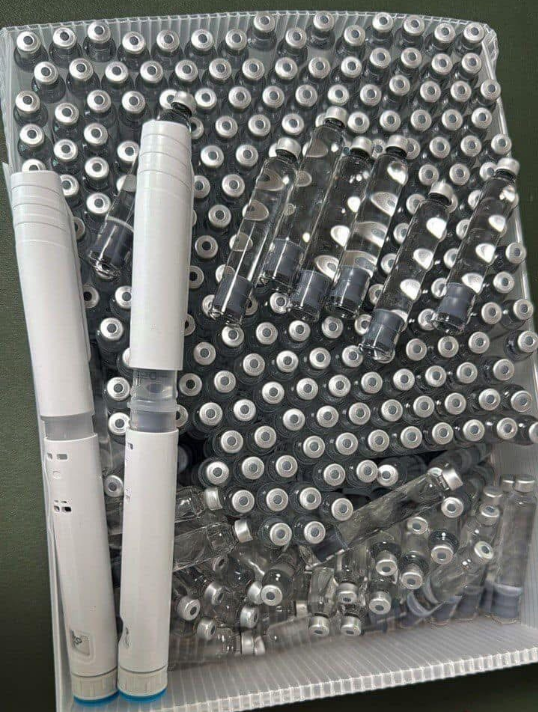
A peptide pen is essentially a drug delivery device—a prefilled or refillable injection pen designed to administer peptide-based compounds with precision. Think of it like a high-tech fountain pen… except instead of ink, it delivers biologically active compounds into the human body.
But here’s the catch:
Not all peptide pens are created equal.
Some are built for clinical-grade precision, while others are more suited for research environments. Compared to traditional vial-and-syringe methods, peptide pens are:
Better in dosing accuracy
Faster to use
Safer in reducing contamination risk
More expensive upfront but often more cost-effective long-term
A peptide pen used in a hospital setting must meet stricter requirements compared to one used in early-stage research.
Imagine driving a race car vs. a commuter vehicle. Both get you from A to B—but one demands higher engineering standards, tighter tolerances, and far more validation.
Similarly, peptide pens in clinical environments must comply with:
Sterility assurance levels
Regulatory approvals
Biocompatibility standards
Stability testing
Compared to non-clinical options, these are:
Stronger in quality assurance
More reliable in performance
More expensive, but far less risky

Choosing a peptide pen supplier without evaluating these four pillars is like buying a parachute without checking if it opens.
This is your foundation.
Ask yourself:
Are they ISO-certified?
Do they follow GMP standards?
A high-quality supplier will always be better and more consistent, while a low-quality one may be cheaper but riskier and less reliable.
Peptides can be sensitive—almost like delicate glass sculptures.
The wrong material can:
Degrade the peptide
Cause adsorption
Lead to contamination
Compared to generic plastics, medical-grade polymers are:
Stronger in chemical resistance
Safer for long-term storage
More expensive, but worth every cent
Dosing matters. A lot.
Even a tiny deviation can lead to:
Reduced efficacy
Increased side effects
Compared to manual syringes, peptide pens are:
More precise
Faster to administer
Better for patient compliance
This is the “trust factor.”
A supplier that meets regulatory standards is:
Safer
More reliable
Easier to scale with
Compared to non-compliant suppliers, they may be:
More expensive
…but dramatically less risky.
Here’s where things get interesting.
Most buyers ask surface-level questions like:
“What’s the price?”
“What’s the lead time?”
But the real questions? They’re hidden below the surface.
How does the peptide behave after 3 months? 6 months?
Compared to unstable systems, a well-designed pen:
Maintains potency longer
Reduces waste
Is more cost-efficient in the long run
Sounds technical, right? But it’s critical.
These are chemicals that can migrate from the pen into the peptide.
Better suppliers:
Conduct thorough testing
Provide detailed reports
Compared to low-tier suppliers, they are:
Safer
More transparent
Slightly more expensive, but far more trustworthy
Can your supplier grow with you?
A small supplier might be:
Cheaper initially
…but
Slower
Less capable at scale
Compared to large-scale manufacturers, they may struggle with:
Bulk orders
Regulatory expansion
Sometimes, the best decision is knowing when to say no.
If a peptide pen supplier is significantly cheaper compared to competitors, ask yourself:
What corners are they cutting?
Cheaper often means:
Lower material quality
Less testing
Higher risk
No data = no trust.
A reliable supplier should provide:
Validation reports
Stability data
Compliance certificates
Compared to undocumented products, documented ones are:
Safer
More credible
Easier to approve in clinical settings
If they’re slow to respond now, imagine when something goes wrong.
Compared to responsive suppliers, poor communicators are:
Slower
More frustrating
Potentially riskier partners
When choosing a peptide pen supplier, you’ll likely face this decision:
Custom-built pens
Off-the-shelf (OTS) solutions
Let’s break it down.
Feature | Custom Peptide Pens | Off-the-Shelf Peptide Pens |
|---|---|---|
Flexibility | Higher | Lower |
Cost | More expensive | Less expensive |
Development Time | Slower | Faster |
Precision Fit | Better | Moderate |
Scalability | Stronger long-term | Limited |
It depends.
Custom pens are better for specialized applications, offering stronger performance and tailored design.
OTS pens are faster and more affordable, ideal for early-stage research.
Think of it like tailoring a suit:
Off-the-rack is quicker and cheaper
Custom is better fitting, but takes time and money
This is where things move from concept to reality.
It’s the process of transferring:
Design
Manufacturing protocols
Quality standards
from supplier to production.
Ensures the design meets requirements.
Confirms equipment is properly installed.
Tests performance under expected conditions.
Validates real-world usage.
Skipping validation is like launching a rocket without testing it.
Compared to unvalidated systems, validated peptide pens are:
Safer
More reliable
Better suited for clinical use
Choosing the right peptide pen supplier isn’t just a procurement decision—it’s a strategic one.
You’re balancing:
Cost vs. quality
Speed vs. reliability
Simplicity vs. scalability
The best suppliers aren’t always the cheapest—but they’re often:
Safer
More consistent
Better long-term partners
So next time you evaluate a supplier, remember:
Don’t just look at the tip of the iceberg—dive deeper.

Question | Answer |
|---|---|
What is a peptide pen supplier? | A peptide pen supplier provides injection devices designed to deliver peptide-based compounds safely and accurately. |
Are peptide pens better than syringes? | Yes, peptide pens are generally more precise, faster, and safer, though they are more expensive upfront. |
How do I choose a reliable supplier? | Focus on manufacturing quality, regulatory compliance, material compatibility, and engineering precision. |
What are the risks of low-quality suppliers? | Risks include contamination, inaccurate dosing, reduced peptide stability, and regulatory issues. |
Is custom design worth it? | Custom designs are better for long-term use and precision, but they are more expensive and slower to develop compared to off-the-shelf options. |
What certifications should I look for? | Look for GMP compliance, ISO certifications, and documented validation processes. |
How important is validation? | Extremely important. Validation ensures the device performs safely and consistently under real-world conditions. |
Can peptide pens affect peptide stability? | Yes. Poor materials or design can degrade peptides, while high-quality pens preserve stability better. |


