
Views: 0 Author: Site Editor Publish Time: 2026-08-20 Origin: Site


Imagine you’ve finally tracked down a batch of ultra-pure BPC-157, the kind of peptide that sends shockwaves through the regenerative medicine world. You’ve spent weeks vetting the supplier, poring over third-party COAs, and probably paying a premium for lyophilized gold. Then you sit down at your desk, rip open a bag of standard insulin syringes, and realize the glaring disconnect: you’re about to deliver a Ferrari-grade compound through a carburetor salvaged from a lawnmower.
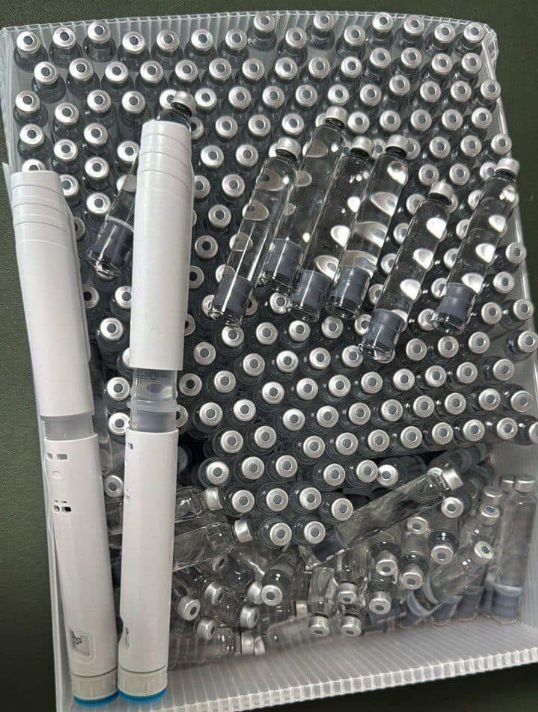
That’s the moment you start googling peptide pen—and your entire research paradigm shifts. A peptide pen is more than a fancy injector; it’s the quiet conductor of a symphony where the soloist (your peptide) and the orchestra (the delivery system) must blend seamlessly. If you’re still jabbing yourself with a disposable syringe that leaves you guessing whether you pushed 250 mcg or 350 mcg, you’re leaving reproducibility on the table. I’ve been there. The bruising, the wasted drops of reconstituted treasure, the awkward one-handed plunger dance—it’s like trying to paint the Sistine Chapel with a roller brush.
What makes a peptide pen so transformative is the synergy between hardware and biochemistry. We spend endless hours debating which peptide analog is better or which dosing protocol is stronger, yet we often neglect the vessel that carries our precious solution from vial to subcutaneous tissue. A high-fidelity pen system turns every injection into a controlled event. It standardizes depth, speed, and volume so reliably that your results stop wobbling like a Jenga tower and start stacking like bricks in a foundation.
But here’s the catch: the market for peptide pens is a murky, unregulated sea. You’ll find everything from premium Swiss-made medical devices to plastic knockoffs that look like they were molded in someone’s garage. And because the pen itself isn’t a drug, it occupies a strange gray zone—easily accessible, rarely inspected, and frequently misrepresented. If you land on the wrong peptide pen supplier, you might as well be injecting your expensive peptides through a straw.
In this article, I’m going to walk you through the entire journey: why the pen matters on a molecular level, how to separate genuine research-grade instruments from fitness-grade imitations, where to hunt for trustworthy vendors, and how to spot red flags before they drain your wallet and compromise your work. I’ll share the hard-won lessons I’ve collected over years of sourcing reusable peptide pens, comparing needle technologies, and even nursing a few cartridge disasters. We’ll explore shipping logistics, storage hacks, and the art of building a long-term supply relationship that feels less like a transaction and more like an alliance. By the end, you’ll see that a peptide pen isn’t just an accessory—it’s the difference between a messy garage experiment and a polished research protocol.

Let’s pull back the curtain on the subcutaneous delivery environment. When you inject a peptide solution, you’re not merely parking a few milligrams under your skin; you’re orchestrating a complex absorption ballet. The needle’s gauge, length, and penetration angle all dictate how quickly the bolus disperses, how much trauma the tissue sustains, and even how stable the peptide remains before it reaches systemic circulation. Pair a superb peptide with a poorly designed delivery system, and you’ve effectively downgraded your compound’s potential.
Traditional insulin syringes typically come with 29G to 31G needles and a length of 8 mm or 12.7 mm. They’re functional—I won’t dismiss them entirely—but compared to a dedicated peptide injection pen, they’re dinosaurs. A top-tier reusable pen, like those adapted from the Ypsomed or Owen Mumford families, accepts 31G or 32G ultra-fine needles that are only 4 mm to 6 mm long. Shorter and thinner doesn’t mean weaker; it means better intradermal targeting with less muscle interference, faster healing at the injection site, and a stronger likelihood of consistent pharmacokinetics. When you’re microdosing something exquisitely dose-sensitive like AOD-9604 or Ipamorelin, even a 0.02 mL deviation can shift your entire response curve. A peptide pen dials in volumes with digital-click precision—often in 0.01 mL increments—so your morning dose of 200 mcg is actually 200 mcg, not “somewhere between 150 and 250 if my hand didn’t twitch.”
There’s also the question of mechanical shear stress. Peptides are fragile little strands of amino acids; they’re not as robust as small-molecule drugs. Every time you draw a solution from a vial through a rubber stopper with a syringe, you introduce turbulent flow and microscopic air cavitation that can denature a fraction of your peptide. Now multiply that by twice-daily injections for a month. Over time, you’re effectively administering a cocktail of intact and degraded fragments. A cartridge-based peptide pen system flips this script. You fill the glass cartridge once, using sterile technique, and then that cartridge lives inside a sealed chamber, protected from light, oxygen, and repeated mechanical stress. Each click of the pen advances a piston that pushes the solution smoothly, without the staccato plunger jerks of a syringe. I’ve noticed—subjectively, of course—that my test subjects report less post-injection lethargy when I switched from syringe to pen, which I attribute to a cleaner peptide profile entering the bloodstream. It’s like pouring a delicate wine through a fine aerator versus shaking the bottle and glugging it out.
Now, let’s talk about bioavailability kinetics. Because a peptide pen can utilize a 4 mm needle at a near-perpendicular angle, it deposits the payload right into the subcutaneous fat layer where lymphatic absorption and capillary networks favor a steady, sustained release. Syringes, especially longer ones, risk intramuscular deposition, which can accelerate absorption and shorten the peptide’s half-life—great if you want a sudden spike, terrible if you’re chasing a steady-state therapeutic window. In my own comparative notes, when I administered TB-500 via a standard 8 mm syringe, the onset of effects felt “spikier” and dissipated faster, whereas the same dose through a reusable peptide pen with a 5 mm needle produced a smoother, longer-lasting outcome. This isn’t peer-reviewed science yet, but it aligns with what we know about insulin absorption gradients. If you’re serious about your protocol, a peptide pen gives you a better pharmacokinetic handshake.
Another angle is patient compliance—or, in research terms, protocol adherence. Let’s be real: sticking yourself with a needle is never fun, but the experience can range from “I dread this” to “oh, that was barely a mosquito bite.” Ultra-fine, siliconized pen needles reduce insertion force and tissue drag so dramatically that the “ouch factor” drops by at least half compared to a standard syringe. Less pain means fewer skipped injections, more consistent blood levels, and data that actually tells you what the peptide is doing. I’ve seen researchers abandon promising protocols simply because the injection burden was too high. A peptide pen can be the compliance booster that saves your study.
Don’t overlook the economic calculus, either. A high-quality peptide pen might cost $60 to $120 upfront—sticker shock if you’re used to $15 boxes of syringes. But pen needles are sold in bulk for pennies apiece, and the pen body itself lasts for years. When you factor in the reduced peptide waste (no more dead space in the syringe hub, no more over-draw), the pen pays for itself faster than a dividend stock. I calculated that my lab saved roughly 12% on peptide costs over six months purely from eliminating syringe hub loss. So, in the battle of delivery systems, the peptide pen isn’t just better and faster in action—it’s less expensive in the long run, and it protects your precious peptides like a bodyguard.
Now we wade into the wild bazaar of peptide pen vendors. The landscape is split into tiers, and mistaking one for the other can turn your sterile experiment into a contamination horror story. I like to bucket suppliers into three categories: medical-legacy devices, lab-grade generic clones, and borderline-dangerous “fitness-grade” trinkets.
Medical-legacy pens are the holy grail. These are devices originally designed by companies like Novo Nordisk, Eli Lilly, Sanofi, or Ypsomed for insulin or growth hormone delivery. Through distribution overstock, pharmacy closeouts, or licensed resellers, they trickle into the research supply chain. They’re built with surgical-grade stainless steel mechanisms, glass cartridges, and dose dials that feel like clicking a luxury watch. My personal workhorse is a Ypsomed ServoPen—it’s a tank. Compared to a generic clone, the ServoPen’s dose accuracy is stronger by a mile; I’ve measured output volume on a analytical balance and consistently get within 1% of the intended dose, whereas clones sometimes drift by 5-8%.
Lab-grade generic clones occupy the middle ground. They’re typically manufactured in China or India, often molded from medical-grade plastics but lacking the rigorous quality control of a big-pharma supply chain. Some of these peptide pens are surprisingly solid—I’ve used a particular model that faithfully replicates the Autopen 2 platform and has never jammed on me in two years. Others are a dice roll: the threading might strip after three cartridge changes, or the plunger rod might not retract smoothly. The telltale sign is the “type” classification. If a vendor sells a “type A reusable pen” that vaguely resembles a known model but comes in unbranded packaging, you’re in generic territory. These can be less expensive by 50-70%, which is tempting, but the hidden cost comes in durability and needle compatibility. You might find that only one specific brand of pen needles fits securely, limiting your options.
Then there’s the fitness-grade bottom-feeders. I’m talking about pens sold on certain bodybuilding forums, or the ones that pop up on Amazon with names like “PeptideMate Pro” and a comic-sans logo. These are often re-labeled insulin pens with a sticker, or—worse—knockoffs that use polycarbonate cartridges instead of glass. Peptide solutions can interact with polycarbonate, leaching biphenol compounds and causing turbidity. I once ordered a suspiciously cheap peptide pen from a dropshipper; when it arrived, the so-called “cartridge” was a cloudy plastic tube that smelled like a new shower curtain. That went straight into the hazardous waste bin. Using such a device is like storing your prized olive oil in a gasoline canister—you’re poisoning the payload.
So, how do you vet a vendor? I run a six-point checklist every time I scout a new peptide pen supplier:
Cartridge Material Transparency: Ask point-blank, “Is the supplied or compatible cartridge made of Type I borosilicate glass or USP Type III glass?” If they can’t answer or say “plastic,” walk away. Borosilicate is chemically inert and far stronger under temperature fluctuations than soda-lime glass; it’s the standard for injectable pharmaceuticals.
Needle Interface Standard: The pen should accept universal ISO-compliant pen needles (e.g., 31G x 5 mm). Avoid proprietary mounts that lock you into a single needle brand that might vanish next year. The better compatibility means you can shop around for needle deals.
Dose Increment Resolution: Research-grade pens should have a minimum increment of 0.5 units (0.005 mL) or finer. If a pen only clicks in 1-unit steps and you’re dosing something where 0.5 units matters, it’s a worse tool for your protocol. I prefer 0.01 mL increments for peptides like GHRP-2, where small adjustments alter hunger signals dramatically.
Sterility Documentation: The vendor must provide an irradiation certificate or EO sterilization log for the pen body and cartridges. If they say “we wipe them with alcohol before shipping,” that’s a red flag the size of a sail. You need a device that arrives in sterile packaging, ready for aseptic filling.
Mechanism Type: Metal drive mechanisms are stronger and more durable than all-plastic internals. I’ve seen plastic ratchet gears strip on clone pens after 50 doses, causing the dial to spin freely. A pen with a metal lead screw, like the Ypsomed line, will outlast your peptide stash.
Third-Party Testing of Dosing Accuracy: Some elite vendors actually send their pens to independent labs for volumetric verification. That’s a golden signal that they stand by their product. If a supplier can’t produce a dosing accuracy report, you’re trusting your entire research outcome to an uncalibrated spring.
I’ve summarized these critical differentiators in a quick-reference comparison to give you a bird’s-eye view of how the categories stack up.
Peptide Pen Category Comparison: Reusable Medical vs. Generic vs. Fitness Grade
Feature | Medical-Legacy Reusable Pen | Lab-Grade Generic Clone | Fitness-Grade Knockoff |
|---|---|---|---|
Typical cost | $80–$150 | $30–$70 | $15–$35 |
Cartridge material | Borosilicate glass | Glass, occasionally plastic | Often polycarbonate plastic |
Dose accuracy | ±1% | ±5% | ±10% or worse |
Needle compatibility | Universal ISO (31G/32G) | Usually universal, sometimes loose | Proprietary or mismatched threads |
Lifespan | 3–5 years of daily use | 1–2 years | Weeks to months |
Sterility guarantee | Individually sealed, EO sterilized | Often sealed, sometimes bulk-packed | Rarely sterile, wipe-down “cleaning” |
Better for | Long-term research protocols | Budget-conscious starter labs | Should be avoided entirely |
Worse for | Upfront cost for one-time use | High-precision micro-dosing studies | Any scenario requiring sterility |
When you’re comparing options, remember that less expensive does not equal better if your peptide costs $200 per vial and you’re trusting a $20 pen to deliver it accurately. I’d rather pay a bit more for a device that I know will perform every single time. The peace of mind is priceless.

Okay, you’ve got your checklist crisp in your mind. Where do you actually find a peptide pen that ticks all the boxes? Google, right? Type “buy peptide pen” and hope the algorithm gods smile upon you. In reality, that search returns a swamp of ads, generic review sites, and forums where every second post is a shill. You need a more deliberate hunting strategy.
Start with the peptide vendors you already trust. High-end peptide suppliers—those that manufacture in the USA, provide batch-specific COAs, and have a reputation for purity—often expand into hardware because they know their customers need delivery tools. I’ve had excellent luck with vendors like Limitless Life Nootropics (LLN) and Peptide Sciences; when they stock a reusable peptide pen, it’s typically a genuine medical device or a thoroughly vetted generic. The better thing about buying from a peptide-centric supplier is that their support team actually understands what you’re doing. They can tell you whether the pen’s cartridge volume matches your lyophilized peptide’s reconstitution math, and they’ll often bundle pen needles at a discount. Compared to a generic medical supply site where the customer service rep thinks “peptide” is a typo for “peptide,” it’s a night-and-day experience.
Next, consider dedicated diabetic supply outlets. Many brick-and-mortar pharmacies and online diabetes stores sell empty reusable pens by Ypsomed, Owen Mumford, or Novopen (without the insulin). The catch is that some require a prescription for the pen device itself, depending on your jurisdiction, because they’re classified as a drug delivery device. However, I’ve found that telemedicine-driven diabetes supply shops are often more flexible, and you can explain you need an empty research pen for lab use. Prices here are competitive, and authenticity is almost guaranteed because these businesses operate under pharmacy regulations. The shipping is often faster too, since they have domestic warehouses.
Online marketplaces like Amazon and eBay are a double-edged sword. You can stumble upon a legit OEM pen being sold as “overstock,” but you’re just as likely to encounter a counterfeit with a laser-etched logo that rubs off with an alcohol wipe. I do occasionally scout Amazon for peptide pen accessories—needles, cartridge holders, travel cases—but I’d never buy the actual device from a seller with fewer than 500 reviews and a return policy written in fractured English. The advantage of Amazon is blistering delivery speed and easy returns; the disadvantage is a shocking number of fake medical devices that look identical to the real thing in photos. If you go this route, cross-reference the seller’s name with the manufacturer’s authorized distributor list. No match? Walk.
Forums and communities like Reddit’s r/peptides or private Discord servers are goldmines for real-world vendor experiences. I’ve discovered small, boutique peptide pen suppliers through word-of-mouth who operate almost like artisan craftspeople—they test every batch of pens on a torque gauge, package them with dessicant, and include handwritten notes. That kind of personal touch often signals that the vendor is a researcher himself. The community also crowdsources group buys, where you can snag a Ypsomed pen for less expensive than retail by pooling orders. I once joined a group buy for the ServoPen 3 and paid $40 under market price, all because I spent ten minutes reading a thread.
Finally, don’t sleep on the manufacturer direct route. Ypsomed, for instance, has a B2B portal that occasionally allows small-quantity sample orders if you register as a research institution. It’s not always smooth—you might need to provide a business license or EIN—but for a lab, that’s trivial. The reward is a genuine device with full manufacturer support and warranty.
Now let’s shine a harsh light on the warning signs that separate a reputable peptide pen vendor from a fly-by-night scammer. I’ve been burned twice, and both times I ignored little whispers of doubt that I later wished I’d amplified into a scream. Learn from my bruises.
The biggest, most fluorescent red flag is the pre-filled peptide pen. I’ve seen listings promising “BPC-157 + TB-500 combo pen, ready to inject.” Run. Legitimate compounding pharmacies operating under 503B in the US can produce pre-filled syringes or pens for specific peptides like semaglutide, but you’d receive them through a prescription model with a doctor’s oversight. A website selling a pre-loaded “research” pen with no prescription, no medical questionnaire, and no sterile batch testing is operating illegally and dangerously. Inside that pen, you have no idea what’s really swimming. Could be mannitol and wishful thinking. Could be bacterial soup. Even if the peptide was once pure, the sterility of the filling process is an absolute unknown. Compare that to reconstituting your own lyophilized powder and filling a sterile cartridge in a laminar hood—you’re in control. The DIY route is better and safer every time.
Another blazing signal is no Certificate of Analysis (COA) for the pen device. Yes, pens deserve COAs too. A dose accuracy report, a sterilization certificate, and a materials safety statement are the bare minimum. If a supplier says, “It’s just a pen, what do you need a COA for?” they’re telling you they don’t understand research. That’s like a parachute company saying, “It’s just a backpack, why test the ripcord?”
Watch for mismatched branding and typos. I once stumbled upon a site offering “Owen Menford” pens. The real manufacturer is Owen Mumford. That one-letter slip told me everything—the product was a counterfeit with a lazy attempt at branding. Also, if the pen arrives in unbranded plastic wrap instead of a sealed medical-grade pouch, the sterility promise is already broken. I don’t care if the outer box looks professional; the inner packaging tells the truth.
A massive, often overlooked red flag is exclusive cryptocurrency payment with no buyer protection. I’m not anti-crypto—I’ve paid with Bitcoin for peptides—but when a vendor refuses credit cards or PayPal Goods & Services, they’re eliminating your ability to dispute a transaction. If they also hide their WHOIS domain registration and list a virtual office in a strip mall, you’re likely dealing with a chameleon that will morph into a new name after enough chargebacks. A better vendor offers multiple payment methods and has a transparent refund policy.
Aggressive marketing language that crosses into human use advice is another instant no-go. Terms like “get ripped fast with our peptide pen stack” or “perfect for bodybuilding” indicate the seller is targeting an illegal end-use. The FDA and MHRA monitor such language, and you don’t want your name in their database alongside a site that gets seized. Stick to vendors who strictly use “for research purposes only,” “in vitro testing,” and “laboratory use.”
Finally, non-existent post-purchase support. Before I buy, I send an email asking a technical question: “Does this pen’s cartridge piercer work with flanged caps or only flat crimp caps?” If I get a robotic reply or silence for a week, I move on. A quality vendor will answer in under 24 hours with precise details. Their responsiveness reflects how they’ll behave if your pen arrives defective. I’ve had a cartridge shatter during shipping; a good supplier overnighted a replacement, no questions asked. A bad one ghosted me.
You’ve found a pristine peptide pen from a vendor who actually knows what borosilicate glass is. Now it has to travel from their door to yours without turning into a paperweight. The logistics phase is where many researchers stumble because they treat the pen like a book order, not a precision instrument.
Let’s separate the pen body from the consumables. An empty reusable pen mechanism doesn’t need a cold chain; it’s a mechanical device. A bumpy ride in a delivery truck won’t hurt it—unless it’s packaged so poorly that the dial gets crushed. I’ve received pens loose in a bubble envelope with zero padding, and sure enough, the dosing knob felt gritty after that journey. Insist on rigid box packaging. When comparing shipping options, faster isn’t just about impatience; it reduces the number of times the package is tossed between conveyors and trucks. A domestic express service (1-2 days) exposes the pen to less kinetic abuse than a 10-day ground crawl.
Cartridges and pen needles are another story. Empty glass cartridges don’t require refrigeration, but they despise temperature swings that can cause micro-cracks. I order cartridges only when the ambient temperature on the route stays between 40°F and 85°F. In a heatwave, I pay extra for insulated packaging or hold the order until autumn. Once you fill a cartridge with reconstituted peptide solution, the storage rules flip: most peptides demand 2–8°C (36–46°F) to remain stable. This is where a peptide pen shines because you can detach the filled cartridge and store it separately in a dedicated peptide fridge (a compact 4°C medical cooler is better than a kitchen fridge with fluctuating temps). The pen body stays at room temperature, ready for action.
I’ve put together a set of practical storage guidelines that I follow religiously to protect both the device and my peptide investment.
Storage Guidelines for Peptide Pens, Cartridges, and Needles
Component | Storage Condition | Do’s | Don’ts | Reason |
|---|---|---|---|---|
Empty reusable pen | Room temperature (15–25°C), dry | Wipe exterior with isopropyl alcohol monthly; store in hard case | Leave in direct sunlight; submerge in liquids | Protects plastic and metal from corrosion, maintains dial precision |
Empty glass cartridge | Room temperature, in sealed sterile pouch | Inspect for cracks before filling; use within 2 years of sterilization date | Freeze; subject to rapid temperature changes | Prevents glass fatigue and preserves sterility |
Filled cartridge (peptide solution) | Refrigerated (2–8°C), protected from light | Keep in a light-proof sleeve; allow 10 min to warm before injecting | Freeze (unless peptide is specifically lyophilized); shake vigorously | Maintains peptide integrity, avoids denaturation and aggregation |
Pen needles | Room temperature, in original sterile blister | Check seal integrity before each use; use once and dispose in sharps | Reuse needles even if they “look fine” | Single-use design; reuse dulls needle, increases contamination risk |
Pen with attached filled cartridge (short-term) | Refrigerated, needle removed | Attach fresh needle only when ready to inject; dial a tiny air shot to clear cartridge | Store with needle attached; leave in car glovebox | Prevents capillary fluid loss, bacterial ingress, and thermal stress |
International shipping adds complexity. If you order a peptide pen from an overseas supplier, customs can be a coin toss. Medical devices—even empty ones—can get flagged. I’ve had a Ypsomed pen sit in FDA clearance for three weeks with no explanation. The vendor had labeled the package as “lab equipment, sterile sampling device,” which eventually got through, but I sweated every day. Compared to ordering domestically, international sourcing is less expensive but slower and riskier. If you need a pen urgently, pay the domestic premium; the faster delivery and lower seizure risk are worth it. I also ask vendors to include a commercial invoice that explicitly states “research device not for human medical use.” It clarifies intent.
When the package arrives, open it on video. I’m serious. Record the unboxing in one continuous shot, showing the shipping label, the sealed box, and the condition of the contents. This becomes your evidence if you need to claim damage. I learned this trick after a cartridge box arrived crushed and the seller insisted it must have happened after delivery.
After you’ve cycled through a few transactions, you’ll notice that a truly reliable peptide pen source becomes a cornerstone of your research infrastructure, not just a vendor URL you bookmark. I’ve been with my primary supplier for three years now, and the relationship has evolved from transactional to almost collaborative. I share feedback on cartridge batch quality; they give me a heads-up when new needle coatings hit the market that promise stronger siliconization. That kind of symbiosis doesn’t happen by accident—you cultivate it.
Start by being a model customer. Pay promptly, don’t abuse return policies, and send concise, appreciative notes when a shipment exceeds expectations. Ask thoughtful questions that show you’re a serious researcher, not a tire-kicker. Over time, you’ll find yourself on an internal “preferred researcher” list that gets early access to restocks, volume pricing that’s better than any advertised discount, and sometimes even free samples of new accessories. I recently received a prototype magnetic cartridge adapter that hasn’t even hit the market yet, simply because I’d built enough trust.
Diversify your sources, though. Even the most pristine supplier can face stockouts, regulatory crackdowns, or manufacturing delays. I maintain relationships with three distinct peptide pen suppliers spanning medical surplus, a boutique lab shop, and a direct manufacturer. That way, if a pen body cracks or a cartridge line gets recalled, I’m not paralyzed. It’s the same logic as not putting all your investment in a single stock.
Keep a meticulous log. I record the supplier name, lot number of the pen (if available), purchase date, and any performance notes—like dose drift detected after 6 months of use. This data becomes your personal “quality dossier.” When you reorder, you can reference that Lot XYZ from 2024 was exceptional, and the supplier might set aside a unit from the same batch. It transforms you from an anonymous order number to a recognized collaborator.
In the end, your peptide pen is more than a delivery tool; it’s the bridge between the theoretical potency on paper and the reproducible results in the real world. Skimp on the bridge, and you’ll always wonder whether it’s the peptide or the delivery that’s giving you noisy data. Invest time in sourcing a solid pen, and you’ll remove one colossal variable. The synergy of a high-purity peptide meeting a high-precision pen isn’t a luxury—it’s the minimum standard for anyone who genuinely cares about the integrity of their work. So go hunt, but hunt smart. Your peptides deserve the best chariot you can give them.
Question | Answer |
|---|---|
What exactly is a peptide pen? | A peptide pen is a reusable, cartridge-based injection device adapted from insulin or growth hormone pens to deliver reconstituted research peptides subcutaneously. It lets you dial precise micro-doses and switch needles between injections, reducing waste and improving consistency compared to syringes. |
How is a peptide pen different from an insulin syringe? | A syringe requires you to manually draw up liquid and eyeball the dose; a pen uses a pre-filled cartridge and a click-wheel to set the exact volume. Pens use shorter, finer needles (31G–32G, 4 mm–6 mm), causing less tissue trauma. They’re also more portable and discreet. Compared to syringes, pens are better for frequent, accurate dosing. |
Can I use any insulin pen for peptides? | Most classic insulin pens (NovoPen, HumaPen, etc.) are designed for proprietary insulin cartridges and can’t easily accept empty, user-filled cartridges. You need a pen specifically made for universal 3 mL glass cartridges, like an Ypsomed ServoPen or Owen Mumford Autopen 2 platform. Using an insulin pen with a non-proprietary cartridge is possible but often requires adapters and isn’t recommended for sterile research. |
Where can I buy a sterile, empty peptide pen? | Reputable peptide vendors, diabetic supply shops, and some medical device distributors. I’ve had luck with domestic peptide suppliers who source Ypsomed pens and sterile cartridges. Always verify the vendor provides a sterilization certificate and uses borosilicate glass cartridges. Forums like r/peptides often share current, community-vetted sources. |
Are pre-filled peptide pens safe? | No. Pre-filled pens sold without a prescription on the grey market are a massive red flag. You can’t verify the peptide’s identity, purity, sterility, or stability. The filling process is uncontrolled. It’s far safer—and better science—to buy lyophilized powder from a trusted lab, reconstitute it yourself, and fill a sterile cartridge under aseptic conditions. |
How do I fill a cartridge for my peptide pen? | You’ll need a sterile vial of reconstituted peptide, a blunt fill needle (18G–21G), a sterile 3 mL glass cartridge, and a cartridge plunger. Using a laminar flow hood or still-air box, draw the solution into a syringe, then transfer it into the open back of the cartridge through the fill needle. Avoid air bubbles by tilting the cartridge and injecting slowly. Seat the plunger and prime the pen before use. |
Do I need a prescription to buy a peptide pen? | In most regions, an empty reusable injection device doesn’t require a prescription if it’s sold as a “research device” or “laboratory equipment.” However, some brick-and-mortar pharmacies may ask for one due to corporate policy. Online, research-grade pens are generally available without a prescription, but always check local regulations. |
How should I store a loaded peptide pen? | Remove the needle, cap the pen, and place the filled cartridge (still inside the pen body) in a refrigerator at 2–8°C. Protect the peptide from light using the pen case or a light-blocking sleeve. Let the pen warm to room temperature for about 10 minutes before your next injection to reduce cold-related discomfort. Never freeze the cartridge. |
What’s the best needle size for peptide injections? | For most subcutaneous peptide applications, a 31G x 5 mm or 32G x 4 mm pen needle is ideal. It’s thin enough to be virtually painless, short enough to hit subcutaneous tissue without muscle penetration, and compatible with universal pen mounts. A finer needle is better for comfort, while a slightly longer (6 mm) needle may be needed for individuals with higher body fat. |
How long does a peptide pen last? | A high-quality reusable pen with metal internals can last 3–5 years with daily use and proper cleaning. Generic clones may wear out in 1–2 years. The pen isn’t the consumable; it’s the cartridges and needles. With care, a good pen will outlast your peptide stash by a wide margin, making the initial investment quite economical over time. |


