
Views: 0 Author: Site Editor Publish Time: 2026-08-04 Origin: Site


If ISO 13485 were a person, it would be the meticulous architect who won’t let a single brick be laid without checking the blueprint seventeen times. Officially, ISO 13485 is a quality management system (QMS) standard tailored specifically for the medical device industry. It covers everything from design control and supplier management to risk mitigation and post-market surveillance. A peptide pen supplier that holds a genuine, third-party audited ISO 13485 certificate isn’t just saying, “We make pens.” They’re saying, “We document how we make pens, we prove that every pen is made the same way, and we have a system to catch mistakes before they reach your hands.”
Think of it as the foundation of a house. Without it, you might still have walls and a roof, but the moment a storm rolls in — say, a batch of pens that starts jamming after the third dose — the whole thing collapses. Compared to a supplier who only flaunts a generic ISO 9001 (which is for quality management in any industry), an ISO 13485-certified peptide pen supplier is like a heart surgeon compared to a general practitioner. Both have training, but only one knows exactly what to do when things get intimate with a human body.
I once consulted for a small pharmacy that jumped on a “too good to be true” deal: 2,000 peptide pens for half the usual price. The supplier swore they followed “strict quality,” but when I asked for their ISO 13485 certificate, they sent me a blurry, undated document in a language I couldn’t identify. After a little digging, the certificate belonged to a different company with a similar name. That pharmacy lost money, faced patient complaints about inconsistent dosing, and spent months rebuilding trust.
When you work with an ISO 13485-compliant peptide pen supplier, you get better traceability. Every raw material batch is linked to finished pen lots. If a cartridge has a defect, the supplier can pinpoint exactly which shipments are affected and quarantine them — sometimes before they even leave the warehouse. Without that system, a recall is a blindfolded guessing game.
Moreover, an ISO 13485 supplier integrates risk management (often following ISO 14971) into every design decision. They don’t just slap together a dosage knob; they analyze what happens if a patient with arthritis tries to turn it, if the pen is dropped on a tile floor, or if the storage temperature soars during shipping. This results in a stronger, more reliable device that can survive the chaos of real life.
Don’t just take a PDF at face value. A legitimate certificate will show the certification body’s logo (think BSI, TÜV, SGS, etc.), a unique certificate number, the scope of certification explicitly mentioning “manufacture of pen injectors for medical use” or similar, and an expiration date. Then, do yourself a favour: go to the certification body’s online database and enter that number. A genuine peptide pen supplier will encourage this; the imposters will get defensive.
Are ISO 13485 pens more expensive? You bet they are. Audits, documentation, dedicated quality engineers — none of that is free. But when you compare the cost of a recalled shipment or a lawsuit over a mis-dosed peptide, the certified pen is actually the less expensive option in the long run. It’s the difference between paying for a seatbelt once and paying hospital bills for life.
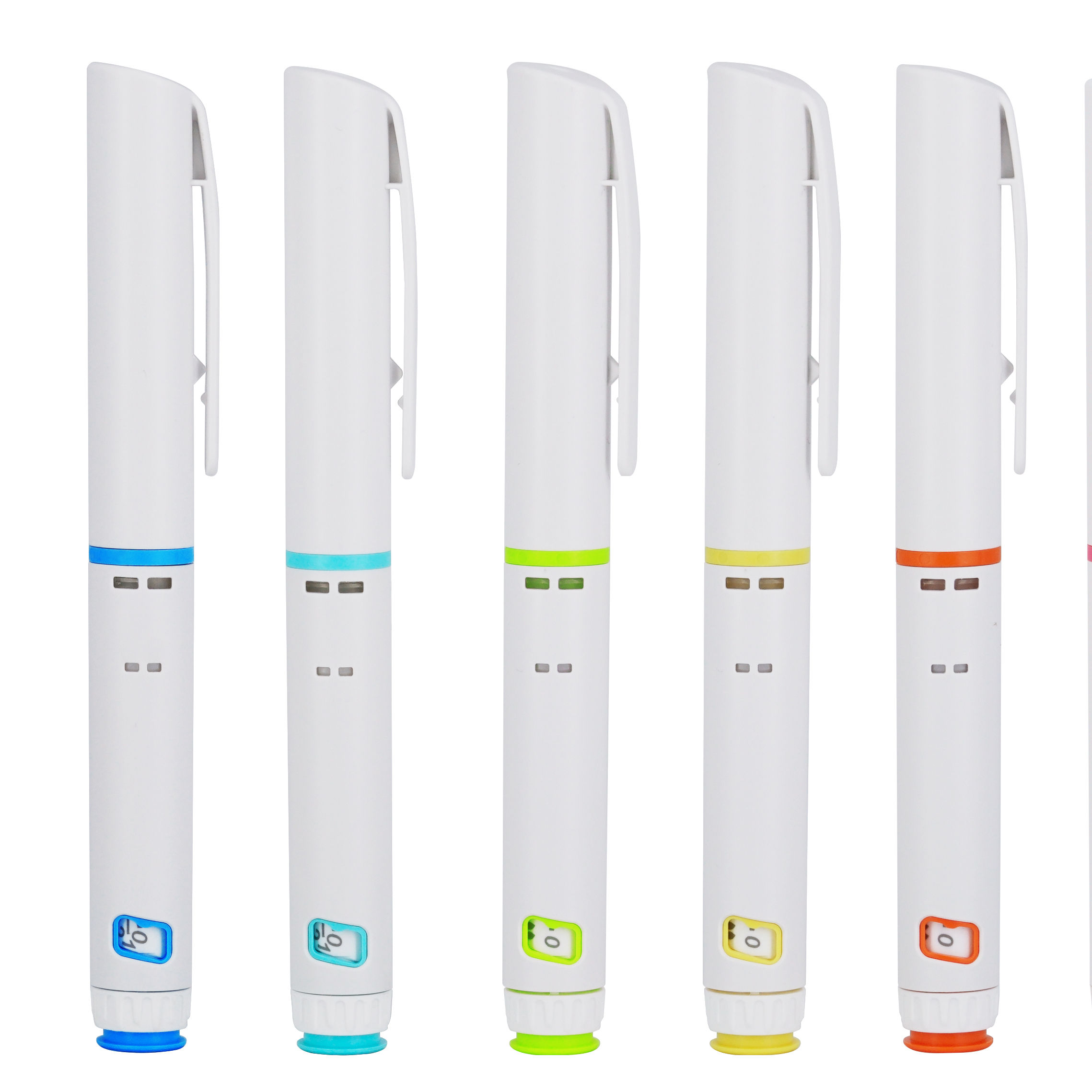
Let’s get intimate for a second. A peptide pen isn’t a coffee mug; its components — the cartridge that holds your liquid peptide, the stopper that pushes it out, the needle hub that attaches to your skin, even the glue that holds labels — all come into direct or indirect contact with the drug and with your body. If any of those materials leach toxic chemicals, cause allergic reactions, or trigger cellular stress, you’re not just dealing with a red bump; you could be jeopardizing the therapeutic effect or, worse, triggering a systemic reaction.
ISO 10993 is the biological evaluation standard that screams, “Prove you’re not poisonous.” A peptide pen supplier who submits their materials to ISO 10993 testing is checking for cytotoxicity (does it kill cells?), sensitization (will it trigger allergies on repeat exposure?), irritation (will it make the injection site angry?), and systemic toxicity. Some tests also look at genotoxicity and chronic effects depending on contact duration. Compared to a pen that hasn’t been tested, an ISO 10993-certified pen is like a cotton shirt you’ve washed a hundred times versus a mysterious sack made from unlabeled fibres — one is soothing, the other makes you itch just thinking about it.
I’ve seen suppliers proudly declare, “We use medical-grade plastic!” as if that absolves them of everything. Here’s the catch: medical-grade means the material meets certain pharmacopeia standards, but it doesn’t guarantee the finished device won’t irritate because the manufacturing process itself can introduce residues — mould release agents, lubricants, or cleaning solvents. ISO 10993 testing must be performed on the final finished device (or a representative sample processed identically), not just on virgin raw pellets. A truly safety-conscious peptide pen supplier will have a test report showing extraction studies with both polar and non-polar solvents to mimic bodily fluids.
I recall a bodybuilding enthusiast who bought a cheap pen for his BPC-157 cycle. Within days, his injection site swelled into a firm, itchy lump. The pen’s rubber plunger turned out to contain a vulcanizing agent that his immune system hated. Had the supplier done ISO 10993 testing, that compound would have shown up in a sensitization assay. Compared to his experience, a properly tested pen from a reputable peptide pen supplier would have been gentler on his skin, with no lost training days.
Here’s where biocompatibility crosses paths with peptide integrity. Silicone oil, commonly used to lubricate syringe barrels, can cause certain peptides — especially those rich in hydrophobic amino acids — to aggregate into fibrils. That’s not just a visual defect; aggregated peptides can be less effective or even immunogenic. A forward-thinking peptide pen supplier will go beyond basic ISO 10993 and choose materials (like silicone-free plunger coatings or cyclic-olefin copolymer cartridges) that are friendly to both your tissue and your peptide. When you request the biocompatibility report, ask: “Has this pen been tested with my specific peptide class?” That leads us to our wildcard later, but for now, know that ISO 10993 is the safety net that catches the obvious hazards. Without it, you’re free-falling.
Imagine you’re baking a delicate soufflé, but your measuring cups are warped — one day a “cup” holds 200 ml, the next day 280 ml. Your soufflé becomes a glorified pancake. Now replace that soufflé with a peptide like semaglutide, where a 0.25 mg dose ramps up to 0.5 mg and beyond. If your pen says “0.5 mg” but actually squirts out 0.7 mg, you might be hugging the toilet with nausea. If it delivers 0.3 mg, the therapeutic effect vanishes. Accuracy isn’t a luxury; it’s the backbone of therapy.
ISO 11608 is the international standard that lays down the law for pen injectors. It demands that the delivered dose stays within tight limits — typically ±5% or better for most dose sizes, under varying temperatures and positions. It tests for dose setting repeatability, meaning if you dial to 1 mg, back to zero, then dial again, you should get the same physical travel. It measures delivery force, ensuring elderly users or those with weak hands can still press the button smoothly. It verifies that the pen can survive thousands of cycles and multiple falls without deviating from its calibrated duty. Compared to a pen that merely “works,” an ISO 11608-compliant pen is like a Swiss timepiece next to a plastic toy watch — both show the time, but one does it with relentless precision.
A compounding pharmacist once told me about a batch of pens he purchased from a no-name supplier. The pens looked elegant, but every third device under-delivered by nearly 20%. Patients on a GHRP-2 regimen kept calling to ask why their hunger didn’t change. He ended up extracting and weighing the expelled fluid on an analytical balance, proving the inconsistency. The financial hit aside, his professional reputation took a hammering.
A trustworthy peptide pen supplier will have ISO 11608 test data, usually from a third-party lab, showing dose accuracy at the low, medium, and high ends of the pen’s range. They’ll also demonstrate performance after preconditioning — for instance, storing pens at 40°C for weeks and then testing them. Why? Because peptides often need refrigeration during transport, and a pen that warps in hot climates will deliver worse accuracy. If your supplier can’t hand you a compliance statement referencing ISO 11608-1:2022, you’re gambling with every dial turn.
Let’s not sugar-coat it: ISO 11608 testing adds cost. Developing a dosing mechanism that survives 6,000 injections without drift, selecting high-tolerance components, and running accelerated aging studies — these expenses trickle down to you. A fully compliant pen might be more expensive by 30–50% compared to a generic copy. But what’s the price of a hospital visit for hypoglycemia because you got an accidental mega-dose of an insulinotropic peptide? Or the cost of wasted therapy months because under-dosing produced zero results? In my book, the accurate pen is actually cheaper when you factor in outcome value. The disadvantage is the upfront cost; the advantage is that you’re not playing Russian roulette with your receptors.
When we talk about a peptide pen, we usually focus on the external hardware. But have you ever thought about what’s inside the pen — or, more importantly, what isn’t supposed to be inside? Even if you’re filling the pen with your own peptide cartridge, the fluid path (needle hub, adhesive, cartridge inner surface) must be manufactured in an environment that won’t introduce particulate matter, endotoxins, or microbial contamination. That’s where GMP and ISO 14644 swagger in.
GMP (Good Manufacturing Practice) is a set of regulations that govern production hygiene, personnel training, equipment maintenance, and quality control. For medical devices, the foundation is often ISO 13485, but GMP adds the gritty practicalities: “Are your operators wearing beard covers? Are you monitoring air pressure differentials? Are you cleaning your machinery with validated processes?” ISO 14644 then defines the cleanroom classification. A peptide pen supplier assembling components in an ISO Class 7 (or better) cleanroom ensures that the number of particles floating around is so low that the air is essentially purified of skin flakes, pollen, and metal shavings. Compared to a factory that assembles pens in an open warehouse next to a loading dock, a GMP cleanroom facility is like performing surgery in a laminar flow hood rather than on a picnic table.
Let’s be real: a visual inspection won’t tell you much. Bacterial spores are invisible. Endotoxins — the ghostly remnants of dead bacteria — can’t be seen but can trigger fever, inflammation, and shock. A responsible peptide pen supplier will validate their cleaning and sterilization processes. If the pen is marketed as sterile (for instance, a pre-filled pen), they need to prove a Sterility Assurance Level (SAL) of 10⁻⁶, meaning only one in a million units might be non-sterile. Even for empty, reusable pens that will be sterilized by the end-user, the initial bioburden must be controlled.
I remember a clinic that ordered pens for a multi-patient study on thymosin beta-4. The pens were “sealed” in plastic pouches but lacked any ethylene oxide (EtO) or gamma irradiation validation. Within a month, two patients developed injection-site abscesses. The culprit? A batch contaminated with Staphylococcus epidermidis likely introduced during manual assembly in a non-classified area. The clinic’s medical director later switched to a peptide pen supplier who proudly displayed their ISO 14644 Class 7 certificate and GMP compliance letter — and never saw another infection. The pens were more expensive, yes, but they avoided a more expensive lawsuit and patient harm.
ISO 14644 classes run from ISO 1 (the cleanest) to ISO 9 (room air). For medical device assembly, ISO Class 7 (formerly Class 10,000 under old US standards) is a common minimum: no more than 352,000 particles ≥0.5 µm per cubic metre. A better peptide pen supplier might push to ISO Class 5 (Class 100) for critical operations, making the pen cleaner and safer for immunocompromised users. That’s a population we often forget: someone taking peptides as an adjunct to cancer recovery already has a fragile immune system. For them, a pen built in a dust-free, HEPA-filtered environment is not an upgrade — it’s a necessity.
When you’re comparing suppliers, ask: “Can I see your cleanroom monitoring logs for the past six months? What’s your environmental action limit if particle counts spike?” If they blink in confusion, you’ve found your answer. The less expensive supplier might cut corners here, but you’re not buying a pen; you’re buying insurance against infection.

Here’s a phrase that gets thrown around like confetti: “We are FDA registered!” It sounds impressive, but it’s often a flimsy umbrella in a hurricane. In the US, a peptide pen (unless it’s purely a low-risk manual syringe) is typically a Class II medical device requiring a 510(k) premarket notification. This means the supplier must demonstrate that their pen is substantially equivalent to an already-legally marketed predicate device. FDA registration, on the other hand, is an annual registration of the establishment and listing of the device — it doesn’t mean the agency has reviewed the pen’s safety and effectiveness.
A peptide pen supplier who truly guards your supply chain will have a 510(k) clearance number that you can look up on the FDA’s database. If they’re shipping to the US without that clearance, they’re potentially violating the law, and your shipment could be detained at customs faster than you can say “import alert.” Compared to a pen with a valid 510(k), an un-cleared pen is like driving a car that hasn’t passed emission and safety inspections — it might drive smoothly for a while, but eventually the legal and safety consequences catch up.
Across the pond, Europe tightened its regulations with the Medical Device Regulation (EU) 2017/745 (MDR). Under the MDR, a peptide pen supplier must obtain CE marking through a Notified Body — an independent organization that audits the technical documentation, quality system, and clinical evidence. The MDR demands post-market surveillance, periodic safety update reports, and unique device identification (UDI). A CE mark with a four-digit Notified Body number (e.g., CE 2797) is much stronger proof of compliance than the old MDD certificate.
When a supplier hands you a CE certificate, check the Notified Body’s identity. Is it a recognized body like BSI, TÜV SÜD, or DEKRA? Can you verify the certificate on the NANDO database? A genuine peptide pen supplier will never hesitate to walk you through the certificate details. Compared to an unmarked pen, an MDR-compliant pen is better for European market access, offers stronger post-market scrutiny, and signals that the manufacturer welcomes continuous oversight. The disadvantage? Lead times and costs — MDR certification is brutal and expensive, so the pen price reflects that. But from a compliance standpoint, it’s the safest bet for EU distribution.
Some elite peptide pen suppliers achieve both FDA 510(k) clearance and EU MDR CE marking. These dual-certified pens are more expensive — sometimes double the price of a bare-bones generic. But they’re faster to clear customs, lighter in regulatory burden because you’re not scrambling to compile missing documentation, and stronger in market credibility. If you’re a pharmacy serving both US and EU patients, a dual-certified pen is less risky and more streamlined. The disadvantage is the initial outlay; the advantage is you’ll sleep like a baby knowing your supply chain isn’t one audit away from collapse.
We’ve covered the big structural certifications, but here’s the twist: even a pen that passes ISO 11608, ISO 10993, and has a pristine GMP cleanroom can still fail you if it’s incompatible with your specific peptide. Peptides are prima donnas. They can adsorb (stick) to plastic surfaces, aggregate in the presence of silicone oil, oxidize if the cartridge allows too much oxygen permeation, or degrade when in contact with certain metal ions leached from the needle.
This is where the API (Active Pharmaceutical Ingredient) Compatibility Test becomes the wildcard that separates the great peptide pen suppliers from the merely adequate. A diligent supplier will have performed — or be willing to perform — a series of studies with your exact formulation. They’ll fill cartridges with your peptide at intended concentrations and storage conditions, then pull samples over time to check purity, potency, and sub-visible particle counts. Compared to a supplier who just sells you a “one-size-fits-all” pen, the one who offers compatibility data is like a tailor who measures every inch of your body versus a department-store mannequin.
Let me share a story that still makes me shake my head. A research clinic was using a GHRH analogue in a generic insulin pen. At first, patients reported great results — deeper sleep, improved recovery. But three months in, complaints trickled in: “I feel nothing.” The clinic tested the remaining pens and found peptide content had dropped by 40%. The peptide had adsorbed onto the silicone oil layer inside the cartridge. Once they switched to a peptide pen supplier who used a silicone-free, fluoropolymer-coated plunger and provided a six-month stability report, potency held steady. The switch was more expensive per pen, but it prevented thousands in wasted peptide and lost patient trust.
When evaluating a peptide pen supplier, ask for a compatibility study summary that covers:
Extractables and leachables (E&L): Identifies any chemical entities that migrate from the pen components into the peptide solution.
Functional dose accuracy with your formulation: Because peptide viscosity can differ from insulin, the pen’s torque might be off.
Physical stability: Does the peptide remain clear, or do fibrils form?
Biochemical potency over time: Often measured by HPLC and bioassay.
If the supplier can provide this data (or partner with a lab to generate it), they’re a keeper. The advantage is a tailor-made device that ensures your peptide reaches the bloodstream intact; the disadvantage is that these studies add time and cost. But look at it this way: without compatibility data, you’re essentially beta-testing on your own body or on patients. The wildcard test isn’t just a bonus — it’s the ultimate confidence booster.
We’ve walked through a fortress of certifications: ISO 13485 as the foundation, ISO 10993 as the safety net, ISO 11608 as the accuracy requirement, GMP & ISO 14644 as the sterility shield, and FDA Registration or CE Marking (EU MDR) as the supply chain guardian. Then we added the wildcard — the API Compatibility Test — that turns a good peptide pen supplier into an exceptional partner.
Cutting corners might save you a few dollars today, but it’s a gamble where the stakes are your health, your reputation, or your company’s future. I’ve watched compounding pharmacies get burned by recall costs that dwarfed any initial savings. I’ve seen individuals develop injection-site nodules that took months to resolve. The pens that cost less upfront often become the most expensive when you factor in medical bills, lost therapies, and shattered trust.
When you sit down to choose a peptide pen supplier, don’t let a slick website or a cheap price tag mesmerize you. Demand documentation. Verify certificates. Push for compatibility data. Your peptide pen isn’t just a tool — it’s the bridge between a fragile molecule and your body’s intricate signaling networks. And just like any bridge, you want it built by engineers who follow the code, not by someone who thinks “close enough” is close enough.
Question | Answer |
|---|---|
What certifications should I absolutely demand from a peptide pen supplier? | At minimum, look for ISO 13485 (quality management for medical devices), ISO 10993 (biocompatibility), and ISO 11608 (pen injector accuracy). For market access, seek FDA 510(k) clearance (US) or CE marking under EU MDR (Europe). A GMP certificate with ISO 14644 cleanroom validation is also essential for sterility. |
Can I use a pen designed for insulin with my peptide, or do I need a specific peptide pen supplier? | Not always. Insulin pens are designed for insulin’s specific viscosity and stability profile. Peptides can interact differently with silicone oil and plastics. A peptide pen supplier who provides API compatibility testing ensures your specific peptide remains stable and accurately dosed. |
How do I verify if a CE certificate from a peptide pen supplier is legitimate? | Check the CE certificate for a four-digit Notified Body number (e.g., CE 2797). Visit the EU’s NANDO website, search for that notified body, and confirm they are authorized for pen injectors under MDR. Then request the Declaration of Conformity and cross-check it with the Notified Body. |
Why is ISO 13485 more relevant than ISO 9001 for peptide pens? | ISO 9001 is a generic quality standard for any industry. ISO 13485 adds medical-device-specific requirements like risk management, traceability, and regulatory compliance. Compared to ISO 9001, ISO 13485 provides better assurance that the pen is safe and effective for human use. |
Is a peptide pen with FDA registration enough to sell in the US? | No. FDA establishment registration and device listing are not the same as premarket clearance. Pens typically need a 510(k) clearance. Verify the 510(k) number on the FDA’s database. A supplier that only claims “FDA registered” without clearance may be marketing illegally. |
How much more expensive are fully certified peptide pens compared to generic ones? | Fully certified pens (ISO 13485, biocompatibility, accuracy testing, cleanroom manufacturing, 510(k)/CE) can be 30–100% more expensive than generic copies. However, the lower cost of generic pens often hides risks of inaccurate dosing, contamination, and legal exposure, making certified pens less expensive in the long run. |
What’s the biggest red flag when vetting a peptide pen supplier? | Reluctance to share certificates, blurry or undated documents, refusal to allow a factory audit, and inability to provide a compatibility study with your peptide formulation are all huge red flags. A trustworthy supplier acts like an open book. |
Can a peptide pen supplier help me if I use a custom peptide blend? | Yes, the best suppliers will collaborate with your team to run leachables testing and dose-accuracy studies with your specific formulation. This ensures the pen materials and mechanics won’t degrade your unique peptide cocktail. It costs extra but is invaluable for patient safety and efficacy. |


