
Views: 0 Author: Site Editor Publish Time: 2026-05-26 Origin: Site


When it comes to sourcing from a peptide pen supplier, most people focus heavily on price, brand, or delivery speed. Fair enough—those things matter. But here’s the catch: even the best, most expensive, or fastest-shipping peptide pen won’t help you if you’re using it incorrectly.
Think of a peptide pen like a high-performance sports car. Compared to a basic tool, it’s more precise, faster to use, and easier to control—but only if you understand how to handle it properly. Otherwise? You’re leaving performance on the table—or worse, risking errors.
This guide walks you through critical usage mistakes, supplier considerations, and practical insights you won’t usually find on product pages. We’ll break things down in a conversational, no-nonsense way—because let’s be honest, nobody wants to read a robotic manual.

Let’s start with one of the most overlooked steps: priming.
You just got your peptide pen from a supplier. It looks sleek, feels solid, and you’re ready to go. But wait—did you prime it?
Priming removes air bubbles from the cartridge and ensures the pen delivers accurate dosing. Think of it like letting water run through a hose before watering your plants—you want a smooth, consistent flow.
Skipping this step is like trusting a scale that hasn’t been zeroed. Sure, it might be close… but close isn’t good enough when dosing peptides.
You may inject less peptide than intended
Air pockets can cause inconsistent dosing
First dose might be weaker or ineffective
Compared to properly primed pens, unprimed ones are less reliable, less accurate, and frankly, riskier.
Some peptide pen suppliers focus more on product specs than user education. A cheaper supplier, compared to a premium one, may skip detailed instructions altogether.
Better suppliers typically:
Include step-by-step guides
Offer video tutorials
Provide customer support
Before first use:
Dial a small dose
Point pen upward
Press until a drop appears
Simple, right? But incredibly important.
Here’s a question: Would you leave medication in a hot car?
Probably not. Yet many users unknowingly expose peptide pens to unsafe temperatures.
Peptides are sensitive molecules. Compared to tablets, they’re less stable and more fragile.
If stored incorrectly:
Heat can degrade potency
Cold (freezing) can damage structure
Fluctuations can cause inconsistent effectiveness
Not all peptide pen suppliers are equal here.
Feature | Premium Supplier | Budget Supplier |
|---|---|---|
Insulated packaging | Better | Basic or none |
Temperature indicators | Often included | Rare |
Shipping speed | Faster | Slower |
A better supplier ensures temperature control during transit, while a cheaper one may compromise this to reduce costs.
Imagine ordering peptides during summer. One supplier ships overnight with insulation. Another ships standard delivery with no cooling.
Which one do you trust?
Exactly.
Store between recommended temperatures (usually refrigerated)
Avoid direct sunlight
Never freeze unless specified
Let’s be blunt: reusing needles is a bad idea.
Even if it’s “just once.”
To save money
Convenience
Lack of awareness
But compared to new needles, reused ones are:
Duller (more painful)
Less sterile
Higher risk for infection
Sharing needles introduces risks like:
Cross-contamination
Bloodborne pathogens
Serious health complications
Yes, new needles are slightly more expensive. But compared to medical treatment costs from infections? They’re practically free.
Think of it this way:
Would you reuse a toothbrush? Probably not. A needle is far more critical.
Better peptide pen suppliers often:
Bundle sterile needles
Offer affordable refill packs
Emphasize hygiene in instructions
Cheaper suppliers may skip these extras, making it easier for users to cut corners.
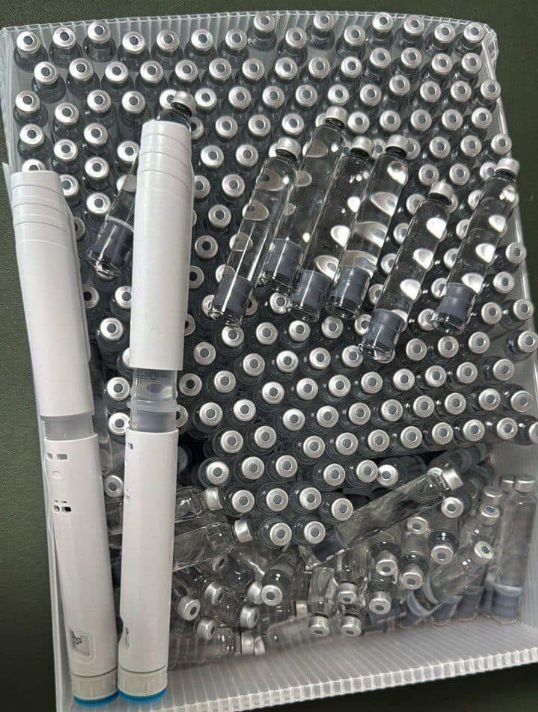
This is where things get tricky.
Peptide pens don’t always speak the same “language.”
mg (milligrams) – actual mass
IU (International Units) – biological activity
Clicks – pen-specific increments
Mixing these up can lead to:
Underdosing (ineffective)
Overdosing (potential side effects)
Different suppliers use different calibration systems. Compared to standardized medical devices, some peptide pens are less intuitive.
Let’s say:
1 mg = 100 IU (hypothetical)
Your pen click = 10 IU
Misreading this could mean taking double or half the intended dose.
Feature | Better Supplier | Worse Supplier |
|---|---|---|
Clear labeling | Yes | Confusing |
Conversion charts | Included | Missing |
User guide | Detailed | Minimal |
Always:
Read instructions carefully
Double-check conversions
Start with lower doses if unsure
This one sneaks up on you.
Over time:
Residue builds up
Dust accumulates
Contacts degrade
This can lead to:
Inconsistent dosing
Mechanical issues
Reduced lifespan
Condition | Performance |
|---|---|
Clean pen | Smooth, accurate |
Dirty pen | Sticky, unreliable |
Weekly for regular users
Before cartridge changes
After exposure to contaminants
Premium peptide pen suppliers often design pens that are:
Easier to clean
More resistant to buildup
Longer-lasting
Budget pens? Not so much.
Let’s simplify things with a quick troubleshooting guide.
Problem | Possible Cause | Solution |
|---|---|---|
No liquid comes out | Not primed | Prime the pen |
Weak effect | Underdosing | Check units |
Leakage | Loose needle | Tighten or replace |
Pain during injection | Dull needle | Use new needle |
Pen not clicking | Mechanical issue | Clean or replace |
Think of this as your mental checklist. Quick, practical, and effective.
At the end of the day, choosing a peptide pen supplier isn’t just about price.
It’s about:
Reliability
Safety
Usability
A better supplier offers:
Clear instructions
High-quality materials
Strong customer support
A cheaper one may be less expensive upfront, but more costly in mistakes.
And remember—no matter how advanced your peptide pen is, it’s only as effective as the person using it.
So take your time, follow best practices, and treat your peptide pen like the precision tool it is.

Question | Answer |
|---|---|
What should I look for in a peptide pen supplier? | Look for reliability, temperature-controlled shipping, clear instructions, and good customer support. Better suppliers are usually slightly more expensive but far more dependable. |
Are expensive peptide pens better? | Generally, yes. Compared to cheaper options, they are more accurate, durable, and easier to use. However, price alone doesn’t guarantee quality—always check reviews. |
Can I reuse peptide pen needles? | No. Reusing needles increases infection risk and reduces comfort. Always use a new sterile needle. |
How do I know if my peptide pen is working correctly? | Check for consistent dosing, proper priming, and smooth operation. If anything feels off, troubleshoot or replace components. |
What happens if peptides are stored at the wrong temperature? | They may lose potency or become ineffective. Always follow storage guidelines provided by your supplier. |
Are all peptide pens the same? | Not at all. Some are more precise, easier to use, and longer-lasting. Better suppliers invest in higher-quality designs. |
How can I avoid dosing mistakes? | Understand unit conversions, read instructions carefully, and start with lower doses when unsure. |
Is buying from a cheaper supplier worth it? | It can save money initially, but compared to premium suppliers, you may face issues like poor quality, lack of support, and higher risk of errors. |
Do peptide pens require maintenance? | Yes. Regular cleaning and proper storage are essential for optimal performance. |
Who should use peptide pens? | Typically used by individuals under professional guidance. Beginners should proceed cautiously and prioritize education. |


