
Views: 0 Author: Site Editor Publish Time: 2026-08-24 Origin: Site


Let's be honest for a second—when you first heard about peptide therapy, you probably imagined a complicated process involving vials, syringes, and a whole lot of guesswork. Maybe you pictured yourself in a sterile doctor's office, nervously watching a healthcare professional prepare an injection while you tried not to think about the needle. Or perhaps you're one of the brave souls who've already ventured into the world of self-administration, fumbling with tiny rubber stoppers and wondering if you're drawing up the correct dose.
Here's the thing: peptides are absolutely incredible. These short chains of amino acids are like tiny messengers running through your body, telling cells exactly what to do and when to do it. They can help with everything from building muscle and burning fat to improving sleep quality and boosting cognitive function. But here's the million-dollar question that keeps coming up in forums, doctor's offices, and wellness circles everywhere: what's the best way to actually get these powerful compounds into your system?
That's where the peptide pen enters the conversation. Compared to traditional syringes, the peptide pen represents a paradigm shift in how we think about at-home injection therapy. But is it really better? Is it faster? Is it worth the extra money? And most importantly, will it help you stick with your peptide protocol long enough to see real results?
In this comprehensive guide, we're going to dive deep into everything you need to know about the peptide pen. We'll compare it against traditional syringes, break down the psychological factors that influence adherence, crunch the numbers on cost-effectiveness, and help you figure out which delivery system actually fits your lifestyle. By the time you finish reading, you'll have a crystal-clear understanding of whether a peptide pen is right for you—or if you're better off sticking with the old-school approach.
Before we can have an intelligent conversation about which option is superior, we need to understand exactly what we're comparing. It's like trying to choose between a sports car and an SUV without knowing anything about horsepower, cargo space, or fuel efficiency. So let's break down our two main contenders in detail.
The standard syringe and needle combination has been the backbone of peptide administration for decades. When you think of "giving yourself a shot," this is probably what comes to mind. A typical setup includes a sterile syringe (usually with a capacity of 1mL or 0.5mL) paired with a detachable needle that can range from 27-gauge to 31-gauge in thickness.
The Pros of Syringes:
Cost-effective: Compared to a peptide pen, syringes are significantly less expensive. We're talking pennies per injection versus several dollars.
Universal compatibility: Any peptide that comes in a standard vial can be drawn up with a syringe. You're not locked into a specific brand or system.
Precise dosing: For those who need to adjust their dose frequently or are titrating up slowly, syringes offer the ultimate flexibility. You can draw up 0.05mL if that's what your protocol calls for.
No proprietary cartridges: You're not forced to purchase specialized refills from a specific manufacturer.
The Cons of Syringes:
Steeper learning curve: There's definitely an art to drawing up medication correctly. You need to learn how to handle the vial, avoid bubbles, and ensure you're getting the exact dose every time. It's not rocket science, but it takes practice.
More equipment: You'll need alcohol wipes, separate needles for drawing and injecting (if you're being meticulous), and a proper disposal container for sharps.
Higher perceived barrier: Let's face it—seeing a needle that's separate from the syringe can be intimidating. For some people, this psychological hurdle is significant enough to delay or avoid treatment entirely.
Potential for dosing errors: When you're dealing with reconstituted peptides, it's easy to make mathematical mistakes. One decimal point in the wrong place can mean the difference between an effective dose and one that's either ineffective or potentially problematic.
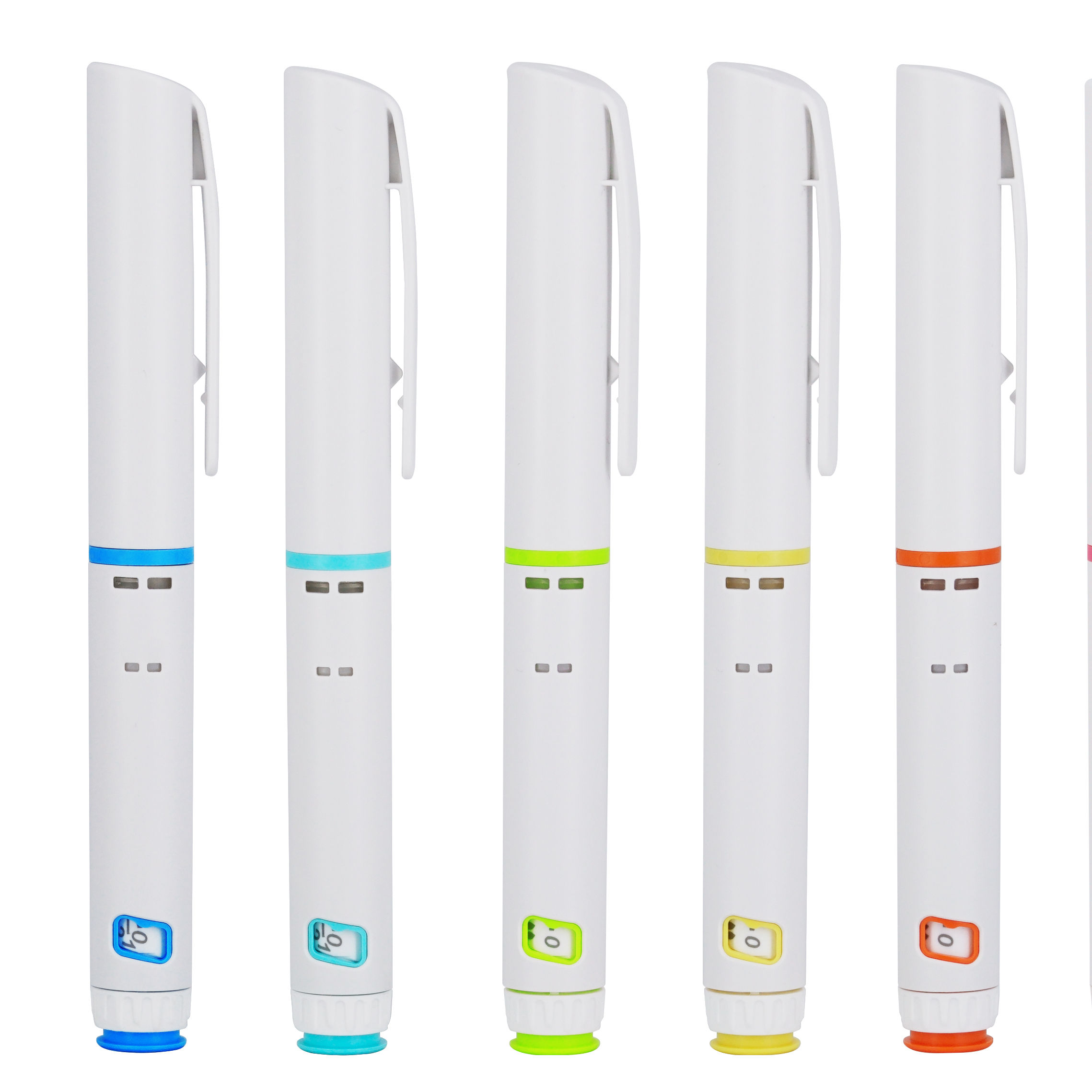
Now let's talk about the peptide pen. If you've ever seen an insulin pen or an EpiPen, you already have a general idea of how this works. The peptide pen is a sleek, compact device that looks more like a fancy writing instrument than a medical device. Inside, it holds a cartridge of liquid peptide that's pre-measured and ready to go.
The Pros of Peptide Pens:
Incredible ease of use: We're talking about a system that's almost foolproof. You attach a tiny needle, dial your dose, press a button, and you're done. It's faster, simpler, and requires virtually no learning curve.
Discreet and portable: These devices are designed to be carried in a purse or pocket. Compared to carrying around vials and syringes, the peptide pen is infinitely more convenient for travel or on-the-go administration.
Reduced needle anxiety: The needle is tiny, hidden inside the device, and you never actually see it going in. For many people, this alone makes the peptide pen the clear winner.
Consistent dosing: Because the doses are pre-set or easily dialed, there's less room for user error. You're getting exactly what you need every single time.
Better for long-term adherence: When something is easier and more pleasant to do, you're more likely to keep doing it. This is arguably the peptide pen's greatest strength.
The Cons of Peptide Pens:
Higher upfront cost: The initial investment for a peptide pen is significantly more than a box of syringes. We're talking anywhere from $50 to $200 for the pen itself.
Ongoing expense: Refill cartridges are typically more expensive per dose compared to buying peptides in vials and drawing with syringes.
Limited availability: Not all peptides are available in pen format. You're limited to whatever formulations the manufacturer produces in cartridge form.
Less flexibility: If you need to adjust your dose in a way that's not aligned with the available cartridge options, you're out of luck.
Dependency on the manufacturer: If the company stops making your peptide in pen format, you're forced to switch systems entirely.
When we put these two systems side by side, the differences become stark. The peptide pen is clearly faster and more convenient—you can complete an injection in under 30 seconds from start to finish. Compare that to the traditional syringe, which might take 2-3 minutes and requires more steps and mental effort.
In terms of learning curve, the peptide pen is much gentler. Most people can master it in a single demonstration. Syringes, by contrast, require multiple practice sessions before users feel truly confident.
Cost-wise, the syringe is undeniably less expensive in the short term. But we'll dig deeper into the financial picture later, because the long-term value calculation might surprise you.
The biggest difference, however, comes down to psychology—which brings us to our next section.
This is where the conversation gets really interesting. Because here's the thing about peptides: they only work if you actually take them consistently. Missing doses, taking the wrong amount, or skipping days can completely undermine your results. And what determines whether you'll stick with your protocol? Psychology.
Let's talk about human nature for a moment. We're wired to avoid discomfort and seek pleasure. This is why New Year's resolutions often fail by February—the initial motivation wears off, and the daily effort becomes a chore. The same principle applies to peptide therapy.
The "Friction" Factor
Think about every step required to administer a peptide with a traditional syringe:
Pull out your supplies
Clean the rubber stopper on the vial with an alcohol wipe
Draw air into the syringe
Inject air into the vial
Flip the vial upside down
Draw up the correct amount of peptide
Check for bubbles and push them out
Switch needles (if you're using a drawing needle)
Clean your injection site
Pinch the skin
Insert the needle
Inject the peptide
Remove the needle
Apply pressure to the injection site
Dispose of the syringe properly
That's 15 steps. FIFTEEN. And each step represents an opportunity for something to go wrong—or for your brain to say, "You know what? I'll just do this tomorrow."
Now contrast that with the peptide pen:
Take out the pen
Attach a needle
Dial your dose
Clean your injection site
Press the button
Dispose of the needle
Six steps. Six. That's less than half the steps required for a traditional syringe. The reduction in friction is enormous, and it has a direct impact on whether you'll actually follow through with your protocol.
Here's a hard truth: willpower is a finite resource. Every time you have to overcome resistance to do something, you're using up a little bit of your willpower reserve. By the end of a long day, when you're tired and your defenses are down, the thought of going through 15 steps to take your peptide might be enough to make you skip it entirely.
With a peptide pen, the process is so simple that it requires almost no willpower at all. It's closer to brushing your teeth than performing a medical procedure. This difference might not seem significant on paper, but in practice, it's the difference between 90% adherence and 60% adherence.
There's also the issue of confidence. With a traditional syringe, you're constantly wondering: "Did I draw up the right amount? Did I get all the bubbles out? Did I inject at the right angle?" This anxiety can be draining and can even cause people to abandon their protocols out of frustration.
The peptide pen eliminates most of these concerns. The dose is pre-measured. The needle is the perfect length for subcutaneous injection. The mechanism ensures you deliver the full dose. It's like having a little safety net that boosts your confidence every time you use it.
According to research on habit formation, the easier a behavior is to perform, the more likely it is to become automatic. The peptide pen's simplicity means you're much more likely to integrate it into your daily routine—setting a reminder and just doing it without thinking about it.
The traditional syringe, with all its complexity, remains a conscious effort even after weeks or months of use. That mental drain never really goes away, which is why many people eventually fall off their protocols.
I've spoken with countless peptide users over the years, and the pattern is remarkably consistent. Those who start with syringes often describe a honeymoon period followed by a gradual decline in adherence. "It's not that I don't want to take it," they'll say, "it's just that the whole process is such a hassle."
Those who switch to peptide pens almost universally describe the experience as liberating. "I don't even think about it anymore," they'll tell me. "I just do it and go on with my day."
This is the "X-factor" that makes the peptide pen potentially worth its weight in gold—or at least worth the extra cost.
Money. It's the elephant in the room, isn't it? Peptide therapy isn't cheap to begin with, and adding a peptide pen to the equation can feel like an unnecessary expense. But is it really? Let's crunch the numbers and look at this from both a short-term and long-term perspective.
Let's start with the obvious: a peptide pen costs more than a syringe. Here's a typical breakdown:
Traditional Syringe Setup:
Box of 100 syringes: $15-$30
Alcohol wipes: $5 for 100
Disposal container: $10 (one-time)
Total upfront cost: $30-$45
Peptide Pen Setup:
The pen device: $50-$200 (one-time)
Refill cartridges: Vary widely, but typically $100-$300 per cartridge
Needles for the pen: $15-$25 for 100
Alcohol wipes: $5 for 100
Total upfront cost: $70-$230 (plus cartridge costs)
At first glance, the peptide pen looks significantly more expensive. But here's where it gets interesting: the long-term cost analysis paints a different picture.
When we compare the ongoing costs of syringes versus peptide pens, several factors come into play:
For Traditional Syringes:
You're buying peptides in vials, typically a powder that needs to be reconstituted with bacteriostatic water.
Each vial might cost $50-$300 depending on the peptide and source.
Reconstitution requires precision and care.
There's usually some waste—it's hard to extract every last drop from a vial.
Most protocols require frequent injection cycles, often multiple times per day for some compounds.
For Peptide Pens:
You're purchasing pre-mixed liquid peptide cartridges.
These cartridges typically contain a precise number of doses (often 30-60 days' worth).
There's virtually no waste—the cartridge is designed to be used completely.
The peptide is already dissolved and ready to go—no reconstitution needed.
The convenience factor means you're less likely to miss doses.
The Tipping Point
Here's the calculation that many people overlook: if a peptide pen makes you just 10% more consistent with your protocol, the improved results can more than justify the higher cost. Consider this scenario:
You're spending $200/month on peptide therapy.
With a traditional syringe, you're getting 70% adherence over six months.
That means you're effectively wasting $60/month in product that you're not using correctly.
Over six months, that's $360 down the drain.
With a peptide pen, you're getting 90% adherence.
You're using nearly all the product you paid for.
Your results are better, which means you might need less time in therapy to achieve your goals.
Suddenly, the extra $50-$100 for a pen device doesn't seem so unreasonable, does it?
We also need to factor in the value of your time. Let's say it takes 3 minutes to administer a peptide with a traditional syringe compared to 30 seconds with a peptide pen. Over the course of a year, assuming daily injections:
Syringe: 3 minutes × 365 days = 1,095 minutes (18.25 hours)
Peptide Pen: 0.5 minutes × 365 days = 182.5 minutes (3.04 hours)
That's a 15-hour difference over a year. If you value your time at even $20/hour, the peptide pen has just saved you $300 in time alone—easily justifying its upfront cost.
There's another financial angle to consider: the cost of inconsistent therapy. When you miss doses or take incorrect amounts, you're not just wasting money on the peptide itself—you're also potentially extending your therapy timeline. Instead of seeing results in 8 weeks, it might take 12 weeks. Instead of one cycle being enough, you might need two cycles.
Consistent therapy leads to predictable results. Predictable results mean you can plan your treatment timeline and budget accordingly. The peptide pen delivers that consistency in a way that the traditional syringe simply cannot match.
Can you put a price on peace of mind? Because that's what the peptide pen offers. No more worrying about bubbles in the syringe. No more second-guessing your dose. No more feeling like you're performing surgery every morning. For many people, that psychological ease is worth the extra money all by itself.
When we look at the full picture—not just the immediate cost but the long-term value in terms of adherence, results, time saved, and mental energy—the peptide pen starts to look like the more economically sound choice for many people.
Is it the right choice for everyone? Absolutely not. If you're on a tight budget, need extreme dosing flexibility, or are only using peptides for a short period, a traditional syringe might make more sense. But for anyone planning to use peptides long-term, the peptide pen's convenience and consistency make it a compelling investment.
Now that we've explored all the angles—the mechanics, the psychology, and the economics—it's time to get personal. Because ultimately, the choice between a peptide pen and a traditional syringe comes down to YOU. Your lifestyle. Your personality. Your goals. Your pain points.
I've identified several distinct "personas" among peptide users. Let's walk through each one and see which delivery system is the best fit.
Profile: You have a demanding career, a packed schedule, and every minute of your day is accounted for. You need efficiency above all else. You're willing to pay more for convenience because your time is genuinely valuable.
Recommendation: Peptide pen, without question. The speed, simplicity, and discretion of a peptide pen mean you can administer your dose in the office bathroom or in your car between meetings. There's no way you're going to stop a 10-hour workday to pull out vials and syringes. The peptide pen makes it possible to stay consistent without disrupting your professional flow.
Profile: You're just getting started with peptides and you're not sure if you'll stick with it long-term. You want to keep your initial investment as low as possible while you figure out if peptides are right for you.
Recommendation: Start with syringes. The lower upfront cost means you can try peptide therapy without making a major financial commitment. If you decide peptides are for you, you can always upgrade to a pen later. Just be aware that your adherence might suffer, so your results might not be as impressive as they could be.
Profile: The thought of needles makes you uncomfortable. You're not terrified, exactly, but there's definitely a psychological barrier you need to overcome every time you inject. You've delayed starting peptide therapy because of this fear.
Recommendation: Peptide pen, no contest. The hidden needle, the simple button press, and the lack of visible sharp are all designed to reduce needle anxiety. The difference between a syringe and a pen for someone with needle anxiety is night and day. The peptide pen is faster, gentler, and significantly less scary.
Profile: You love tweaking your protocols. You're constantly reading research, listening to podcasts, and experimenting with different doses and compounds. You want total control over every aspect of your therapy.
Recommendation: This is where syringes win. The flexibility to draw up 0.08mL or 0.12mL or any amount you want makes syringes the biohacker's best friend. The peptide pen is standardized—you get what the cartridge gives you. If you're constantly adjusting your doses, you'll feel constrained by the pen format.
Profile: You're always on the move—business trips, vacations, or just a lifestyle that keeps you away from home base regularly. You need a delivery system that travels well and doesn't raise eyebrows at security checkpoints.
Recommendation: Peptide pen. The compact design, the lack of loose needles and vials, and the professional appearance make it much more travel-friendly. You can slip it into your carry-on and nobody will bat an eye. The traditional syringe setup is bulkier and raises more questions at TSA checkpoints.
Profile: You're not convinced that peptides are a long-term solution for you. You're doing a single cycle to see if it helps with a specific issue, and you don't plan to continue indefinitely.
Recommendation: Syringes. Since you're only committing to one cycle, the extra cost of a peptide pen doesn't make financial sense. You can manage with syringes for a few weeks and achieve decent results if you're diligent about your protocol.
Profile: You've already seen results with peptide therapy and you plan to continue for the foreseeable future. You've been on peptides for months or even years.
Recommendation: Peptide pen. By now, you've probably already experienced the frustration of inconsistent dosing or the burnout that comes with daily syringe rituals. The peptide pen is a quality-of-life upgrade that pays for itself over time through improved consistency and reduced hassle.
Profile: You have kids, a busy household, and your personal health routine often takes a backseat to family responsibilities. You need something that can be done quickly and discreetly without making a big production of it.
Recommendation: Peptide pen. The ability to dose in 30 seconds while the kids are distracted by a cartoon is invaluable. The traditional syringe process is too involved when you've got little ones running around and pulling at your attention.
Profile: You're concerned about medical waste and environmental impact. You want to minimize your footprint as much as possible.
Recommendation: This one's tricky. On one hand, syringes create more individual pieces of waste per injection. On the other hand, peptide pens have more plastic in the device itself. Both systems require proper disposal. I'd recommend researching the recyclability of each option in your area and making an informed choice based on your local waste management options.
Profile: You don't care about the process—you just want RESULTS. Whatever gets you to your goal faster and with fewer headaches is what you want.
Recommendation: Peptide pen, because adherence is the biggest predictor of results. If the pen helps you maintain 90%+ adherence, your results will be significantly better than the 60-70% adherence typically seen with syringes. The minor cost difference is irrelevant compared to the value of achieving your goals.
When we look across all these personas, a clear pattern emerges: the peptide pen is superior for most people, especially those who value convenience, consistency, and psychological ease. The traditional syringe remains the better choice for those who need maximum dosing flexibility or want to minimize their upfront investment.
The key is being honest with yourself about which persona you actually are, not which one you wish you were. If you're a busy professional but you buy syringes to save money, you're setting yourself up for failure. If you're a biohacker but you buy a peptide pen, you'll feel constrained and frustrated.
Match the tool to the person, and you'll set yourself up for success.
Here's something that rarely gets discussed in the peptide pen versus syringe debate: you don't actually have to choose just one. Many savvy peptide users employ a hybrid approach that gives them the best of both worlds. Let me explain.
The hybrid approach involves using both delivery systems strategically, depending on the situation. Here's how it typically works:
For home use: You use a traditional syringe system when you're at home, taking your time, and have all your supplies organized.
For travel or busy days: You keep a peptide pen loaded and ready for when you need to inject on the go.
This gives you the dosing flexibility of syringes when you want it and the convenience of a pen when you need it.
From a financial perspective, the hybrid approach makes a lot of sense. You don't have to use the peptide pen for every injection—just for the ones where convenience really matters. This means your refill cartridges last longer, spreading out the cost.
For example, if you inject twice a day, you might use your syringe for the morning injection when you're at home and your peptide pen for the evening injection when you might be at work or out to dinner. That's 50% less cartridge usage, making the pen investment more economical.
The hybrid approach also gives you the best of both worlds in terms of flexibility. If you need to adjust your dose, you can do that with the syringe while still enjoying the convenience of the pen when you're on the go. You're not locked into a single system.
This is especially valuable if you're still titrating your dose. You can use the syringe to find your optimal dose, then switch to the pen for maintenance once you've stabilized.
If this sounds appealing, here's how to set it up:
Invest in a peptide pen as your backup system or on-the-go solution.
Keep a small supply of syringes for your primary dosing or for situations where you need more control.
Organize your supplies so you always have both options available. Keep your pen in your bag for emergencies and your syringe kit at home for your primary protocol.
Track your usage to make sure you're using both systems effectively. If you notice you're not using one system much, adjust your approach accordingly.
The hybrid approach isn't perfect. Here are some potential drawbacks to consider:
Double the cost: You're investing in two different systems, which means higher upfront and ongoing costs.
More equipment to manage: You now have two sets of supplies to keep track of, which can be confusing if you're not organized.
Risk of confusion: If you're switching between systems, there's a small risk of dosing errors or mixing up your protocols.
Storage concerns: You need to keep both systems properly stored, which might be challenging if space is limited.
The hybrid approach is best for:
People who travel frequently but also want dosing flexibility
Those who are in the process of titrating their dose but want a convenient option for busy days
Anyone who's tried both systems and can't decide which one they prefer
People who want a backup in case one system fails or gets lost
The hybrid approach is a smart compromise for many peptide users. You get the flexibility of syringes when you need them and the convenience of the peptide pen when you're on the go. The extra cost might be worth it for the peace of mind and convenience.
However, this approach requires more organization and discipline. If you're someone who struggles with managing multiple systems, you might be better off committing to one or the other.

So after all this analysis, where do we land? Which is better—the peptide pen or the traditional syringe?
The answer, as with so many things in life, is: it depends on you.
Consistency matters most to you. If you want to maximize your chances of actually following through with your protocol, the peptide pen is superior. Its simplicity and speed make it easier to integrate into your daily routine.
You travel frequently. The portability and discretion of the peptide pen make it ideal for people who are constantly on the move.
Needle anxiety is an issue for you. The hidden needle and simple injection mechanism can significantly reduce the psychological barrier to therapy.
You're in it for the long haul. The upfront investment in a peptide pen pays off over time through improved adherence and reduced frustration.
You value your time. The time savings of a peptide pen over months or years of use is significant.
You need dosing flexibility. If you're constantly adjusting your dose or using unusual dosage amounts, syringes give you total control.
Budget is a primary concern. The lower upfront cost of syringes makes them more accessible for those on a tight budget or those who are uncertain about long-term commitment.
You're doing a short-term cycle. If you're only using peptides for a few weeks or months, the cost of a peptide pen might not be justified.
You're a biohacker at heart. The precise control and flexibility of syringes appeals to those who love to experiment and fine-tune their protocols.
You have access to peptides that aren't available in pen format. Not all peptides come in cartridges, so syringes might be your only option.
Here's what I've learned from talking to hundreds of peptide users over the years: the delivery system matters, but it's not the most important variable. What matters most is adherence. Any system that helps you stay consistent with your protocol is going to produce better results than a "better" system that you don't actually use consistently.
If the peptide pen is what it takes for you to maintain 90%+ adherence, then it's the better choice—even if it costs more. If you're disciplined enough to maintain that same level of adherence with a traditional syringe, then the syringe might be the way to go.
The most expensive peptide is the one you buy but don't use. The cheapest option is the one that actually works for you.
If I had to make a recommendation based on everything I've seen, I'd say this: if you're new to peptide therapy, start with a peptide pen. The reduced complexity and enhanced convenience will help you establish the habit of daily administration. Once you've built that habit and you're comfortable with the process, you can always switch to syringes if you want more control or lower costs.
If you're an experienced peptide user who's been using syringes for months or years, consider giving the peptide pen a try. Many users who switch report that it's a game-changer—not because the peptide itself works differently, but because they're so much more consistent with their dosing.
The peptide pen isn't magic. It won't make your peptides work better or faster. But it might just make you better at taking them, and that's where the real results come from.
Ultimately, the best delivery system is the one that gets the peptide into your body, consistently, day after day. Choose whichever system helps you achieve that goal, and you'll be on your way to the results you're seeking.
Question | Answer |
|---|---|
How often do I need to replace the peptide pen device itself? | Most high-quality peptide pens are designed to last for 2-3 years with proper care and maintenance. The device itself doesn't contain the peptide—it's just the delivery mechanism for the cartridge. As long as you keep it clean and the mechanism continues to function smoothly, you shouldn't need to replace it frequently. |
Can I use any peptide with a peptide pen, or are there restrictions? | You can only use peptides that are specifically formulated and packaged in pen-compatible cartridges. Not all peptide manufacturers offer their products in this format. If you're using a peptide that's only available in standard vials, you'll need to use syringes. |
How do I clean and maintain my peptide pen? | Regular maintenance is fairly straightforward. Wipe the exterior with a clean, damp cloth—avoid submerging it in water or using harsh chemicals. Inspect the needle attachment area regularly for any peptide residue or buildup. Most pens require minimal maintenance as long as you're changing needles properly and storing the device in a clean, dry place. |
Is the peptide pen safe for travel through airport security? | Yes, peptide pens are generally safe for travel through airport security. Since they contain liquid peptide medication, you should follow TSA guidelines for liquid medications. Typically, this means you should carry your pen in your carry-on bag and inform TSA officers if you're asked about it. It's also wise to carry your prescription or documentation with you to avoid any issues. |
How do I know if a peptide pen is right for my specific peptide protocol? | The suitability of a peptide pen depends on several factors: whether your peptide is available in pen format, your required dosage amounts, your desired level of convenience, and your budget. If your peptide comes in a pen-compatible cartridge and the dosage options match your protocol, a peptide pen could be a great choice. |
How does the peptide pen compare to other injection methods? | Compared to traditional syringes, peptide pens are faster, more convenient, and generally easier to use. They produce less waste and reduce the learning curve associated with self-injection. Compared to other auto-injectors, peptide pens offer more flexibility in dosage adjustment while maintaining similar convenience. |
What should I do if my peptide pen stops working? | First, check that you're not experiencing user error—make sure the needle is properly attached, the cartridge is not empty, and you're holding the pen correctly during injection. If the mechanism seems physically stuck, contact the manufacturer's support line for assistance. Always have a backup administration method available in case of device failure. |
How long does a peptide pen cartridge last? | The lifespan of a peptide pen cartridge depends on the specific peptide and your dosage amount. A typical cartridge contains between 30-60 doses, which generally corresponds to 1-2 months of therapy at standard dosing frequencies. Always check the expiration date on the cartridge and follow storage instructions to ensure potency. |
Are there any special storage requirements for peptide pens? | Most peptide cartridges require refrigeration to maintain stability, similar to regular peptide vials. However, once you've loaded a cartridge into a pen for regular use, many people find they can keep the pen at room temperature for convenience during the duration of its use—though you should always follow the specific storage instructions that come with your peptide. |
What are the side effects of using a peptide pen? | Side effects are typically related to the peptide itself rather than the delivery system. However, some people may experience mild discomfort at the injection site, such as temporary redness or stinging. If you experience any severe side effects, discontinue use and consult a healthcare professional. |
Can I travel internationally with a peptide pen? | International travel with a peptide pen is generally possible, but requirements vary by destination. Always carry your prescription and, ideally, a letter from your healthcare provider. Research the specific regulations of your destination country in advance, as some countries have strict import requirements for medication. |
Is there a learning curve with a peptide pen? | The learning curve for a peptide pen is minimal. Most users become comfortable with the device after 1-2 uses. The process is designed to be intuitive: attach a needle, dial your dose, clean the injection site, and press the button. Compared to learning the skills required for traditional syringes, the peptide pen is significantly easier to master. |


