
Views: 0 Author: Site Editor Publish Time: 2026-03-13 Origin: Site


Let’s start at the very beginning, shall we? When I first heard the term "peptide pen," my mind immediately went to some sort of fancy futuristic pen that you use to write on your skin. And in a way, I wasn't entirely wrong—it’s just that what it "writes" is youthfulness.
So, what exactly is this device? In the simplest terms, a peptide pen is a handheld, electronic aesthetic device designed to deliver powerful, skin-loving ingredients deep into the dermis—that’s the middle layer of your skin, for those of you who skipped biology class—without the need for needles. Imagine it as a bridge between a luxury skincare product and a professional in-clinic treatment.
To understand the peptide pen, you have to understand the challenge it solves. You see, your skin is a brilliant barrier. It’s designed to keep things out—bacteria, pollution, and yes, unfortunately, most of your expensive skincare ingredients. The top layer of your skin, the stratum corneum, is like a brick wall. Most standard creams and serums just sit on top of that wall, looking pretty, but never actually getting through to where the real action happens.
Here’s where the peptide pen comes in and completely changes the game. It utilizes a technology that is often referred to as iontophoresis or micro-channeling, depending on the specific model and mechanism, but the general principle is similar: it creates temporary, micro-sized pathways in the skin to allow for transdermal delivery of active ingredients.
Think of your skin as a tightly guarded nightclub. The bouncer (your skin barrier) is letting almost no one in. A standard serum is just a person shouting from the sidewalk. The peptide pen, however, is like having a VIP pass that opens a tiny, secure side door. It gently disrupts the barrier just enough to usher the good stuff inside.
Unlike a traditional derma roller which uses physical needles to puncture the skin (which can be painful and requires rigorous sterilization), the peptide pen often uses pressurized air or vibrational energy to propel the peptides into the skin. Some of the more advanced models use a combination of sonic vibration and air pressure to create micro-channels. It’s non-invasive, it’s virtually painless, and it’s designed for at-home use.
Let’s talk about the physical device itself. Most peptide pens on the market are designed to look and feel like a slightly oversized pen, hence the name. They are usually lightweight, cordless, and rechargeable, which makes them incredibly easy to handle. You don’t need to be a professional aesthetician to use one. You simply unscrew the cap, attach a disposable tip or a cartridge (which contains the peptide solution), and you’re ready to go.
The design is intentional. It’s meant to be intuitive. The manufacturers know that if a device looks like a lab experiment, people aren't going to use it consistently. So, they made it sleek, modern, and something you wouldn’t mind leaving on your bathroom counter next to your electric toothbrush.
Now, why peptides? Why not just call it a "serum pen"? Well, because peptides are the superstars of the anti-aging world. Peptides are short chains of amino acids, which are the building blocks of proteins like collagen and elastin. Think of your skin as a mattress. Collagen is the springs that give it structure and bounce. Elastin is the fabric that allows it to snap back into shape after you press on it. As we age, those springs break and the fabric loses its stretch.
When you apply peptides topically—and especially when you deliver them deep into the skin with a peptide pen—you are essentially sending a signal to your skin cells saying, "Hey! Wake up! We need to build more springs and reinforce the structure!" They act as little messengers, triggering your body’s natural repair processes.
Compared to using a standard moisturizer with peptides, the peptide pen delivers these messengers faster and in a much stronger concentration directly where they are needed. It’s like the difference between shouting an instruction from the doorway (cream) versus walking right up to the factory foreman and whispering in his ear (peptide pen).

Okay, let’s put on our lab coats for a minute—don’t worry, they’re imaginary and they look great on you. We need to talk about the science because honestly, once you understand the "why" and the "how," you’ll be even more impressed by what this little gadget can do.
Collagen regeneration isn't just a marketing buzzword; it’s a biological process. And the peptide pen is essentially a catalyst for that process.
To appreciate the regeneration, you have to appreciate the loss. Starting in our mid-to-late twenties, our body’s production of collagen begins to slow down. We lose about 1% of our collagen every year. It’s a cruel trick of nature, right? At the exact time we start figuring out life, our skin starts giving up.
This decline leads to the classic signs of aging:
Fine lines and wrinkles: Without enough collagen, the skin’s support structure collapses slightly, creating creases.
Sagging: The loss of elastin means skin doesn’t "snap back" as readily, leading to jowls and drooping eyelids.
Thinning skin: The dermis becomes thinner, making blood vessels more visible and the skin more fragile.
External factors like UV exposure (hello, sunshine!), pollution, smoking, and even high sugar diets accelerate this process through a mechanism called glycation, where sugar molecules damage collagen fibers, making them stiff and brittle.
This is where the magic happens. The peptide pen doesn’t just "pump" collagen into your skin. That’s impossible. Collagen molecules are too large to be absorbed topically in their complete form. Instead, the pen delivers signal peptides.
Think of signal peptides as a telegram. They are small enough to get through the micro-channels created by the pen, and once they reach the fibroblasts (the cells in your skin responsible for producing collagen and elastin), they hand over the telegram. The message reads: "It’s time to work. Start producing collagen."
This process is known as up-regulation. You are essentially flipping a biological switch from "off" to "on." The fibroblasts get the message and kick into high gear, churning out fresh, new collagen fibers.
Here’s a little secret that the beauty industry doesn't always highlight: a little bit of stress is good for your skin. The micro-channels created by the peptide pen—even though they are painless and invisible to the naked eye—create a very mild, controlled "injury" response.
Your body, in its infinite wisdom, sees this as a call to action. Blood flow is directed to the area, bringing with it nutrients and growth factors. This is the wound-healing cascade. But because the "wound" is microscopic and controlled, the body doesn't panic; it simply does its job. It sends in the repair crew. And who is the repair crew? You guessed it: collagen and elastin.
So, you’re actually getting a double whammy:
Direct Delivery: Peptides are delivered deep to signal collagen production.
Natural Healing: The micro-channels trigger the body’s natural wound-healing response, which also boosts collagen.
Compared to a laser treatment, which creates a significant thermal injury to the skin, the peptide pen’s approach is gentler and less expensive in terms of recovery time. You don’t have to hide indoors for a week looking like a tomato. The healing is internal and invisible.
Alright, the science is cool and all, but let’s get down to the nitty-gritty. What’s in it for you? Why should you consider swapping out your current serum routine or adding this device to your arsenal? The benefits are actually pretty substantial, and they go beyond just "looking younger."
We touched on this earlier, but it’s worth repeating because it’s the biggest advantage. Standard topical creams have an absorption rate of maybe 5-10%. The rest just sits on your face, evaporates, or gets rubbed off on your pillowcase. That’s a lot of wasted money.
With a peptide pen, you are bypassing the skin's primary defense system. By creating those temporary micro-channels, you are allowing the active ingredients to penetrate much deeper and at a much higher concentration. We’re talking about potentially increasing absorption by up to 90% or more. It’s the difference between watering the leaves of a plant versus watering the roots. Which one do you think is more effective?
This is the big one. As we discussed, the combination of signal peptides and the micro-injury response is a powerful trigger for collagen synthesis. You aren't just filling in wrinkles temporarily like you would with a hyaluronic acid serum (which plumps with water). You are actually rebuilding the structure of your skin from the inside out.
Over time, this leads to a cumulative effect. Your skin becomes stronger, thicker, and more resilient. This means fewer wrinkles today, and a better defense against future wrinkles tomorrow. It’s proactive and reactive at the same time.
Obviously, this is the result we all want. As the new collagen fills in the gaps and supports the skin, the surface texture improves. Those stubborn crow’s feet, the forehead lines, and those dreaded nasolabial folds (the lines from your nose to your mouth) begin to soften. They don’t disappear overnight, but with consistent use, the change is undeniable. You’ll notice your makeup starts to sit better, too. It glides on rather than settling into creases.
Collagen regeneration isn't just about lines. It’s about the overall "glow." Users often report a significant improvement in skin texture. That orange-peel look on the cheeks? Smoother. Those large pores? They appear smaller because the surrounding skin is firmer and tighter.
Additionally, the delivery of peptides can help with hyperpigmentation. Some peptide blends include ingredients that inhibit melanin production, helping to fade sun spots and post-acne marks faster than a topical cream could. The result is a more even, radiant complexion.
Let’s compare it to the alternatives. Botox involves injecting a neurotoxin to paralyze muscles. Fillers involve injecting a gel to plump up volume. Lasers involve burning off layers of skin. All of these are effective, but they are invasive, expensive, and come with downtime and risk.
The peptide pen offers a middle ground. It’s more effective than a cream, but less invasive than a needle. You can use it on a Sunday evening while watching Netflix, and go to work on Monday looking fresh-faced (maybe with a slight, temporary flush, but nothing crazy). There’s no "pump and dump" like with fillers; the results are gradual and natural because they are your results.
Let’s do the math. A single session of microneedling at a dermatologist’s office can cost anywhere from $200 to $700. If you go every month, that adds up quickly. A peptide pen is a one-time purchase (usually between $150 and $400). After that, you only need to buy replacement cartridges or peptide solutions.
Over the course of a year, the peptide pen is significantly less expensive than professional treatments. It’s an investment in a tool that keeps on giving.
You aren't limited to just your face. The skin on your neck, chest (décolletage), and even the backs of your hands ages too. These areas are often neglected because they are sensitive. The peptide pen is gentle enough to be used on these delicate zones, helping to smooth out "tech neck" and crepey skin on the chest. Some people even use it on stretch marks on their thighs or tummy.
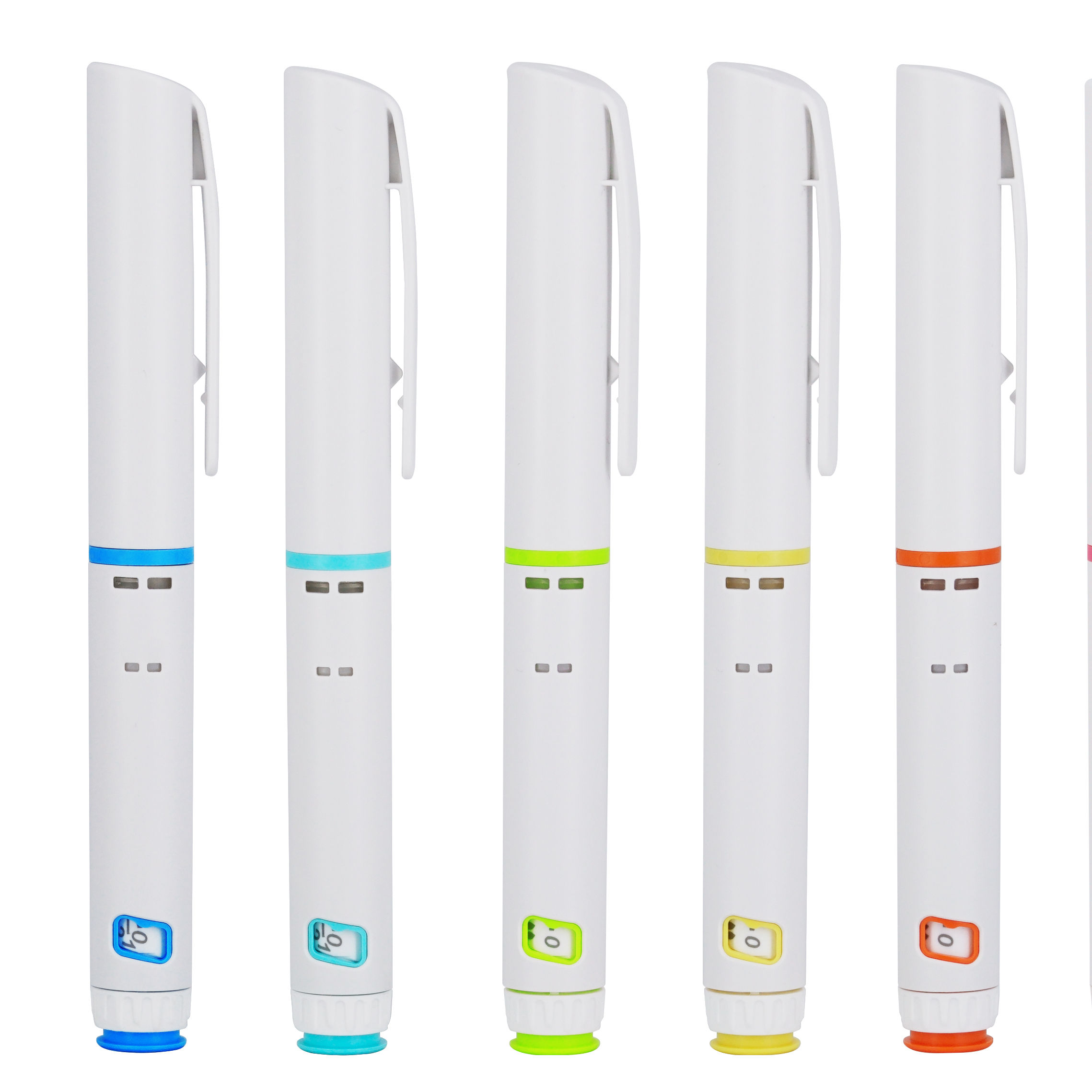
We need to put things in perspective. The peptide pen isn't the only game in town. So, how does it stack up against the competition? Let’s look at the heavy hitters.
Absorption: The peptide pen wins, hands down. Creams are limited by the skin barrier. The peptide pen smashes through that barrier (temporarily and safely). It’s better at getting ingredients where they need to go.
Speed: You might see results from a high-quality retinol serum in 3-6 months. With a peptide pen, because of the enhanced delivery, users often report seeing a visible difference in 4-8 weeks. It’s faster.
Cost: High-end serums can cost $100-$300 a bottle. While the peptide pen has a higher upfront cost, you use less serum because it’s delivered efficiently, and you aren't repurchasing the device every month. Over time, the peptide pen can be less expensive or comparable.
Convenience: A cream is easier—you just slap it on. The peptide pen requires a few extra minutes of your time and a cleaning routine. So, in terms of pure laziness, the cream wins for convenience, but loses on efficacy.
Pain: Derma rollers have actual needles. Even the small ones can sting and cause pinpoint bleeding if you press too hard. The peptide pen, especially those using air or sonic technology, is virtually painless. It’s gentler and less scary.
Safety: This is a big one. Derma rollers are notoriously hard to clean. You have to soak them in alcohol. If you don't, you risk introducing bacteria into your skin, leading to breakouts and infections. Peptide pens usually have disposable, single-use tips, making them more hygienic and safer.
Damage: Derma rollers drag needles across the skin at an angle, which can cause tearing and micro-trauma. Many peptide pens use a stamping or vertical penetration motion, which is less damaging to the skin tissue.
Ease of Use: The derma roller requires a steady hand and a specific rolling pattern (vertical, horizontal, diagonal). The pen is usually a simple stamping or gliding motion. It’s much easier for a beginner.
Depth: Professionals can adjust needles to go much deeper (up to 2.5mm or more) to treat deep scars. The peptide pen is designed for surface-level rejuvenation (usually 0.25mm to 0.5mm). For deep acne scars, the professional treatment is stronger and more effective.
Expertise: A dermatologist knows exactly how to handle complications. You’re in safe hands. With a peptide pen, you are the boss. You have to know your own skin.
Cost: As we discussed, the professional treatment is much more expensive per session.
Downtime: Professional microneedling often leaves you red and peeling for several days. The peptide pen has almost zero downtime. It’s lighter on your social calendar.
Results: A series of professional treatments will yield faster, more dramatic results for deep-set issues. However, for maintenance and prevention, the peptide pen is an excellent at-home companion.
Mechanism: Botox paralyzes muscles. Fillers add volume. The peptide pen regenerates your own tissue. They are fundamentally different approaches.
Results: Botox and fillers are immediate. The peptide pen is gradual.
Longevity: Fillers dissolve, Botox wears off. The peptide pen, by stimulating your own collagen, creates results that are theoretically longer-lasting because they are part of your skin structure. However, aging continues, so you still need to maintain.
Risk: Injectables carry risks of bruising, asymmetry, and (in rare cases) vascular occlusion. The peptide pen, being topical/non-injectable, carries far less risk.
Cost: A single area of Botox can cost $200-$400 and lasts 3-4 months. Fillers are even more expensive. The peptide pen is a fraction of the annual cost.
Think of it this way: If your skin is a house, Botox and Fillers are the interior decorators—they come in and fluff the pillows and hide the stains quickly. Professional treatments are the general contractors—they do major renovations. Topical creams are the cleaning crew—they maintain the surface. The Peptide Pen is the homeowner doing regular, smart maintenance—painting the walls, fixing small cracks before they become big problems, and making sure the foundation (collagen) stays solid.
So, you’re intrigued. Maybe you’ve already bought one, or you’re about to pull the trigger. The question is: how do you use this thing to get the absolute best results? You can’t just go at it like a wild west gunslinger. There’s a method to the madness.
Never, ever use a peptide pen on dirty skin. That’s asking for trouble. Imagine trying to plant a beautiful garden in a field full of trash. It’s not going to work.
Cleanse: Wash your face with a gentle, non-abrasive cleanser. You want to remove all makeup, sunscreen, and the day’s grime.
Disinfect: Some people like to follow up with a hypochlorous acid spray or a gentle toner with antiseptic properties. This adds an extra layer of safety.
Dry: Pat your skin dry with a clean towel. Not the one your husband just used. A clean one.
Sanitize the Device: If your pen has a reusable tip, soak it in the recommended alcohol solution. If it uses disposable tips, take a fresh one out of the sterile packaging.
Alright, your face is clean, your pen is ready, and you’ve loaded the peptide cartridge.
Section Your Face: Don’t just wave the pen around. Mentally divide your face into sections: forehead, left cheek, right cheek, nose, chin, and neck.
The Glide or Stamp: Depending on your device, you will either glide it slowly across the skin or use a stamping motion. Follow the manufacturer's instructions. Generally, you want to go over each area 2-3 times.
Pro Tip: Use your non-dominant hand to hold your skin taut. This gives the pen a flat, even surface to work on, especially around the eyes and mouth.
Listen to the Device: Most pens have a sensor or a sound that tells you when you’re in the right spot. If the sound changes, you might be lifting the pen off the skin.
Don't Drag: If you have a stamping device, don't drag it across the skin. Lift and place. Lifting and dragging can cause micro-tears.
This is where you maximize the results. Immediately after using the pen, your skin has those microscopic channels open. This is the "Golden Window" of absorption, usually lasting about 10-20 minutes.
Apply a Targeted Serum: This is not the time for your thick night cream. This is the time for a potent, water-based serum. Think hyaluronic acid for hydration, vitamin C for brightening, or a growth factor serum for repair. The peptides from the pen are already in there; now you’re adding fuel to the fire.
Warning: Avoid anything with harsh acids (AHAs/BHAs), retinols, or high concentrations of niacinamide immediately after. They can cause irritation because they will penetrate too deeply.
Don't Touch: Your skin is more susceptible to bacteria right now. Put down your phone, don't let your dog lick your face, and avoid touching it.
Rinse the Pen: If you have a reusable tip, rinse it under warm water and then soak it in alcohol as directed.
Dispose of Tips: If you used a disposable tip, throw it away immediately. Never reuse disposable tips.
Sunscreen is Your Best Friend: For the next 48-72 hours, your skin is more photosensitive. The new collagen you’re trying to build can be damaged by UV rays. Wear SPF 30 or higher every single day, even if it’s cloudy. This is non-negotiable.
Gentle Routine: Stick to gentle cleansing and hydration for a day or two. Skip the retinol and acids until your skin feels completely back to normal.
Hydrate from Within: Drink water. It sounds cliché, but hydrated skin heals faster.
Consistency is key. Most manufacturers recommend using the peptide pen 2-3 times per week. Your skin needs time to heal and regenerate between sessions. Think of it like a workout for your face. You wouldn't go to the gym and do heavy squats seven days a week; your muscles need rest to grow. The same goes for your collagen. Overusing the pen can lead to sensitivity and irritation, which is counterproductive. Slower and steady wins the race here.
So, here we are at the end of our deep dive. We’ve looked under the hood, we’ve tested the engine, and we’ve taken it for a spin. The question remains: is the peptide pen the holy grail of collagen regeneration, or just another shiny object in the beauty universe?
From where I’m standing, the peptide pen represents a significant shift in how we approach at-home skincare. It bridges the frustrating gap between "expensive goop in a jar that does nothing" and "expensive procedure at a clinic that does everything but costs a fortune." It puts a level of technology and efficacy into the hands of the consumer that was simply unavailable a decade ago.
It’s not a magic wand. You can’t use it once and expect to look 25 again. But as a tool for consistent, long-term skin health, it is arguably one of the most effective options on the market. It respects the biology of your skin. It works with your body, not against it, by harnessing your natural healing abilities.
If you are tired of throwing money at creams that promise the moon but deliver cheese, and if you are looking for a way to actively participate in your skin's health rather than just passively slathering stuff on, the peptide pen is absolutely worth considering. It empowers you to take control. It turns your bathroom into a mini-clinic.
Think of it this way: your skin is a bank account. Every day, you make withdrawals through sun exposure, stress, pollution, and just plain living. If you don't make deposits, you eventually go into debt (wrinkles, sagging). The peptide pen is one of the best deposit systems we have right now. It allows you to invest in your future self.
So, go ahead. Do your research, pick a reputable device, and give it a try. Your skin—your future, glowing, bouncy, radiant skin—might just thank you for it.

| Question | Answer |
|---|---|
| What exactly is a peptide pen? | It’s a handheld electronic device that uses technology like iontophoresis, sonic vibration, or air pressure to create temporary micro-channels in the skin. This allows for the deep, transdermal delivery of peptide-infused serums to stimulate collagen production. |
| How is it different from a derma roller? | A peptide pen is generally gentler and more hygienic. Derma rollers use physical needles that drag across the skin, which can cause tearing and require strict sterilization. Peptide pens often use disposable tips and a vertical stamping motion, which is less traumatic and safer for home use. |
| Does it hurt? | Most users report little to no pain. The sensation is often described as a mild vibration, warmth, or a faint scratching feeling. It is significantly less painful than professional microneedling or injections. |
| How often should I use it? | For optimal results and to allow skin to heal, it is generally recommended to use the peptide pen 2-3 times per week. Consistency is more important than frequency. |
| When will I see results? | Results are gradual. You may notice better hydration and a "glow" immediately. Fine lines and firmness typically begin to show improvement after 4 to 6 weeks of consistent use, with more significant changes appearing after 3 months as new collagen is built. |
| Can I use it with my regular serums? | Yes, but with caution. The "Golden Window" after use is perfect for hydrating serums like hyaluronic acid. However, you should avoid using active ingredients like retinols, strong acids (AHAs/BHAs), or high-concentration vitamin C immediately post-treatment as they can cause irritation due to deep penetration. |
| What are the side effects? | The most common side effects are temporary redness and mild sensitivity immediately after use. Some users may experience slight dryness or flaking as the skin regenerates. These effects usually subside within a few hours to a day. |
| Is it safe for all skin types? | It is generally safe for most skin types, including sensitive skin, due to its gentle mechanism. However, if you have active acne, rosacea flare-ups, eczema, or any open wounds, you should avoid using it until the skin has healed. Those with darker skin tones should be cautious not to apply too much pressure to avoid the risk of post-inflammatory hyperpigmentation. |
| Is it better than Botox or fillers? | It is not a replacement for injectables but rather a complement. Botox and fillers provide immediate, dramatic results for static wrinkles and volume loss. The peptide pen provides gradual, natural results by stimulating your own collagen. It is less expensive and less risky but also less immediately dramatic. For maintenance and prevention, it is a superior long-term strategy. |
| How do I clean my peptide pen? | Hygiene is critical. If your device has reusable tips, they should be rinsed and soaked in 70% isopropyl alcohol before and after each use as per the manufacturer's instructions. If you use disposable tips, discard them immediately after a single use and never reuse them. Always wipe down the main body of the pen with an alcohol wipe. |


