
Views: 0 Author: Site Editor Publish Time: 2026-02-24 Origin: Site


If you’ve ever stood in front of the mirror and wondered, “When did those lines get there?”—you’re not alone. The beauty industry has responded with everything from heavy creams to invasive injectables. But lately, a new buzzword keeps popping up in skin-care forums and dermatology discussions: peptide pen.
So what exactly is a peptide pen? Is it just another overhyped gadget, or does it genuinely work better, faster, or stronger compared to traditional anti-aging treatments? And how does it compare to established procedures like Botox or microneedling?
Let’s unpack it—all of it—from the biology of wrinkles to the science of peptides, from user case studies to long-term maintenance strategies. We’ll keep it conversational, but we won’t sacrifice technical depth.
Before we talk about how a peptide pen works, we need to understand what it’s up against.
Wrinkles don’t just “happen.” They are the cumulative result of structural breakdown, mechanical stress, and biochemical shifts inside the dermis. Think of your skin like a mattress. When it’s new, the springs (collagen fibers) are strong and tightly woven. Over time, those springs loosen, break, and collapse. The surface fabric (epidermis) starts to sag and fold.
There are two main mechanisms:
| Aging Type | Primary Cause | Biological Impact | Compared to Other Type |
|---|---|---|---|
| Intrinsic Aging | Genetics & time | Gradual collagen depletion | Slower but unavoidable |
| Extrinsic Aging | UV, pollution, smoking | Accelerated collagen breakdown | Faster and more damaging |
Intrinsic aging is like a slow leak. Extrinsic aging? That’s someone poking holes in your boat.
UV radiation, especially UVA, penetrates deeply and activates matrix metalloproteinases (MMPs), enzymes that literally chew up collagen. This process is faster and stronger compared to natural aging alone.
After age 25, collagen production decreases by about 1% per year. Compared to your 20-year-old skin, your 40-year-old skin is structurally weaker and thinner.
That thinning leads to:
Loss of elasticity
Decreased hydration
Slower cell turnover
Increased wrinkle formation
Now, here’s where the peptide pen enters the conversation.

Let’s break it down simply. Peptides are short chains of amino acids. They’re like text messages sent between skin cells. When collagen breaks down, it releases peptide fragments. Your body reads those fragments as: “Hey, we’re losing collagen—time to make more.”
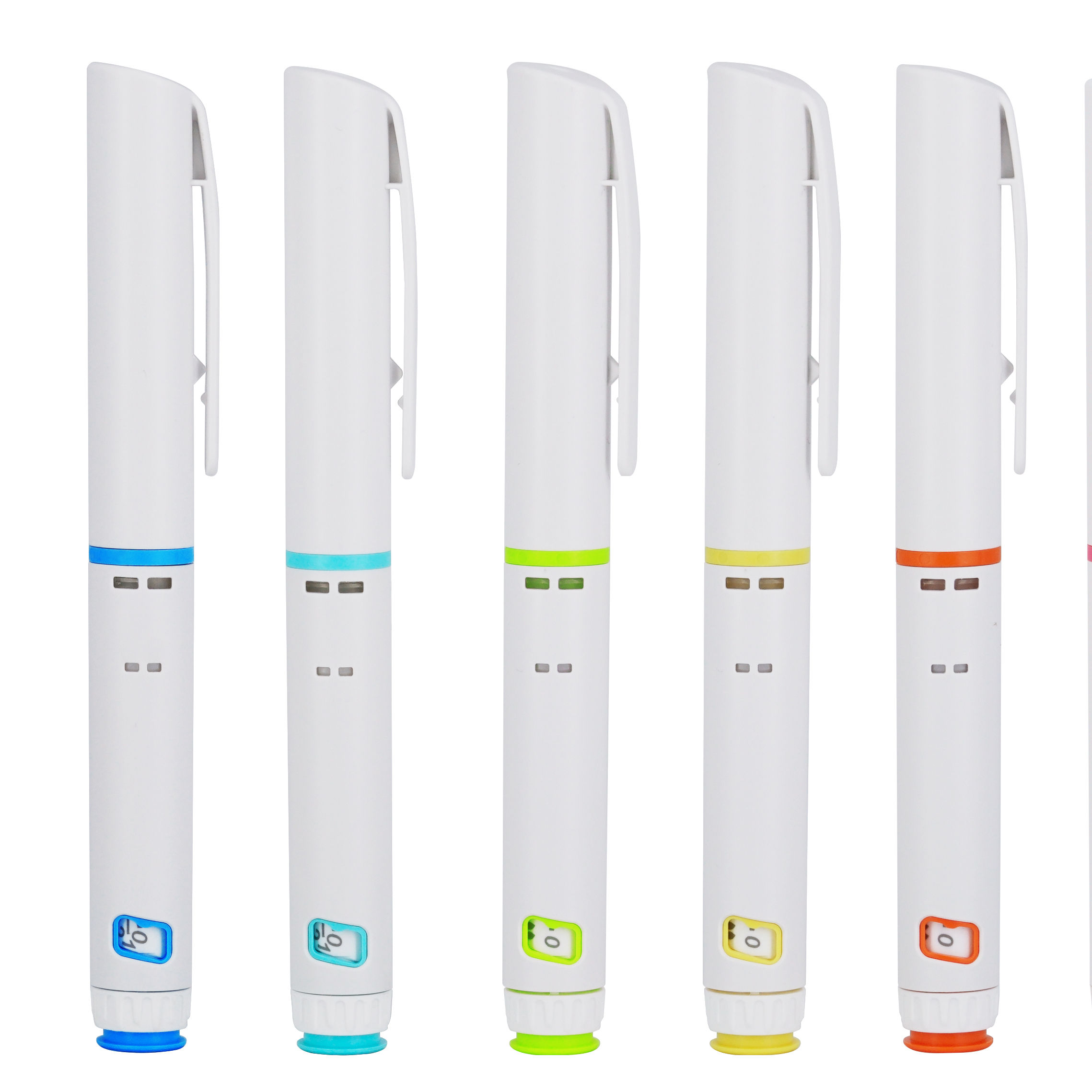
A peptide pen delivers synthetic peptides directly into the skin in a targeted, controlled way.
| Delivery Method | Penetration Depth | Speed of Results | Compared Advantage |
|---|---|---|---|
| Topical Cream | Surface-level | Slower | Less invasive, but weaker |
| Peptide Pen | Dermal layer | Faster | Better absorption, stronger stimulation |
| Injectable Fillers | Deep dermis | Immediate | Faster visually, more expensive |
Compared to creams, a peptide pen offers deeper penetration and stronger stimulation. Compared to fillers, it’s less invasive and more natural-looking—but slower in visible plumping.
Some common functional peptides include:
Signal peptides (stimulate collagen synthesis)
Carrier peptides (deliver trace minerals like copper)
Neurotransmitter-inhibiting peptides (mild muscle relaxation effect)
Compared to neurotoxins like Botox, neurotransmitter peptides are milder, lighter, and less risky. They don’t freeze your face; they soften muscle contraction subtly.
Research published in dermatological journals has shown that certain peptides increase collagen I and III expression in fibroblast cultures. Clinical studies suggest visible wrinkle reduction after 8–12 weeks of consistent peptide application.
Compared to retinoids, peptides are often better tolerated, especially for sensitive skin.
Not all wrinkles are created equal. Some are etched by repetitive facial movement. Others form because skin is dry or sagging.
So, does a peptide pen work equally well for all types? Let’s break it down.
Expression lines—crow’s feet, forehead lines, frown lines—are caused by repeated muscle contraction.
Compared to Botox, a peptide pen:
Is less expensive
Is less invasive
Has fewer severe side effects
Produces slower and subtler results
Think of Botox as flipping a light switch off. Peptides dim the lights gradually.
Peptide pens work better for early-stage expression lines. For deep, etched lines, they may improve texture but won’t erase them completely.
Advantages
More natural facial movement
Lower risk of asymmetry
Can be used preventatively
Disadvantages
Slower visible improvement
Requires consistent sessions
Dryness lines are superficial. They’re caused by dehydration and barrier dysfunction.
Peptide pens can stimulate extracellular matrix repair and enhance hydration retention.
Compared to hyaluronic acid serums:
Peptide pen results last longer
Penetration is deeper
Hydration effect is stronger over time
But serums are lighter and more affordable.
For dryness lines, peptide pen treatment often works faster and better compared to creams alone.
Sagging wrinkles result from volume loss and gravity. Nasolabial folds are classic examples.
Here’s the honest truth: peptide pens improve skin firmness gradually, but they are weaker compared to surgical lifting or dermal fillers.
However, compared to invasive procedures, they are:
Safer
Less expensive
Easier to maintain
Lower downtime
Think of it as reinforcing a bridge instead of rebuilding it.
For mild to moderate sagging, peptide pens show measurable improvement in skin elasticity over 3–6 months.
Let’s move beyond theory. What are real users saying?
A 32-year-old user with mild forehead lines reported smoother texture after 10 weeks. Compared to her previous retinol routine, irritation was lower and recovery was faster.
She described the effect as “subtle but consistent.”
This user combined peptide pen treatment with sunscreen and antioxidants. Compared to filler treatments she previously tried, results were slower but more natural.
She noted:
Firmer jawline
Softer nasolabial folds
Improved skin density
However, she acknowledged that deep folds remained visible.
| Age Group | Primary Concern | Reported Effectiveness | Compared to Alternatives |
|---|---|---|---|
| 25–35 | Prevention | Strong | Better tolerated than retinol |
| 35–50 | Mild to moderate wrinkles | Moderate to strong | Slower but more natural than fillers |
| 50+ | Deep sagging | Mild to moderate | Weaker than surgical options |
Subjectively, users report better long-term texture improvement compared to quick-fix injectables.
Here’s where expectations matter.
Peptide pens are not one-and-done solutions.
Week 2–4: Improved hydration
Week 6–8: Subtle smoothing
Week 12+: Noticeable firmness
Compared to fillers (instant), peptide pens are slower but more gradual and cumulative.
Initial Phase:
Weekly or biweekly sessions for 8–12 weeks
Maintenance Phase:
Monthly treatments
Compared to surgical options, maintenance is lighter and less risky.
Most common:
Mild redness
Temporary tingling
Slight swelling
Compared to aggressive procedures, side effects are lighter and resolve faster.
Not ideal for:
Active acne infections
Severe rosacea
Pregnancy (consult physician)
Less invasive than injections
Better collagen stimulation compared to topical creams
Lower downtime
More affordable compared to surgical lifts
Safer long-term use
Slower visible results
Requires consistency
Not strong enough for severe sagging
Device quality varies
| Feature | Peptide Pen | Botox | Fillers | Retinol |
|---|---|---|---|---|
| Invasiveness | Low | Moderate | Moderate | None |
| Speed | Moderate | Fast | Immediate | Slow |
| Cost | Moderate | Higher | Higher | Lower |
| Collagen Stimulation | Strong | None | Minimal | Moderate |
| Natural Look | Better | Risk of stiffness | Risk of overfill | Natural |
If you’re looking for a middle ground—stronger than creams, lighter than injectables—the peptide pen sits comfortably there.
Compared to doing nothing, it’s clearly better. Compared to surgery, it’s less dramatic but far safer.
The best candidates?
Early aging signs
Preventative users
Those wanting natural improvement
Individuals avoiding needles

| Question | Answer |
|---|---|
| What is a peptide pen? | A device that delivers collagen-stimulating peptides into the skin to reduce wrinkles and improve elasticity. |
| Is peptide pen better than Botox? | It depends. Compared to Botox, it is less invasive and more natural-looking but slower and less dramatic. |
| How long do results last? | Typically 3–6 months with maintenance sessions. |
| Are there side effects? | Mild redness or swelling; compared to fillers, risks are lighter. |
| Is peptide pen safe for sensitive skin? | Often better tolerated compared to retinoids, but patch testing is recommended. |
| How many sessions are needed? | Usually 8–12 initial sessions followed by monthly maintenance. |


