
Views: 0 Author: Site Editor Publish Time: 2026-02-13 Origin: Site


If you’ve been researching anti-aging skincare lately, chances are you’ve stumbled across the term peptide pen. It sounds futuristic, right? Almost like something from a dermatologist’s lab rather than your bathroom shelf. But what exactly is a peptide pen? How does it work? And how does it compare to the long-standing gold standard of anti-aging—retinol?
Let’s break it all down in plain English. No fluff. No vague marketing promises. Just science, comparisons, and practical advice to help you make smarter skincare decisions.
The anti-aging skincare industry isn’t just growing—it’s exploding. Consumers are no longer satisfied with generic moisturizers. They want targeted solutions. They want faster results. They want better ingredients. And above all, they want treatments that are stronger yet gentler.
Traditional creams are like watering your whole garden when only one plant needs attention. A peptide pen, on the other hand, is more like using a precision dropper. It delivers concentrated peptide formulas directly where wrinkles, fine lines, or sagging appear.
Consumers today are:
Comparing ingredient lists more carefully
Looking for clinical backing
Avoiding irritation-heavy formulas
Seeking less expensive alternatives to injectables
Peptides have become popular because they promise collagen support without the harshness associated with stronger actives like retinol or acids.
Peptides are short chains of amino acids—the building blocks of proteins like collagen and elastin. As we age, collagen production slows down. That’s when skin loses firmness and elasticity.
Compared to traditional anti-aging creams, peptide pens:
Deliver ingredients more directly
Often feel lighter on the skin
Are marketed as less irritating
Are positioned as safer for sensitive users
Retinol still dominates the conversation, but peptides are gaining ground because they’re perceived as gentler and more suitable for long-term maintenance.
The market isn’t abandoning retinol. Instead, it’s asking: Is there a better, smarter way?

Let’s get into the science—but don’t worry, we’ll keep it digestible.
A peptide pen is essentially a precision applicator that delivers peptide-rich formulations directly onto targeted skin areas. The mechanism depends on the specific peptides used, but most anti-aging peptide pens rely on signal peptides.
Think of peptides as tiny messengers. When applied topically, they “tell” your skin to produce more collagen. They mimic fragments of collagen breakdown products, tricking the skin into thinking it needs repair.
In simple terms:
Your skin thinks something is damaged → it produces more collagen → skin appears firmer.
Compared to retinol, which forces cellular turnover, peptides work more like gentle nudges rather than aggressive commands.
Signal peptides – stimulate collagen production
Carrier peptides – deliver trace minerals to boost repair
Neurotransmitter-inhibiting peptides – reduce expression lines
These ingredients are often combined for stronger results compared to single-ingredient formulas.
Better tolerance for sensitive skin
Less irritation compared to retinol
Can be used more frequently
Often lighter texture
Suitable for daytime use
Results may be slower compared to retinol
Effects are often subtler
Quality varies widely between brands
Some formulations are more expensive
If you’re expecting overnight transformation, peptides may feel slower. But if you want steady improvement without peeling or redness, they might feel better long term.
Retinol is the veteran. It’s been studied extensively and has strong clinical backing.
So how does it work?
Retinol is a vitamin A derivative. Once applied, it converts into retinoic acid inside the skin. This compound:
Accelerates cell turnover
Stimulates collagen production
Reduces hyperpigmentation
Improves skin texture
Compared to peptide pens, retinol works faster and often produces more dramatic results.
But here’s the catch—it can be harsher.
Faster visible wrinkle reduction
Stronger stimulation of collagen
Better for acne-prone skin
More evidence-backed
Higher irritation potential
Can cause peeling and dryness
Not ideal for sensitive skin
Requires careful sun protection
Not recommended during pregnancy
Retinol is like sending your skin to boot camp. Peptides are more like hiring a personal trainer.
Both can be effective. It depends on your tolerance and goals.
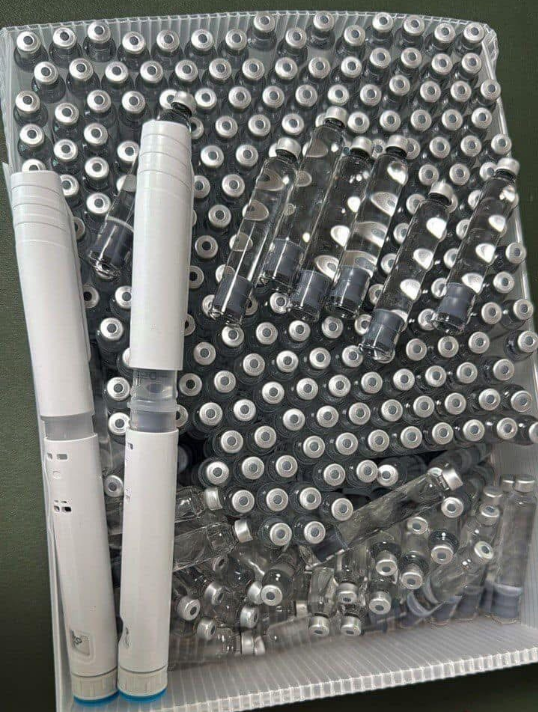
Now let’s compare peptide pen and retinol directly across key decision-making factors.
Peptide pens are generally less irritating compared to retinol. Most users experience minimal redness or peeling.
Retinol, especially in higher concentrations, can cause:
Dryness
Flaking
Redness
Temporary breakouts
If your skin barrier is compromised, peptides are often better tolerated.
Winner for sensitive skin: Peptide pen
Stronger but harsher option: Retinol
Retinol usually produces visible improvements faster—often within 4–8 weeks.
Peptides may take 8–12 weeks or longer to show noticeable firmness improvements.
So if you want faster wrinkle reduction, retinol may be better.
If you prefer gradual, steady progress with less irritation, peptide pen might be a smarter choice.
| Skin Type | Peptide Pen | Retinol |
|---|---|---|
| Sensitive Skin | Better tolerated | Often too strong |
| Oily/Acne-Prone | Moderate effect | Stronger, better |
| Dry Skin | Lighter, less drying | Can worsen dryness |
| Mature Skin | Good for maintenance | Stronger rejuvenation |
| Beginner Users | Safer entry point | Requires gradual introduction |
Retinol has decades of research backing it. Long-term use is generally safe when applied properly.
Peptides are considered safe, but long-term clinical data is less extensive compared to retinoids.
That said, peptides are usually associated with fewer chronic irritation issues.
If you’re planning lifelong use, peptides may feel more sustainable for sensitive individuals.
Choosing between a peptide pen and retinol isn’t just about skin type—it’s about age, lifestyle, and tolerance.
At this stage, collagen levels are still relatively high.
Better option:
Lightweight peptide pen for prevention
Low-strength retinol if acne is present
Retinol might be stronger than necessary unless acne is a concern.
Collagen decline begins to accelerate.
Recommended approach:
Combine peptides in the morning
Low-to-moderate retinol at night
Compared to using only one, combination therapy can be more effective.
This is when deeper wrinkles and sagging become more noticeable.
Retinol becomes more powerful for collagen stimulation. However, if irritation becomes an issue, peptides can provide gentler maintenance.
Some users alternate nights to reduce irritation.
Skin becomes thinner and more sensitive.
Peptide pens may be better tolerated compared to strong retinoids. However, carefully monitored retinol can still provide stronger rejuvenation.
The key? Balance intensity with comfort.
Yes—but strategically.
Peptides and retinol can complement each other because they work through different mechanisms.
Morning:
Peptide pen
Sunscreen (non-negotiable)
Evening:
Retinol
Moisturizer
Avoid layering high-strength retinol and peptide pen simultaneously if your skin is sensitive. Introduce gradually.
Combined use can lead to better long-term anti-aging results compared to using either alone—but only if your skin tolerates it.
Patch test new formulas
Store properly to maintain peptide stability
Avoid contaminated applicators
Side effects are rare but may include mild irritation.
Start with low concentration
Use sunscreen daily
Avoid mixing with strong acids initially
Not recommended during pregnancy
Retinol side effects are more common compared to peptides but usually manageable.
Less irritating
Better for sensitive skin
Lighter feel
Safer for long-term maintenance
Slower results
Sometimes more expensive
Less dramatic wrinkle reduction
Faster results
Stronger collagen stimulation
Better for acne
Higher irritation risk
Requires careful introduction
Not suitable for everyone
Journal of Cosmetic Dermatology – Peptide efficacy studies
International Journal of Dermatology – Retinoid research
Clinical trials on topical retinoids (multiple peer-reviewed publications)
Dermatology Times reviews on anti-aging ingredients
Retinol has stronger long-term clinical data compared to peptides, but peptide research is growing rapidly.

| Question | Answer |
|---|---|
| What is a peptide pen? | A precision skincare applicator delivering concentrated peptide formulations directly to wrinkles or targeted areas. |
| Is peptide pen better than retinol? | It depends. Peptide pens are less irritating and better for sensitive skin, while retinol is stronger and faster for wrinkle reduction. |
| How long does a peptide pen take to work? | Visible results usually appear in 8–12 weeks, slower compared to retinol. |
| Can I use peptide pen every day? | Yes, most formulas are gentle enough for daily use. |
| Is peptide pen safe during pregnancy? | Generally safer than retinol, but always consult a healthcare professional. |
| Does peptide pen replace Botox? | No. Effects are milder compared to injectables. It supports collagen but does not paralyze muscles. |
| Can I combine peptide pen with retinol? | Yes, typically peptides in the morning and retinol at night. |
| Is peptide pen more expensive? | Some formulations are more expensive compared to basic creams, but often less expensive than in-office procedures. |


