
Views: 0 Author: Site Editor Publish Time: 2025-12-03 Origin: Site


Imagine walking into a lab filled with high-precision glassware, shiny stainless-steel reactors, and teams of chemists monitoring screens with micro-level accuracy. That’s the world where steroid powders—used legally in pharmaceuticals, hormone therapies, veterinary medicine, and scientific research—are created.
Many people hear “steroid powders” and think of misuse in sports. But in reality, the majority of globally traded steroid raw materials are intended for:
Pharmaceutical production (e.g., hormone replacement therapies)
Veterinary applications (e.g., animal growth regulation under strict guidelines)
Academic research
Biotech development
So why has China become such a dominant force?
It comes down to a mix of:
Stronger industrial infrastructure compared to many Western manufacturers
Faster production capacity scaling
Lower operational costs, making products less expensive overall
R&D clusters, which make innovation faster and better
Decades of specialization in API and intermediate chemistry
But here’s the catch:
Not all manufacturers operate at the same level.
Not all factories are compliant.
And not all buyers fully understand the legal responsibilities in their own countries.
This article will help you cut through the noise and understand how to evaluate a reputable, compliant, legally operating China steroid powder manufacturer—and avoid the “grey-area” suppliers that lack certification or traceability.
Let’s dive deeper.
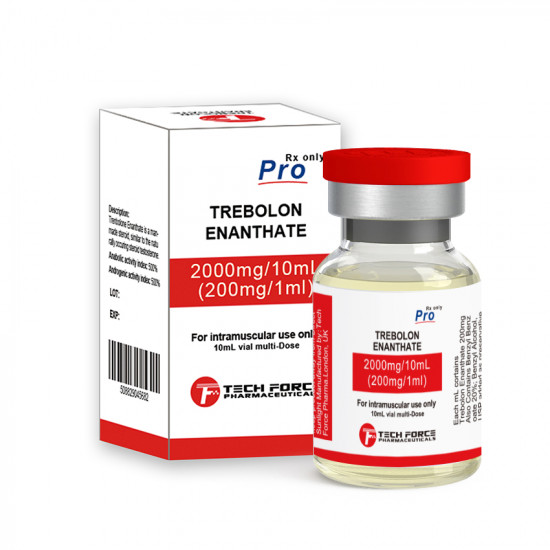
If you compared China’s pharmaceutical ecosystem to a giant machine, every cog would represent a specialized region:
Zhejiang → home to huge chemical clusters
Shandong → major organic intermediate base
Hebei & Jiangsu → strong in API manufacturing
The advantage is synergy. Factories sit close to raw material sources, transport hubs, and logistics services—resulting in:
Faster production cycles
Lower freight costs
Stronger supplier networks
When compared to Europe or the U.S., Chinese factories often operate with lower fixed costs, making pricing significantly more competitive.
China’s production capability is:
Stronger due to integrated supply chains
Faster because of readily available raw materials
More scalable, thanks to large industrial parks
More R&D-driven, due to university partnerships
There are entire cities where dozens of manufacturers specialize in steroid intermediates, hormone APIs, and fine chemicals—making the ecosystem extremely efficient compared to more fragmented Western markets.
China has significantly tightened pharmaceutical rules since 2016:
Mandatory GMP alignment with WHO standards
Regular environmental inspections
Crackdowns on factories without proper registration
Increasing enforcement of export documentation
This shift has eliminated many non-compliant plants and strengthened the reputation of legitimate, certified manufacturers.
Choosing a manufacturer is like choosing a surgeon: you want certification, transparency, and a strong track record.
A reputable factory should have:
GMP certification (domestic or international)
Business license + Drug Production License
Environmental approval documents
Without these, risks skyrocket.
A truly compliant manufacturer will offer:
HPLC test reports
COA (Certificate of Analysis) with batch numbers
MSDS safety documents
Batch traceability from raw material to finished product
These controls make the difference between consistent pharma-grade quality and unregulated grey-market powders.
Good manufacturers share:
Factory photos
Production flowcharts
Quality control SOPs
Regulatory certificates
Bad manufacturers avoid transparency like the plague.
Even if a product is legal to produce in China, import rules vary by country. High-quality manufacturers educate buyers about:
Required import licenses
API restrictions
Customs documentation
That’s a green flag.
Not all steroid powders are created equal. Chinese factories typically categorize products into API-grade, pharmaceutical-grade, veterinary-grade, and research-grade.
Used in the creation of:
Corticosteroids
Hormone replacement therapies
Anti-inflammatory medications
API intermediates undergo rigorous testing and cost more, compared to lower-grade materials.
Used for legal medical research.
These powders are:
Highly purified
Produced via GMP standards
Stronger and more consistent in quality
Compared to industrial-grade powders, these are safer, cleaner, and clinically reliable.
Used in:
Livestock breeding programs
Growth regulation
Hormonal therapy for animals
Regulations differ from country to country, so compliance is key.
| Use Type | Purity | Cost | Oversight Level | Suitable For |
|---|---|---|---|---|
| Research-grade | Moderate | Less expensive | Moderate | Lab experiments |
| Pharma-grade | Higher | More expensive | Strict | Medical research |
| Veterinary-grade | Variable | Moderate | Country-specific | Animal treatment |
| API intermediates | Highest | Highest | Very strict | Drug manufacturing |

Think of this as your due diligence checklist.
A legitimate factory will willingly provide:
Business license
GMP certificate
ISO9001 or ISO14001
Product registration documentation
If they hesitate — run.
You should ask for:
HPLC chromatograms
Microbial test reports
Third-party laboratory verification
The best factories provide batch-specific documentation, not generic templates.
Look for signs like:
Export experience
Stable raw material sourcing
Clear MOQs (minimum order quantities)
Reliable delivery timelines
A stable manufacturer can deliver faster, more reliably, and with better quality control.
Good suppliers:
Check emails frequently
Provide detailed answers
Offer reference customers (when legally allowed)
Provide samples for quality evaluation
Poor communication usually predicts poor manufacturing quality.
False. There are excellent, fully GMP-certified plants producing materials equal to or better than Western factories.
The real issue?
Unlicensed workshops posing as manufacturers.
China regulates pharmaceuticals heavily. Violations lead to:
Factory shutdowns
Fines
Export bans
Not always.
Sometimes it reflects:
Cheaper labor
Larger production scale
Stronger local supply chains
But extremely low prices are red flags for non-compliance.
No.
Many are used legally for:
Research
Veterinary medicine
Pharmaceutical intermediates
Illegality depends on the country, not the manufacturer.
Aging populations worldwide drive demand for:
Testosterone replacement
Corticosteroids
Hormonal therapies
China’s supply chain is expanding faster to meet demand.
Countries are implementing:
Stricter import controls
API tracking systems
Higher testing standards
This pushes manufacturers to become stronger, cleaner, and more compliant.
China is pushing:
Lower carbon emissions
Cleaner solvents
Waste treatment systems
Factories that can adapt survive; older ones close.
B2B sourcing via:
Alibaba
Made-In-China
Global chemical sourcing platforms
has made finding suppliers faster, but it also creates a flood of middlemen.
Factories are adopting:
AI-based purity prediction
Automated reactors
Smart supply chain software
This results in better consistency and faster delivery.
China is expected to grow its share of API exports between 2025–2030 due to:
Stronger R&D
Lower production costs
Better compliance alignment with the EU and U.S.
More collaboration is happening between:
China FDA (NMPA)
EMA
FDA
WHO
This means more unified quality standards worldwide.
Choosing a reputable China steroid powder manufacturer requires:
Certification verification
Quality testing
Understanding your own country’s laws
Avoiding grey markets
China’s role in the global pharmaceutical chain is becoming stronger, faster, and more regulated than ever. With the right knowledge, buyers can safely and legally cooperate with compliant manufacturers delivering pharma-grade quality.
| Question | Answer (Educational Only) |
|---|---|
| What are steroid powders used for legally? | Pharmaceuticals, research, veterinary medicine, API development. |
| Are all China steroid powder manufacturers GMP certified? | No. Only a portion are fully GMP-compliant—verification is essential. |
| Why are China’s prices lower? | Larger production scale, lower labor costs, and stronger supply chains. |
| Can buyers import steroid powders freely? | No—import laws vary by country. Always check local regulations. |
| How to check if a factory is legitimate? | Verify license, GMP certificate, COA, HPLC results, and export history. |
| Are steroid powders illegal? | Depends on the specific compound and country regulation. |
| Do reputable companies provide samples? | Yes, usually for research and testing purposes. |
| What’s the main difference between pharma-grade and research-grade? | Purity, testing rigor, and documentation quality. |
| Why is batch traceability important? | Ensures safety, consistency, and regulatory compliance. |
| Are grey-market suppliers risky? | Yes—products may lack testing, traceability, or legality. |


